When the order book shrinks and clients start pushing payment deadlines further out, you know something’s gone wrong. That’s the reality for businesses in Windsor, Ontario—a city so close to Detroit you can see American smokestacks from the riverfront. Here, the hum of cross-border commerce has slowed to an uneasy murmur.
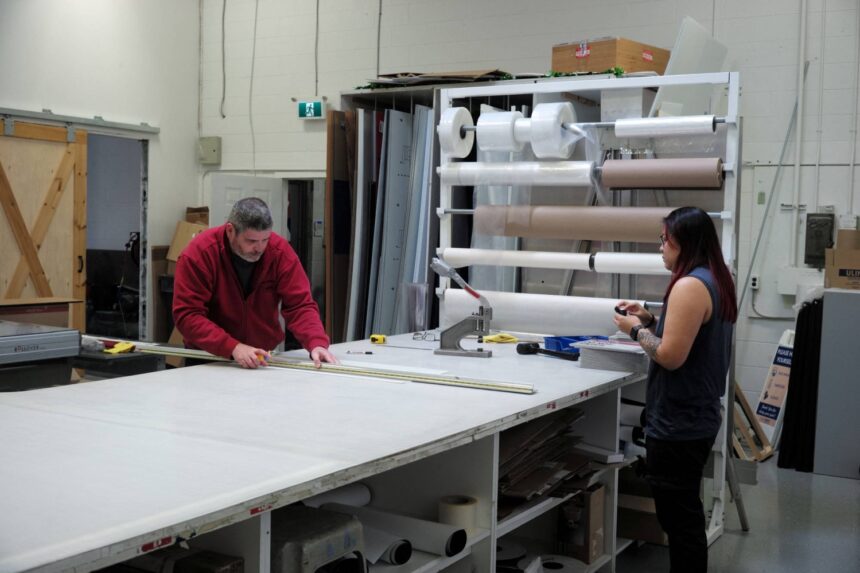
Windsor-based Fastsigns, a company that designs and installs custom business signs and graphics, had its worst year since the pandemic in 2023. Orders from automotive clients—the backbone of the regional economy—vanished. A new project in early 2024 brought some hope, but the reprieve has been fragile. Customers are now demanding longer payment terms, placing smaller orders, and driving harder bargains on price. The reason isn’t a supply chain meltdown or a sudden shift in consumer taste. It’s fear.
The United States-Mexico-Canada Agreement, known as USMCA, is up for review this year. And U.S. President Donald Trump has made it clear he’s not particularly attached to the deal he negotiated during his first term. He’s called it outdated and no longer beneficial to American interests. Jamieson Greer, the U.S. Trade Representative, has described negotiations with Canada as challenging. That’s diplomatic speak for difficult, tense, and uncertain.
For businesses in Windsor, uncertainty is poison. This city of roughly 230,000 people sits directly across the Ambassador Bridge from Detroit. It’s one of the busiest commercial border crossings in North America. More than a quarter of all merchandise trade between Canada and the United States flows through this single choke point. When the trade relationship wobbles, Windsor feels it first and hardest.
The numbers tell the story. Canada’s economy contracted 0.6% in the fourth quarter of 2023. That’s not a blip. It’s a warning sign. And in cities like Windsor, where economic fortunes are tied directly to cross-border trade, the slowdown is more than a statistic. It’s a daily reality for business owners, workers, and families.
USMCA replaced the North American Free Trade Agreement in 2020. It was supposed to modernize trade rules, address digital commerce, and provide stability for manufacturers. The deal exempts most Canadian goods from U.S. tariffs. For industries like automotive, aerospace, and agriculture, that exemption is essential. Without it, Canadian exporters would face cost increases that would make their products uncompetitive in the American market.
But the deal includes a review clause. Every six years, the three countries are supposed to assess whether the agreement is working. That review is happening now. And instead of a routine check-in, it’s turned into a high-stakes negotiation. Trump has floated the idea of scrapping the deal entirely. That threat, even if it’s mostly posturing, has real consequences.
Businesses hate uncertainty. They can adapt to bad news if they know what’s coming. But when the rules might change at any moment, planning becomes impossible. Do you invest in new equipment? Do you hire more workers? Do you sign a long-term supply contract? If the trade deal collapses, those decisions could sink a company. So businesses wait. They delay. They hedge. And that caution ripples through the economy.
Windsor’s automotive sector is a perfect example. The city is home to a Stellantis assembly plant and a network of parts suppliers. These companies depend on integrated supply chains that cross the border multiple times before a finished vehicle rolls off the line. A single car might contain components that zigzag between Canada, the United States, and Mexico. Under USMCA, those movements are tariff-free. Without the deal, each border crossing could trigger a duty. The cost would be enormous.
Fastsigns is not a car manufacturer. But its fortunes are tied to the automotive industry. When automakers and suppliers are uncertain, they cut discretionary spending. That includes signage, branding, and facility updates. The company’s experience mirrors what’s happening across the region. Smaller orders. Tougher negotiations. Longer payment terms. These are the subtle signs of an economy under stress.
The broader Canadian economy is also feeling the pressure. Exports to the United States account for roughly 20% of Canada’s GDP. Any disruption to that flow has serious consequences. The Bank of Canada has cut interest rates to try to stimulate growth, but monetary policy can’t fix trade policy uncertainty. If businesses are afraid to invest because they don’t know what the trade rules will be, lower rates won’t change that calculus.
Trade Representative Greer’s comments about challenging negotiations are particularly telling. They suggest the U.S. side is not simply seeking minor adjustments. They want substantive changes. What those changes might include is still unclear. There’s speculation about dairy market access, digital trade rules, and dispute resolution mechanisms. Canada has made some concessions already, but it’s not clear whether those will be enough.
For Windsor, the stakes are existential. The city’s economy is more dependent on cross-border trade than almost any other in Canada. A study by the University of Windsor found that more than 40,000 jobs in the region are directly tied to the automotive sector. If USMCA collapses or is significantly weakened, many of those jobs would be at risk. The ripple effects would spread through retail, services, and real estate.
Local business leaders have been vocal about their concerns. The Windsor-Essex Regional Chamber of Commerce has called for stability and predictability in trade policy. That’s not a partisan position. It’s a survival instinct. Businesses can compete on quality, price, and service. They can’t compete against policy chaos.
There’s also a human dimension to this story. Behind every delayed order and tougher negotiation is a person making decisions about their livelihood. For a sign company owner, it might mean putting off a new hire. For a factory worker, it might mean fewer overtime shifts. For a recent graduate, it might mean leaving the region to find work elsewhere. These individual decisions, multiplied across thousands of people, shape the trajectory of a city.
The uncertainty around USMCA is not just a Canadian problem. American businesses that depend on Canadian inputs are also worried. The integrated supply chains that make North American manufacturing competitive globally don’t work if trade barriers go up. A disruption would hurt companies and workers on both sides of the border.
What happens next depends on negotiations that are largely happening behind closed doors. The official review process continues. Trade ministers meet. Lawyers draft language. Lobbyists make their cases. Meanwhile, businesses in Windsor and across Canada are left to guess what the future holds.
For now, companies like Fastsigns are doing what they can. They’re managing cash flow carefully. They’re being selective about new projects. They’re trying to diversify their client base. But there’s only so much a small business can do to protect itself from macroeconomic uncertainty.
Windsor’s experience is a reminder that trade policy is not an abstract debate. It has real consequences for real people. And when the rules are up in the air, everyone pays a price.