The morning I arrived in Kuala Lumpur last month, a labour recruiter told me something that stuck. He said companies had started calling him more in the past six weeks than in the previous six years. They weren’t hiring. They were asking how to prove they weren’t exploiting workers. That shift, sudden and revealing, traces back to Washington and a trade weapon now pointed at sixty governments worldwide.
The Trump administration just weaponised forced labour as grounds for global tariffs. On March 14, the US Trade Representative launched investigations into whether governments adequately ban imports made with forced labour. It’s the first time Section 301 of the Trade Act has been deployed this way. The legal premise is simple and damning: forced labour taints every supply chain it touches, making trade inherently unfair.
Section 301 allows the US to investigate and retaliate against trading partners whose practices burden American commerce. Historically, it targeted intellectual property theft or market access barriers. Now it’s being wielded against labour abuses affecting 27.6 million people globally, according to the International Labor Organization. That number grows each year. If the current standoff with Iran triggers prolonged energy shocks, displacement will spike further. More refugees mean more desperate workers vulnerable to exploitation in factories, farms, and fishing boats across Asia and beyond.
This isn’t purely altruistic. Trade experts widely believe the forced labour angle serves as legal cover for Trump’s broader tariff agenda. After the Supreme Court struck down his emergency powers to impose sweeping duties in February, the White House needed another statutory vehicle. Section 301 offers that, though it requires individual country investigations and negotiation attempts before tariffs take effect. The administration has compressed what normally takes years into a timeline ending in July, when temporary tariffs under Section 122 expire.
“Arguably, these investigations have more to do with reconstructing the reciprocal tariff regime rather than specific concerns about forced labour,” Stephen Olson, a former US trade negotiator now with the ISEAS–Yusof Ishak Institute, told me last week. Barbara Weisel, formerly with the USTR and now at the Carnegie Endowment for International Peace, added it remains unclear what steps would actually satisfy Washington that a government has effectively addressed the issue.
Yet motive and outcome don’t always align. Regardless of intent, this approach will force systemic change in how companies and governments monitor supply chains. The shift from targeting individual shipments to entire economies creates exponentially higher stakes.
Under existing US law, Customs can detain specific goods suspected of involving forced labour. The burden falls on the company to prove otherwise. That system has worked, slowly. In 2020, US authorities banned imports from Sime Darby, a Malaysian palm oil giant, after finding debt bondage, restricted movement, and withheld wages across plantations. The company had drafted a human rights charter three years earlier. That didn’t matter. The ban forced real remediation: Sime Darby repaid roughly eighteen million dollars in recruitment fees to 34,000 workers and brought in independent auditors.
Section 301 broadens the target from companies to governments. If the USTR determines a government failed to prohibit or enforce against forced labour adequately, it can slap tariffs on all exports from that country. Suddenly, it’s not just one palm oil producer under scrutiny. It’s every exporter in Malaysia, Vietnam, Thailand, Bangladesh, or whichever economy lands on the list.
That distinction matters immensely. Governments facing economy-wide tariffs have far greater incentive to crack down on exporters within their borders. They also have the legal authority to do so in ways a foreign government cannot. Companies should expect intense pressure from local regulators extending well beyond factory floors into murky tiers of suppliers they’ve long ignored.
I spoke with compliance officers at two garment manufacturers in Ho Chi Minh City last week. Both described the same phenomenon: government inspectors suddenly demanding supplier lists, subcontractor details, and labour contracts for migrant workers three levels down the supply chain. One factory owner said he’d never been asked for that level of documentation in twenty years of exporting to the US.
The USTR’s Federal Register notice makes the scope explicit. Forced labour taints the entire supply chain in which it exists. That means raw materials, components, subcontractors, and logistics providers all fall under scrutiny. A shirt assembled ethically in one location but using cotton picked by coerced labour elsewhere becomes tainted goods.
Written comments on the investigations closed April 15. Hearings ran from late April into May. Past Section 301 cases stretched across months or years. This one needed resolution by July to keep Trump’s tariff architecture intact. The accelerated timeline suggests conclusions were predetermined, with little room for remediation before penalties hit.
Three realities make compliance urgent for Asian exporters, even those skeptical this will hold up legally or politically. First, companies able to prove their operations and supply chains are free of forced labour may request exclusions from tariffs imposed on their home countries. Exclusions require documented compliance, not vague assurances.
Second, pressure around forced labour extends far beyond Washington. Investors, customers, and regulators across Europe and parts of Asia already scrutinise labour practices. The European Union’s Corporate Sustainability Due Diligence Directive takes effect soon. California’s supply chain transparency law has been on the books for years. This US move intensifies existing trends rather than creating new ones.
Third, preventing forced labour enjoys rare bipartisan support in American politics. The US has prohibited goods made with forced labour for nearly a century. Both parties frame it as protecting American workers from unfair competition. Even if a Democratic administration takes over in 2029, these measures will likely remain. Compliance frameworks built now will be needed regardless of who occupies the Oval Office.
“A finding of forced labour against a country will create a dark cloud of suspicion,” Olson said. “Companies will have to redouble efforts to demonstrate they are not part of the problem. They’ll need to satisfy not just US and host governments, but socially conscious customers.”
Some companies already do this work rigorously. The sustainable business network BSR works with three hundred member companies to embed human rights throughout value chains. Progress on forced labour and other standards happens within those supply chains. But they remain a minority.
The off-ramp requires both eliminating forced labour and creating a paper trail proving it. That means written supplier commitments, documented audit trails, functional grievance mechanisms workers can actually use, and senior leadership ownership of findings. It’s expensive and time-consuming. It’s also far cheaper than tariffs or lost contracts.
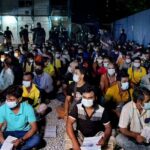
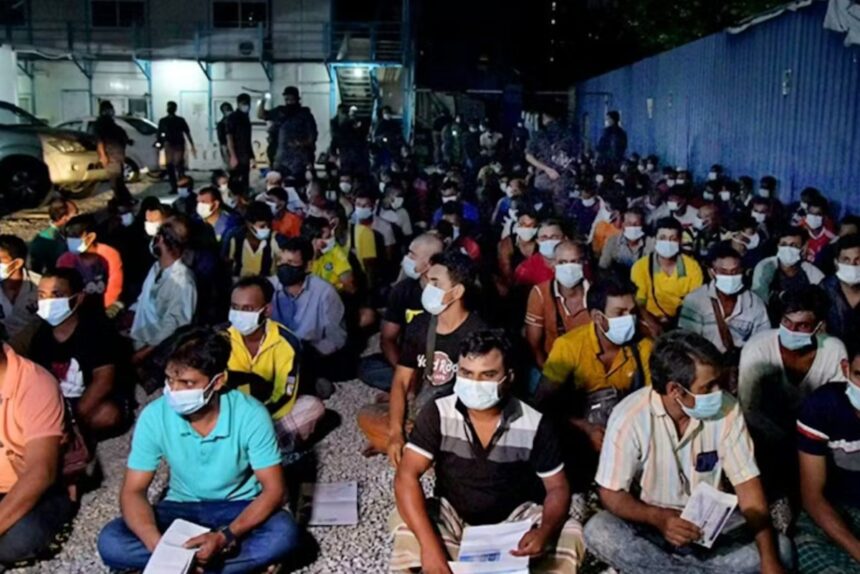
I met a Bangladeshi garment worker in Dhaka two years ago who described paying a recruitment agent the equivalent of eight months’ wages for a factory job in Jordan. She worked the first year just to clear that debt. When I asked if she’d reported it, she laughed. Report it to whom? Her employer facilitated the arrangement. The government looked the other way. Her passport was held by the factory until the debt cleared.
Stories like hers are why 27.6 million people remain trapped in forced labour globally. Structural incentives reward exploitation. Enforcement has been spotty and slow. Companies that genuinely work to eliminate forced labour from supply chains deserve recognition. Many don’t bother.
Trump’s tariff threat, whatever its underlying motive, changes the calculus. Governments now have direct economic incentives to police exporters. Exporters face exclusion from the world’s largest consumer market unless they demonstrate clean supply chains. Migrant workers might finally see the protections on paper enforced in practice.
Sustainability professionals and trade lawyers need to work together now, not separately. For too long, labour rights fell under corporate social responsibility teams with limited influence. Trade compliance sat in legal departments focused on tariff codes and customs procedures. Forced labour has become an unfair trade practice under US law. That merges two previously distinct domains.
The cynic in me knows this could collapse into performative audits and falsified paperwork. The reporter in me has seen too many workers cheated to dismiss any lever that might improve their conditions. When the US government engages on forced labour, lives improve. Rights expand. Conditions get better. Pay becomes fairer.
Whether this investigation serves primarily as tariff justification or genuine human rights enforcement may be irrelevant. The mechanism exists now. Governments and companies face real consequences for ignoring forced labour in supply chains. That recruiter in Kuala Lumpur fielding anxious calls from exporters suggests the pressure is working.
Sixty governments are under investigation. Millions of workers stand to benefit if enforcement follows. Companies unwilling to do the hard work of cleaning supply chains will pay, literally. Those that do might discover sustainability and profitability align more than they assumed.