On a cold evening in Baltimore last month, Janet Rodríguez stood at her local pharmacy counter, staring at a price she couldn’t afford. Her monthly insulin prescription had crept up again. The pharmacist, apologetic, handed her a manufacturer’s coupon downloaded from a website she’d never heard of. This is the fragile bargain millions of Americans now navigate—and it may be about to get worse.
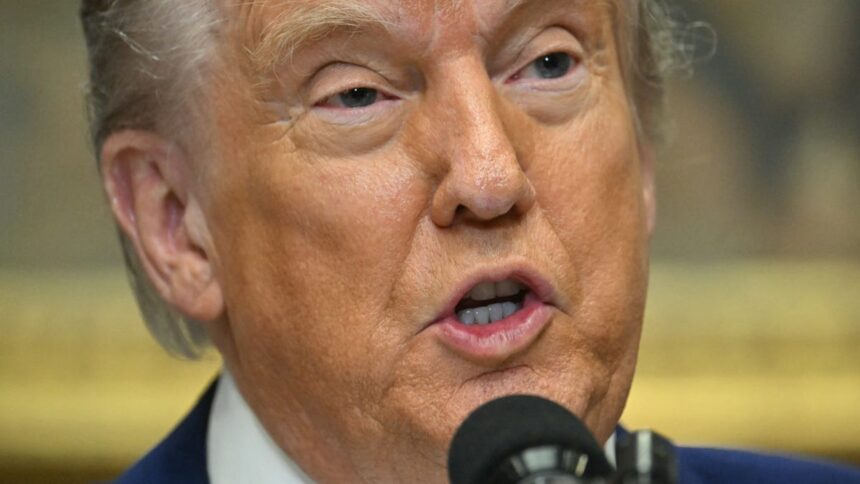
President Donald Trump’s sweeping tariff order, signed April 2, threatens to upend pharmaceutical pricing in ways that could deepen the crisis for people like Rodríguez. The plan assesses a 100 percent tariff on certain imported brand-name drugs unless manufacturers shift production stateside and agree to “most favored nation” pricing, matching what other wealthy countries pay. On paper, it sounds like leverage. In practice, watchdogs warn it could become a tax on the sick.
The order gives drugmakers two off-ramps. Companies that commit to relocating production to the U.S. will face a 20 percent tariff during the transition period. If they also agree to most favored nation pricing, the tariff drops to zero. But if production remains offshore after four years, the full 100 percent duty kicks in. Larger pharmaceutical companies face a July 31 deadline to commit. Smaller firms have until September 29.
Merith Basey, who leads Patients for Affordable Drugs, is skeptical. She notes that most favored nation deals announced so far have not delivered broad savings to everyday patients. “What Americans need is structural reform that will be long lasting,” Basey said. Instead, the administration is offering temporary, voluntary agreements that remain largely opaque. And for families already stretched thin by rising grocery bills and housing costs, even a modest increase in monthly medication expenses can force impossible choices.
The administration has framed these tariffs as economic patriotism, a shield against supply chain collapse during geopolitical chaos. A senior White House official pointed to the fact that roughly 53 percent of patented drugs distributed in the U.S. are made abroad. The argument is that reliance on foreign production leaves the country vulnerable during pandemics or trade wars. There’s truth in that. But the cure may hurt as much as the illness.
Trump has brokered most favored nation deals with 16 of the 17 major drug manufacturers contacted earlier this year. Regeneron, the lone holdout, says it expects to finalize terms soon. Yet the details of these agreements remain secret. The administration launched a website, TrumpRx, listing prices for fertility drugs, insulin, weight-loss medications, and more. It doesn’t process insurance claims. Instead, it redirects cash-paying consumers to manufacturer coupons or discount portals, a patchwork solution that bypasses the insurance infrastructure most people rely on.
This matters because most Americans with health coverage will continue using their plan’s pharmacy benefits, not coupon codes. A March survey from KFF, a nonpartisan health policy organization, found that six in ten Americans worry about affording their prescriptions. Four in ten have skipped doses, rationed pills, or left medications unfilled to save money. Those numbers were recorded before the tariff order took effect.
Antonio Ciaccia, a drug pricing expert and CEO of 46brooklyn, laid out the math bluntly. If pharmaceutical companies face a 100 percent tariff, they’ll need to at least double their prices to cover the cost. Those increases will land hardest on consumers and private insurers. Government programs like Medicare and Medicaid have inflation penalties that limit how much drugmakers can raise prices without financial consequence. That leaves the private market to absorb the shock. “We end up paying for it one way or another,” Ciaccia said.
There are notable exclusions. Generic drugs, which account for about nine out of ten prescriptions filled in the U.S., are exempt from the tariff. That’s a relief for the generics industry, which operates on thin margins and depends heavily on overseas ingredient sourcing. John Murphy III, president of the Association for Accessible Medicines, praised the administration for understanding the “unique aspects” of the generic supply chain and the potential harm tariffs could inflict. Countries with existing trade agreements—the European Union, Japan, South Korea, Switzerland, and the United Kingdom—are also exempt.
But brand-name drugs remain the focus, and they’re the ones driving medical debt and financial strain. These are the medications for cancer, autoimmune diseases, diabetes, and rare conditions. They’re the drugs people can’t substitute or skip without serious consequences. And they’re the products most vulnerable to price shocks under this policy.
The tension here is genuine. The U.S. does need more resilient pharmaceutical supply chains. During the early months of the COVID-19 pandemic, shortages of basic medications exposed how fragile global logistics had become. Relocating production could create jobs and reduce dependency. But tariffs are a blunt instrument. They don’t distinguish between lifesaving drugs and lifestyle medications. They don’t account for the time it takes to build sterile manufacturing facilities or train specialized workforces. And they don’t prevent companies from passing costs directly to patients.
What’s missing is transparency. Without knowing the terms of these most favored nation agreements, it’s impossible to assess whether they’ll deliver real savings or simply serve as political theater. And without structural reforms—like allowing Medicare to negotiate drug prices more broadly, or capping out-of-pocket costs across all insurance types—voluntary deals remain fragile and reversible.
Back in Baltimore, Rodríguez used the coupon. It brought her insulin down to something she could manage this month. But she knows the discount could vanish anytime. And if tariffs push prices higher, even coupons may not be enough. For now, she’s one of millions caught between policy ambition and personal survival, hoping that the next drug pricing announcement doesn’t make her medicine unreachable.