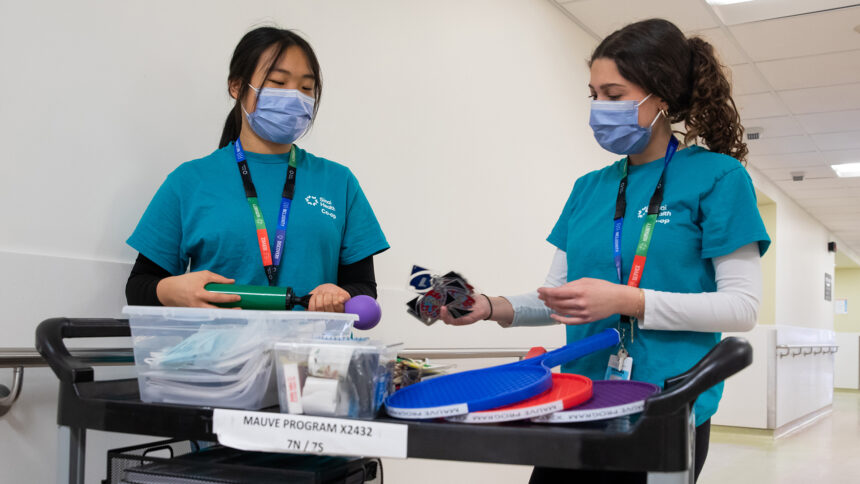
A quiet revolution is unfolding in the corridors of Toronto’s Mount Sinai and Hennick Bridgepoint hospitals. Teenagers in bright T-shirts navigate wards, assist surgical teams and sit with elderly patients navigating dementia. They are not the children of doctors or nursing school recruits. They are youth from Toronto Community Housing, stepping into clinical spaces many never imagined they could enter.
The partnership between Sinai Health and the Toronto Community Housing Corporation has quietly become one of the more practical experiments in health workforce development. Over the summer of 2025, eleven young people spent July and August embedded in hospital departments, from the Neonatal Intensive Care Unit to the Medical Device Reprocessing Department. The program offers more than resumé padding. It opens a door that for many remains locked.
Dr. Gary Newton, President and CEO of Sinai Health, frames the initiative as mutual investment. Partnerships like this one open doors early for young people to see themselves as future health-care leaders, he said. That benefits all of us: the students, our teams and the patients we serve. The language is institutional, but the stakes are tangible. Canada faces persistent shortages in health human resources, particularly among practitioners from equity-deserving communities. Programs like this one aim to shift the pipeline at the source.
Stacy Golding, a Community Service Coordinator with TCHC, is blunt about what access means. Programs like this give our learners early access to hands-on health-care experiences, an opportunity to see themselves in spaces that for many may feel unattainable, she said. We’re talking about low-income, racialized individuals. They aspire to be in this space, but oftentimes they think they can’t be. Access is everything because we know that when given opportunities, our learners can thrive.
The students do not shadow passively. They apply, interview and commit to four to six hours daily, Monday through Friday. Once placed, they join care teams in real roles. In the Medical Device Reprocessing Department, they help prepare surgical instruments for elective procedures. In patient units, they guide visitors, walk patients to diagnostics and provide warm blankets. These are not headline tasks, but they matter. A confused patient calmed. A family directed quickly to the right floor. A nurse freed to chart.
Angel Lau, an elder life specialist in the MAUVE program—Maximizing Aging Using Volunteer Engagement—sees the value in exposure. What the volunteers really get out of it is patient interaction, the front-line experience, Lau said. If they’re really interested in doing frontline work, occupational therapy, physical therapy, nursing, things like that, it really gives them a good taste of what to expect.
The learning extends beyond procedure. Students participate in fire evacuation drills with Toronto Fire Services. They observe nerve blocks and births. They sit in Q-and-A sessions with hospital leadership, asking about medical school, alternative careers and what it takes to lead in health systems. The curriculum is improvised, responsive and grounded in the rhythms of a functioning hospital.
Theresa Shiel, Director of Volunteer Resources at Sinai Health, emphasizes that discovery works both ways. These students don’t just learn about health care, she said. They learn about who they are, how they handle sadness, loneliness, codes and situations they will never see in a classroom. She recalls a co-op student who dreamed of becoming a physician but fainted at the sight of blood. He’s now a top-notch lawyer who works with hospitals, she said. It’s an opportunity for students to learn that working in health care doesn’t always mean working as a physician.
That flexibility matters in workforce planning. Canada graduated roughly 3,000 medical students annually as of recent data, yet the health system employs hundreds of thousands across dozens of professions. Administrators, technologists, allied health workers and support staff are essential. Early exposure helps young people understand the breadth of opportunity, not just the prestige roles. Some return as regular volunteers or staff. Others pivot entirely. Shiel considers both outcomes valid.
The program is structured like Sinai Health’s year-round co-op placements but reserved exclusively for youth living in TCHC properties. This creates a deliberate on-ramp for communities historically underrepresented in health professions. We wanted to give these students a real chance to get their foot in the door at a well-known hospital, Shiel said. The framing is modest, but the intent is strategic. Representation in health care affects patient trust, care quality and cultural competence.
The partnership reflects broader questions about equity in professional development. Who gets internships? Who builds networks early? Whose resumé includes clinical experience before university applications? For many students in subsidized housing, unpaid summer work is a luxury. This program removes that barrier. It also signals institutional commitment, not just rhetoric. Sinai Health allocates staff time, orientation resources and supervision. TCHC coordinates recruitment, screening and support. Both organizations invest because the return is long-term.
There are limits to what a summer program can achieve. Systemic barriers in post-secondary admissions, tuition costs and precarious housing remain. But early exposure can shift perception. It normalizes professional aspiration. It builds confidence. A teenager who has navigated a hospital code, comforted a palliative patient or prepped a surgical tray knows something tangible about resilience and competence. That knowledge travels.
The model also addresses a practical constraint in health human resources. Hospitals need volunteers. Volunteers need meaningful work. The partnership ensures both. Students contribute real labour in exchange for real learning. That reciprocity distinguishes the program from tokenism. It’s not an assignment, Shiel said. It’s a partnership between Sinai Health and the student about how much they want to commit and learn. If they’re willing to give, we want to give back.
As health systems across Canada grapple with staffing shortages and equity gaps, partnerships like this one offer a quiet template. They are not flashy policy interventions. They do not require legislative change. They require institutions willing to allocate resources and community organizations willing to connect young people to opportunity. The work is incremental, localized and deeply practical. It may also be one of the more effective ways to build a health workforce that reflects the patients it serves.