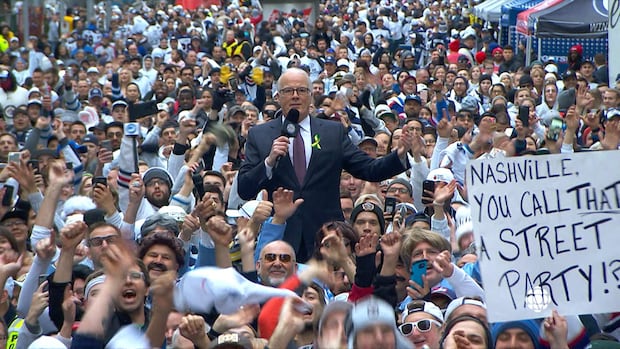
Scott Oake is stepping away from the broadcast booth. After more than five decades telling Canada’s hockey stories, the voice many grew up with is retiring.
He made it official during Saturday’s After Hours segment. The timing feels right to him. The Stanley Cup playoffs will mark his final run.
“Fifty-plus years in this business is more than anyone should have to take of me,” Oake said on air. He smiled when he added it was about all he could take of himself too.
There’s something honest about that kind of goodbye. No fanfare. Just a veteran knowing when the moment arrives.
Oake will host his last After Hours on April 11. That’s the final Saturday of the NHL regular season. He hopes viewers tune in for what he called his “last chance to get it right.”
The career started far from the bright lights. Oake began as a journalist in St. John’s, Newfoundland and Labrador. He moved west to Winnipeg in the late 1970s to pursue sports broadcasting.
A decade later, Hockey Night in Canada came calling. Oake became a fixture at rinks across the country. Generations of fans know his voice the way they know the anthem before puck drop.
But his public life extended beyond play-by-play and post-game analysis. Oake became an advocate for addiction recovery after losing his son Bruce in 2011. The 25-year-old died from an accidental overdose.
That tragedy reshaped how Oake used his platform. He spoke openly about grief and the need for better supports. His advocacy reached people far beyond the hockey world.
The recognition followed. Oake was inducted into the Manitoba Hockey Hall of Fame in 2015. He received the Order of Manitoba and the Order of Canada.
Sportsnet released a statement congratulating him on an extraordinary career. The network called him a trusted voice and steady presence for more than three decades.
“Through his thoughtful reporting, genuine compassion, and unwavering professionalism, he has helped tell the stories that define hockey,” the statement read. They thanked him for his contributions to Canadian broadcasting.
CBC News reached out to Oake on Sunday. He remains Winnipeg-based, rooted in the community that watched him grow into one of the country’s leading sports broadcasters.
What stands out is how Oake framed his departure. He’s leaving on his own terms. That matters in a profession where many don’t get to choose their exit.
There’s no bitterness in his words. Just a recognition that careers have arcs. His has been longer and more impactful than most.
The playoffs will feel different knowing it’s his last time. Viewers will listen a little closer. They’ll notice the cadence they’ve taken for granted.
Hockey broadcasting in Canada will continue without him. But it won’t sound quite the same. Oake brought something specific to the booth—a blend of knowledge, warmth, and lived experience.
His advocacy work will likely continue. The issues he championed don’t retire when he does. Families struggling with addiction still need voices willing to speak plainly about loss and recovery.
April 11 is circled on many calendars now. Fans want to be there for the final show. They want to say goodbye to someone who felt like part of their Saturday nights.
Oake’s career spanned massive shifts in how Canadians consume sports. He adapted without losing what made him effective. That’s rare in broadcasting.
The tributes will pour in over the coming weeks. Former colleagues and athletes will share stories. Viewers will post their memories online.
But the most fitting tribute might be the simplest one. Tuning in on April 11 and listening one last time. Letting a familiar voice guide you through the game.
Oake said he hopes people can be with him for that final broadcast. Based on the response so far, that won’t be a problem.
Fifty years is a long time to do anything. To do it well, with consistency and grace, is something else entirely. Oake managed both.
When the playoffs end and his microphone goes silent, Canadian hockey will carry on. The game always does. But the soundtrack changes when voices like his step away.
He’s leaving on his terms. That phrase keeps coming back. In a business that doesn’t always allow for graceful exits, Oake found his own.
The final weeks will be bittersweet for many. There’s gratitude mixed with sadness. That’s what happens when someone becomes part of your routine for decades.
Oake’s legacy isn’t just in the broadcasts. It’s in how he used his position after personal tragedy. He turned grief into purpose.
The hockey community is better for having had him. So are the families touched by his advocacy work. Both will miss his presence.
April will come quickly. The regular season will wrap. The playoffs will begin. And somewhere in that familiar chaos, Scott Oake will sign off.
It won’t be loud. It probably won’t be dramatic. But it will matter to anyone who ever listened.