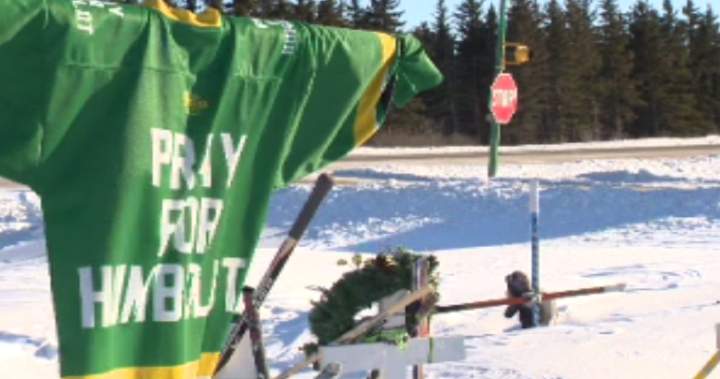
Eight years after a semi blew through a stop sign and slammed into a bus carrying the Humboldt Broncos, the grief hasn’t lifted and neither have all the questions.
Sixteen people died that April day north of Tisdale. Thirteen more were hurt. The tragedy tore through Saskatchewan and beyond, forcing hard conversations about commercial driver training and who’s really watching the roads.
Scott Thomas lost his son Evan in the crash. He’s been pushing for changes ever since. The collision, he says, didn’t have to happen at all.
“The training was bad, the employer was bad and the oversight was bad,” Thomas said recently. “And all three of those things led to the tragedy we went through.”
Saskatchewan did respond. A year after the crash, the province rolled out Mandatory Entry Level Training, known as MELT. The program set a floor for new Class 1 drivers before they could take their road test.
SGI runs the program. It requires 121.5 hours of training before a driver can earn a Class 1 licence. That breaks down to 47 hours of classroom work, 17.5 hours in-yard, and 57 hours behind the wheel.
Those standards came out of talks with other provinces, trucking companies, and driving instructors. SGI says Saskatchewan’s version goes beyond the national minimum.
The Crown insurer also toughened up road tests. New maneuvers now include backing into simulated loading docks, meant to mimic what drivers face in real commercial work.
But here’s where the system gets fuzzy. SGI says it’s up to individual trucking companies to provide on-the-job training after MELT is done.
“Especially specific to each carrier, different load types, different working conditions, things along those lines, provide that additional training,” said Matt Britton, senior director at SGI’s Driver Development and Vehicle Programs.
Not every company does that, though. And critics say the gaps are showing up in real time.
Thomas points to recent overpass strikes across the province as proof that something’s still not working. Drivers who complete MELT but get no follow-up training can still end up in situations they’re not ready for.
“I see stuff like this happening, overpasses being hit, I keep coming back to the same realization that we’re in a worse situation now than we were back then,” Thomas said.
Some trucking outfits go well beyond MELT. Others don’t. Thomas thinks Saskatchewan should look at graduated licensing for commercial drivers, similar to trades apprenticeships.
“Much like carpenters and electricians, they have an expanded scope as they learn,” he said.
The Saskatchewan Trucking Association finds that idea worth exploring. Executive director Susan Ewart says the real problem is that a Class 1A licence is all you need to drive any commercial vehicle, no matter your experience level.
“So, if I got my Class 1A today and a week from now, I could be put in a truck and said, ‘Here, take this load to Vancouver,’ and I am probably not ready to do that,” Ewart said. “So we need to do a better job of onboarding.”
She suggests a system tied to equipment. New drivers could start with basic rigs, then move up as they gain experience. Eventually they might qualify for dangerous goods or long combination vehicles.
“And as you progress through your career, maybe you get to haul dangerous goods at some point, or you might be able to be a long combination vehicle driver,” Ewart said.
The driver in the Humboldt crash, Jaskirat Singh Sidhu, pleaded guilty. That meant no trial. At the time, Thomas was relieved. It spared families from reliving the horror in a courtroom.
But looking back, he thinks the plea deal left too many questions unanswered. Without a trial, key details about training, employer oversight, and regulatory gaps never came out in public.
Thomas is now weighing whether to call for a coroner’s inquest. He believes the three areas that failed in 2018—training, employers, and government oversight—are still failing today.
“I just think there’s issues that haven’t been addressed by all three areas, education, employers and oversight, which is the government,” Thomas said. “They’re all still dropping the ball.”
The conversation around road safety in Saskatchewan has shifted since that day in April 2018. MELT exists now. Road tests are harder. Some companies train better than they used to.
But the system still relies heavily on voluntary follow-through. A new driver can meet the legal minimum and still be sent out unprepared. There’s no requirement for mentorship, no phased approach to handling bigger loads or tougher routes.
Other provinces have faced similar reckonings. Ontario introduced its own entry-level training after years of pressure from safety advocates. British Columbia followed. The patchwork of standards across Canada complicates things for an industry that crosses borders daily.
What makes Saskatchewan different is the weight of what happened here. Sixteen lives lost in a single crash doesn’t just make headlines. It reshapes how people think about who’s driving next to them on the highway.
For Thomas and other families, the question isn’t whether MELT was a step forward. It was. The question is whether it’s enough, and whether the people meant to enforce standards are actually doing it.
A coroner’s inquest could shine light on what’s still broken. It could also reopen wounds that never really closed. But for Thomas, the risk might be worth it if it leads to real accountability.
Because eight years later, the roads are still dangerous. Drivers are still underprepared. And another preventable tragedy is still possible.