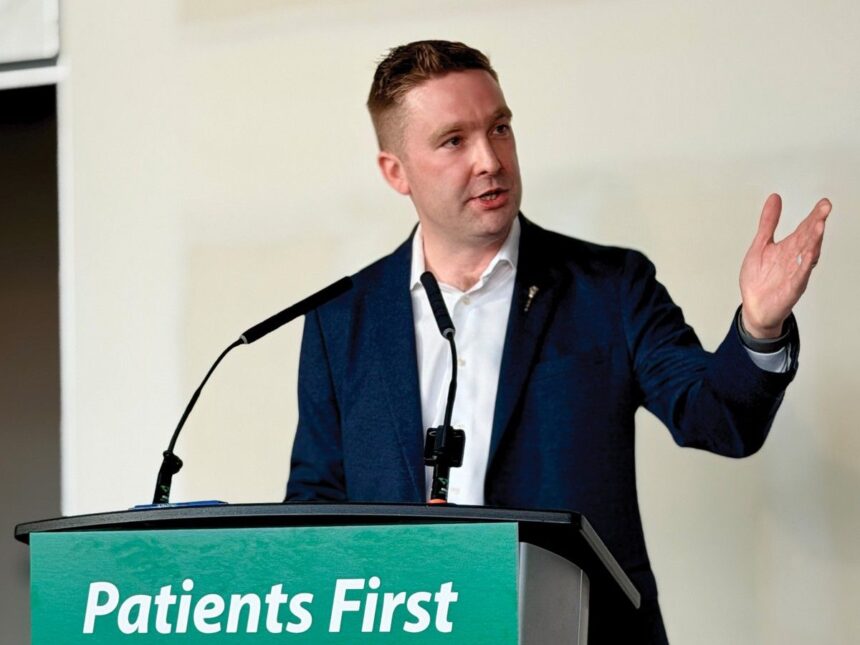
On a grey morning in March, Regina’s health policy corridors buzzed with familiar language. Saskatchewan had just unveiled its Patients First Health Care Plan, backed by an $8.4-billion slice of a deficit-heavy provincial budget. The title alone carried echoes. A decade and a half earlier, a Patient First Review had made similar promises. The problems, it seemed, had outlasted the solutions.
Tom McIntosh leaned back in his office at the University of Regina, where he teaches politics and international studies. He’d seen this cycle before. Years ago, he worked as a key researcher for Roy Romanow’s Commission on the Future of Health Care in Canada, an 18-month dive into whether the country’s system could survive its own weight. The commission raised questions that still hang in the air today. Saskatchewan’s newest plan, McIntosh suggested, was wrestling with ghosts that never quite left.
The 2026-27 budget arrived with an $819-million projected deficit, a number that landed heavy but not unexpected. Health care claimed the lion’s share of attention and dollars. Training expansion became the centrepiece. Budget documents promised a $34-million boost for Saskatchewan’s post-secondary institutions this year, with annual three per cent bumps over the next four. Another $4.1 million would fund 20 new physician seats and 26 nurse practitioner spots in the coming academic year. Programs in respiratory therapy, occupational therapy, and speech language pathology would receive $9.9 million to launch this fall. The University of Saskatchewan’s physician assistant program, still in its early days, also got a nod.
Health Minister Jeremy Cockrill spoke on budget day about rebranding what a health career in Saskatchewan could mean. The province’s health care recruitment agency would expand its reach, he said, casting a wider net for talent. It sounded hopeful. It also sounded like a bet that more seats in lecture halls would eventually translate to full clinics in small towns.
But McIntosh wasn’t convinced that training alone would solve the riddle. Saskatchewan can educate doctors, he noted. It can graduate them with degrees and good intentions. What it struggles with is making them stay. The province’s population spreads thin across vast stretches of prairie and forest. Selling the rural lifestyle that comes with many family physician jobs becomes a hard pitch when competing against urban centres with more resources and less isolation.
The numbers tell part of the story. A recent Angus Reid poll found that 22 per cent of Saskatchewan residents lack a family doctor, a figure that sits above the national average of 18 per cent. On saskdocs.ca, 91 family physician job postings sit unfilled. The province has hired 516 health care professionals through its Rural and Remote Recruitment Incentive, a program designed to lure workers to the places that need them most. There are also $2,000 bursaries for students finishing unpaid clinical placements, offered in exchange for a one-year commitment to work in rural or northern Saskatchewan.
It’s a start, but McIntosh argued that retention requires more than higher wages or one-time incentives. It demands structural changes that reshape how health professionals experience their work. The fee-for-service model, dominant across Canada, rewards physicians for volume. See more patients, earn more money. The logic is simple, but it clashes with the reality of modern primary care, where patients arrive with layered, complex needs that don’t fit neatly into 10-minute appointments.
An optimal system, McIntosh suggested, would incentivize the time necessary to truly address those needs. In 2024, Saskatchewan opened applications for a transitional payment model, a middle ground between fee-for-service and a blended capitation model that accounts for the number of patients on a physician’s roster. The shift emerged from recommendations by the Primary Care Compensation Working Group, a body tasked with imagining alternatives.
Cockrill, when asked about the province’s move toward publicly-funded, privately delivered surgeries, leaned on the fee-for-service model as a fixture. He pointed to fee-for-service doctors as private businesses operating within a publicly funded framework, a setup he said wasn’t going anywhere. But McIntosh countered that newly graduated physicians might not share that enthusiasm. Many don’t want to run a small business on top of practicing medicine. They want to focus on patients, not payroll and overhead.
The tension sits at the heart of Saskatchewan’s health care puzzle. Training more doctors matters, but if the system they enter feels unsustainable or misaligned with how they want to work, the province risks watching them leave for places that offer something different. Urban centres, neighbouring provinces, even other countries all compete for the same graduates.
McIntosh’s words carried a weight of lived experience. He’s watched governments announce plans, allocate funds, and promise change. He’s also watched the same issues resurface with different labels. The perennial problems, as he called them, resist easy fixes. They demand patience, creativity, and a willingness to rethink incentives from the ground up.
Saskatchewan’s health budget reflects a genuine attempt to address long-standing gaps. The dollars are real, the programs tangible. But the harder question remains: Can a province reshape a system while its population is scattered and its workforce stretched thin? Can it make rural practice appealing enough to compete with the pull of cities?
The answer won’t arrive in a single budget cycle. It will unfold over years, in small towns where clinics open or close, in emergency rooms that stay staffed or struggle, in the decisions of individual doctors weighing where to build their lives. McIntosh’s message wasn’t pessimistic, but it was clear. Training is necessary. Retention is the real work. And without the right incentives, even the best-intentioned plans risk becoming another chapter in a familiar story.