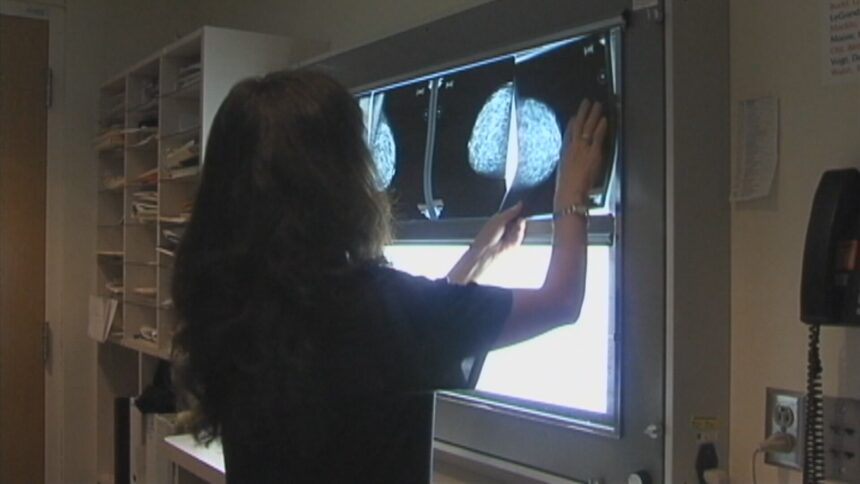
Article – The imaging clinic in Calgary has become a lifeline for dozens of Saskatchewan women who couldn’t afford to wait. When Angela Morrison got the call last fall that her mammogram showed something concerning, she expected the next step would come quickly. Instead, she joined a growing list of people trapped between fear and a healthcare system buckling under demand.
Morrison’s story is not unusual in Saskatchewan, where breast cancer diagnostics have lagged dangerously behind need. But a cross-border initiative launched earlier this year is changing the math. By sending patients to Alberta for imaging and diagnostic procedures, the province has reduced its breast cancer waitlist by eighty-seven percent. The numbers suggest relief, but they also point to a deeper fracture in how prairie provinces deliver care to women.
Saskatchewan has struggled to build capacity for breast health services even as demand climbs. Wait times for follow-up imaging after abnormal mammograms stretched beyond acceptable windows, raising the risk that early-stage cancers would progress undetected. The province turned to Calgary as a pressure valve, contracting private clinics to absorb overflow cases and clear the backlog.
Kimberly Carson, CEO of Breast Cancer Canada, sees the arrangement as pragmatic. Healthcare systems across the country are strained, she notes, and waiting for a perfect solution can cost lives. Screening and early diagnosis change survival outcomes dramatically. If Alberta can provide that window when Saskatchewan cannot, the trade-off makes sense in the short term. Carson commends any government willing to take unconventional steps to address wait times, even if those steps involve paying another province to do the work.
But the initiative has sparked political tension. Vicki Mowat, deputy leader of Saskatchewan’s NDP, argues that sending patients out of province is a costly admission of failure. Estimates suggest the province pays up to ten times more per patient for out-of-province diagnostics than it would for equivalent care delivered at home. Mowat frames this as a question of priorities, pointing to what she calls systemic underinvestment in women’s health and provincial infrastructure.
Health Minister Jeremy Cockrill counters that the government is doing whatever it takes to meet patient need. He has pledged to turn over every rock necessary to ensure timely care, and points to recent efforts to expand diagnostic capacity within Saskatchewan. The province has added imaging equipment and lowered the age threshold for publicly funded mammograms, aiming to catch cancers earlier and reduce future bottlenecks.
The debate reflects a tension common across Canada’s healthcare landscape. Provincial budgets are finite, and building new capacity takes time. Training technologists, purchasing equipment, and expanding clinic hours don’t happen overnight. In the meantime, patients face impossible choices: wait and risk progression, pay out of pocket, or accept care hundreds of kilometers from home.
For women like Morrison, the Alberta option felt like both a relief and a reminder of something broken. She made the drive to Calgary on a Tuesday morning in late winter, the highway stretching flat and white under low cloud. The clinic was efficient and professional. She was back in Saskatchewan by evening. But the experience left her wondering why her home province couldn’t offer the same service.
Breast cancer is the most commonly diagnosed cancer among Canadian women, with nearly thirty thousand new cases expected this year according to the Canadian Cancer Society. Early detection is the strongest predictor of survival, which makes timely access to imaging and biopsy services a matter of life and death. Delays measured in weeks can mean the difference between a lumpectomy and a mastectomy, between localized disease and metastasis.
Saskatchewan’s reliance on Alberta highlights a broader pattern in Canadian healthcare. Provinces have long managed surges by sending patients across borders for surgeries, imaging, and specialized treatments. The practice is not new, but its scale has grown as systemic pressures deepen. COVID-19 accelerated existing trends, draining resources and pushing waitlists to historic highs.
Carson emphasizes that out-of-province care should not be dismissed simply because it crosses a boundary. What matters, she argues, is whether patients receive the right care at the right time. Geography is secondary to outcome. Still, she acknowledges the emotional and logistical burden placed on patients who must travel for care that should be local.
The financial optics are harder to defend. Paying premium rates to offload patients suggests a failure to invest in domestic capacity. It raises questions about long-term planning and whether short-term fixes delay the structural changes needed to sustain public healthcare. Mowat and others argue that the money spent on out-of-province contracts could build permanent capacity at home, training staff and purchasing equipment that serves Saskatchewan women for years to come.
Cockrill insists the government is doing both. The Alberta initiative is a bridge, not a destination. Investments in local diagnostics are underway, and the minister points to recent progress as evidence of commitment. The waitlist reduction, he argues, proves that the strategy is working.
But the deeper question remains: why did the waitlist grow so large in the first place? Saskatchewan is not uniquely challenged among Canadian provinces, but it also did not face a sudden, unpredictable surge. Breast cancer incidence trends have been clear for years. The backlog reflects systemic underpreparation, a failure to scale services in step with population health needs.
Women across the province are watching closely. Some are grateful for the Alberta option and the faster access it provides. Others see it as a costly bandage on a wound that requires stitches. Both perspectives hold truth. Healthcare is always a negotiation between ideal and possible, between what should be and what is.
Morrison got her results two weeks after the Calgary appointment. The mass was benign. She felt lucky, but also angry that luck had to be part of the equation. She knows other women still waiting, caught in the gap between policy announcements and actual appointments. For them, eighty-seven percent might as well be a number on a page. What matters is the call that comes, or doesn’t, and what happens next.