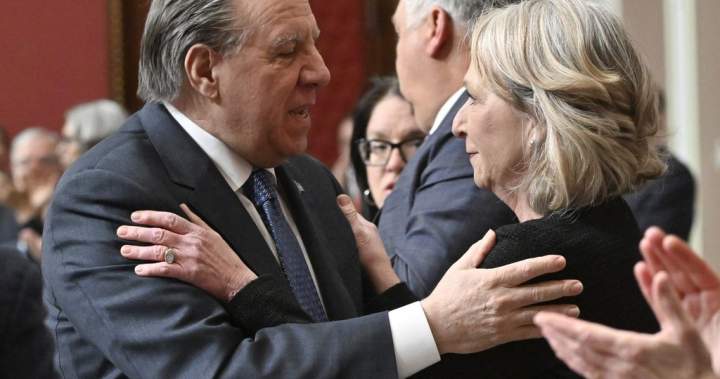
François Legault walked into the Quebec legislature this week knowing the calendar had finally caught up with him. After years of holding the premier’s chair, this sitting marks his final appearance in that role. The National Assembly takes a break next week, and by mid-April, someone else will carry the title.
The Coalition Avenir Québec will gather on April 12 to pick its next leader. Either Christine Fréchette or Bernard Drainville will take the oath shortly after that weekend convention wraps. Legault isn’t disappearing entirely—he’ll stay on as an elected member until voters head to the polls in October. But the job that defined his public life for six years is about to belong to someone else.
It’s a strange rhythm for someone who built a party from scratch. Legault co-founded the CAQ back in 2011, years after leaving the Parti Québécois and its sovereignty mission behind. Before that, he made his name in business as one of the people behind Air Transat. Politics came calling in 1998 when Lucien Bouchard was premier. Legault joined the PQ cabinet and climbed quickly. But sovereignty never sat right with him long-term, so he left and started something new.
The CAQ didn’t win right away. It took patience and message discipline. By 2018, voters were ready for a change. Legault’s party swept into power, ending years of Liberal rule. The promise was simple: focus on the economy, cut immigration, and keep Quebec’s identity strong. No referendum talk. No constitutional fights. Just governance.
For a while, that formula worked brilliantly. Legault’s approval ratings soared during the COVID-19 pandemic. Quebecers watched him deliver daily briefings with a steady hand. He didn’t sugarcoat the deaths or the strain on hospitals. He imposed some of the strictest lockdowns in the country and defended them without apology. Public health became his political armor.
But the armor eventually cracked. As the pandemic faded, other issues moved to the front. Immigration became a flashpoint. Legault clashed repeatedly with federal Liberals over how many newcomers Quebec should accept. He argued the province couldn’t integrate people fast enough without losing its French character. Ottawa disagreed, and the tension between the two levels of government turned personal at times.
Then there was Bill 21, the secularism law that banned public employees in positions of authority from wearing religious symbols. Teachers, police officers, judges—anyone with state power couldn’t wear a hijab, turban, or crucifix. The law sparked protests and court challenges. Civil liberties groups called it discriminatory. Legault stood firm, insisting it protected Quebec’s secular values. The federal government refused to intervene, but plenty of Liberal MPs made their opposition clear.
Those fights defined Legault’s later years in office. He wasn’t just managing a province—he was defending a vision of Quebec that didn’t always align with the rest of Canada. That made him popular at home and controversial outside it. His base loved the defiance. Critics saw it as divisive.
Now the CAQ moves forward without him at the helm. Fréchette and Drainville represent two different pathways for the party. Fréchette, the current deputy premier, offers continuity and a calm governing style. Drainville, a former PQ minister who crossed over to the CAQ, brings energy and a sharper edge. Both have defended Legault’s legacy during the leadership race, but they’ve also hinted at course corrections.
The convention itself will be closely watched. CAQ members haven’t had to make this choice before—Legault was the founder, the face, the reason many joined. Picking someone else means redefining what the party stands for beyond one man’s brand. That’s not always an easy transition.
Legault’s departure also raises questions about what comes next for him personally. He’s staying in the legislature until October, but that role will feel different. Sitting as a backbench MNA after running the government is a humbling shift. Some former premiers fade quietly. Others stay loud. Legault hasn’t said much about his plans, but it’s hard to imagine him staying silent for long.
What’s undeniable is that he changed Quebec politics. He proved a third option could work. For years, voters chose between federalists and sovereignists. The CAQ offered something else—a nationalist party that didn’t want independence. That redrew the map. The Liberals lost their lock on the federalist vote. The PQ faded into irrelevance. Québec Solidaire gained ground on the left, but the CAQ held the center.
Legault also shifted the tone of governance. He didn’t pretend to be everyone’s friend. He made tough calls and defended them bluntly. That style won him admirers and enemies in equal measure. But it kept him in control for six years, which is no small feat in a province with a restless electorate.
As he takes his seat for the final time as premier, the weight of that history sits with him. The next chapter belongs to someone else. But the party, the policies, and the political landscape he leaves behind will carry his imprint for years. October’s election will test whether that’s enough to keep the CAQ in power. For now, Legault’s time at the top is ending, and Quebec is watching to see what comes next.