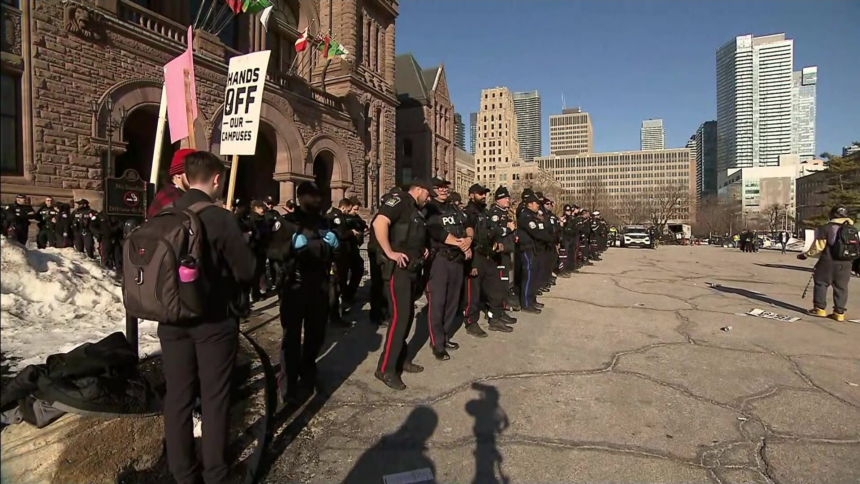
Another crowd is expected to gather outside Queen’s Park as MPPs return to the legislature this week. The focus? Changes to Ontario’s student financial aid system that critics say will make post-secondary education harder to afford for thousands of students across the province.
The rally comes as frustration builds over recent shifts to the Ontario Student Assistance Program. Student unions, advocacy groups, and education organizers have been vocal about their concerns since the provincial government announced adjustments to eligibility criteria and funding allocations. Now they’re bringing those concerns directly to the legislature’s doorstep.
OSAP has long been a lifeline for students who can’t afford tuition, books, and living expenses on their own. The program helpsbridge the gap between what families can contribute and what college or university actually costs. But recent policy tweaks have narrowed who qualifies and how much support they receive.
According to the Canadian Federation of Students, the changes will affect low-income and middle-class families the most. Spokesperson Amanda Cochrane told reporters earlier this month that students are already struggling with rising costs. “When you tighten eligibility or reduce grant amounts, you’re not just changing numbers on paper,” she said. “You’re deciding who gets to pursue education and who doesn’t.”
The modifications include stricter income thresholds and adjusted calculations for family contributions. Some students who previously qualified for grants may now only receive loans. Others might see their total aid package shrink, forcing them to work more hours or reconsider their enrollment plans altogether.
MPPs are aware of the backlash. Opposition parties have repeatedly pressed the government on these changes during Question Period. NDP education critic Chandra Pasma has called the reforms “short-sighted” and warned they will discourage young people from pursuing careers in fields like healthcare and education where Ontario desperately needs workers.
The government defends its approach by pointing to sustainability concerns. Officials argue that OSAP spending had become unsustainable and that reforms were necessary to ensure the program remains viable for future students. Minister of Colleges and Universities Jill Dunlop has emphasized the government’s commitment to supporting students while maintaining fiscal responsibility.
But that explanation hasn’t satisfied students or their families. Social media has been flooded with personal stories from young people who say they’re now reconsidering university or college plans. Some have shared screenshots of reduced aid packages. Others have posted about taking on extra shifts at work or delaying graduation to manage costs.
Ontario isn’t alone in grappling with student aid challenges. Provinces across Canada have wrestled with balancing accessibility and budget constraints. British Columbia recently expanded its grant programs, while Alberta has made its own adjustments to eligibility criteria. But Ontario’s sheer size means changes here affect more students than anywhere else in the country.
Statistics Canada data shows that student debt has been climbing nationally for years. The average graduate now leaves school owing around $28,000. That number jumps higher in Ontario, where tuition rates are among the steepest in Canada. When grants shrink and loans increase, that debt load grows even more.
The economic implications extend beyond individual students. Research from the Higher Education Quality Council of Ontario has shown that student debt affects major life decisions. Graduates with heavy loan burdens delay buying homes, starting families, or launching businesses. They’re more likely to leave the province for job opportunities elsewhere.
These protests aren’t just about money. They reflect broader anxieties about opportunity and fairness. Many students come from families where no one attended post-secondary school before. OSAP made that leap possible. When the program contracts, so do those pathways.
The rally organizers have been clear about their demands. They want the government to reverse the eligibility changes, restore grant amounts to previous levels, and commit to consulting students before making future policy shifts. They’ve also called for a comprehensive review of post-secondary funding that includes student voices at the table.
Whether the government will respond remains uncertain. Budget pressures aren’t going away, and the province faces competing demands for healthcare, infrastructure, and other priorities. But the political pressure is mounting. Student voters turned out in significant numbers during the last provincial election, and all parties are mindful of their influence.
Community colleges and universities have tried to stay neutral publicly, but privately many administrators acknowledge the challenges. Financial aid offices report increased stress and confusion among students trying to navigate the new rules. Some institutions have quietly expanded their own bursary programs to help fill gaps, but those resources are limited.
Faculty associations have also weighed in. The Ontario Confederation of University Faculty Associations recently issued a statement expressing concern that enrollment could drop if students can’t afford to attend. Empty seats in classrooms don’t just affect students. They impact institutional budgets, research capacity, and the broader knowledge economy.
This week’s demonstration will be the latest in a series of actions. Similar rallies have taken place in Toronto, Ottawa, and other cities across Ontario. Each one has drawn diverse crowds: high school students planning their futures, current undergrads juggling classes and jobs, recent graduates still paying down loans, and parents worried about their children’s prospects.
The political calculus is tricky for all parties. The government must balance fiscal discipline with accessibility. Opposition parties need to offer credible alternatives without appearing fiscally reckless. And students themselves are learning hard lessons about how policy decisions in distant legislatures can reshape their lives in immediate, tangible ways.
As MPPs file back into Queen’s Park, they’ll hear the chants and see the signs. Whether that translates into policy changes remains to be seen. But one thing is clear: the conversation about who gets to access higher education in Ontario is far from over.