I stepped off the plane at Dulles last week, and everyone from policy wonks to cab drivers had one question: are Trump’s tariffs going to bury this economy? It’s the kind of question that doesn’t have a clean answer, which makes it exactly the kind of story I chase. And right now, the Federal Reserve—normally allergic to political drama—is wading into it whether it wants to or not.
Jerome Powell, the central bank’s chairman, has now used two consecutive Federal Open Market Committee meetings to point a finger at President Trump’s tariff policy as a major driver of inflation. That’s rare. The Fed doesn’t usually single out White House decisions so bluntly, especially when the administration in question is known for its combative style. Powell’s message in March was unmistakable: inflation isn’t cooling because tariffs are keeping goods prices elevated, and that’s making the Fed’s job harder.
For the FOMC meeting on March 18, the decision to hold interest rates steady surprised no one. But Powell’s commentary during the press conference afterward sent ripples through financial and diplomatic circles. He explained that core inflation, measured by the Personal Consumption Expenditures index, remains stubbornly high largely due to goods-sector inflation. And the root cause, he said, is tariffs. Not just any tariffs—Trump’s tariffs, imposed in waves since his first term and expanded aggressively in recent months.
This wasn’t the first time Powell made that connection. Back at the January FOMC meeting, he had already noted that tariffs were “boosting” goods inflation even as services inflation cooled. But the March remarks went further, with Powell emphasizing that the Fed needs to see goods inflation drop as “the one-time effects on price of tariffs go through the system.” His tone suggested frustration. The central bank has been trying to engineer a soft landing for the economy, lowering rates cautiously after hiking them aggressively to tame post-pandemic inflation. Trump’s trade policy is complicating that choreography.
I spoke with a senior economist at the International Monetary Fund who requested anonymity due to the political sensitivity of the topic. “Powell is in a bind,” the economist told me. “He can’t ignore the data, and the data is screaming that tariffs are driving up costs. But every time he says it, he risks a public fight with the White House.” That tension is playing out in real time. Trump has already lashed out at Powell on social media, accusing him of being “politically motivated” and insisting that tariffs are necessary to protect American industry.
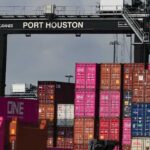
The White House’s position is that tariffs will eventually encourage domestic manufacturing, reducing U.S. dependence on foreign supply chains. But the Fed’s concern is more immediate: higher costs for businesses and consumers, which fuel inflation and force the central bank to keep interest rates elevated. That, in turn, slows economic growth and can tip the economy into recession. It’s a classic policy clash between short-term pain and long-term gain, except the pain is being felt now and the gain remains hypothetical.
Energy markets are adding another layer of complexity. Since the outbreak of renewed conflict involving Iran on February 28, oil prices have surged. Transportation costs have spiked, affecting everything from grocery bills to manufacturing inputs. The March inflation report, due on April 10, is expected to show a meaningful uptick in the prevailing inflation rate. Powell acknowledged this uncertainty but made clear that tariffs, not just energy shocks, are the primary culprit in goods inflation.
Historical data backs up Powell’s caution. A December 2024 study by four economists at the New York Federal Reserve examined the impact of Trump’s China tariffs imposed in 2018 and 2019. The study, published on Liberty Street Economics, found that businesses affected by those tariffs experienced declines in employment, labor productivity, sales, and profits through 2021. The negative effects were not temporary; they persisted even after the initial shock. “Tariffs had a lasting negative impact on corporate America,” the study concluded, a finding that contradicts the administration’s optimistic projections.
What struck me most about the Liberty Street analysis was its focus on input tariffs—duties on goods used to manufacture products domestically, like steel or semiconductors. The Trump administration has argued that tariffs will make U.S.-made goods more competitive and incentivize companies to relocate production stateside. But the Fed economists found that input tariffs actually hurt U.S. businesses by raising production costs. If a factory in Ohio needs imported steel to build machinery, and that steel is now 25 percent more expensive due to tariffs, the factory’s profit margins shrink. That forces the company to either raise prices, cut jobs, or accept lower returns. None of those outcomes help the broader economy.
I reached out to a trade consultant who advises multinational corporations on supply chain strategy. “The problem with broad tariffs is they don’t distinguish between intermediate goods and finished products,” he explained. “You end up punishing your own manufacturers as much as foreign competitors.” He cited the example of the automotive industry, where parts cross borders multiple times during production. A tariff on imported components raises costs at every stage, making the final product more expensive and less competitive globally.
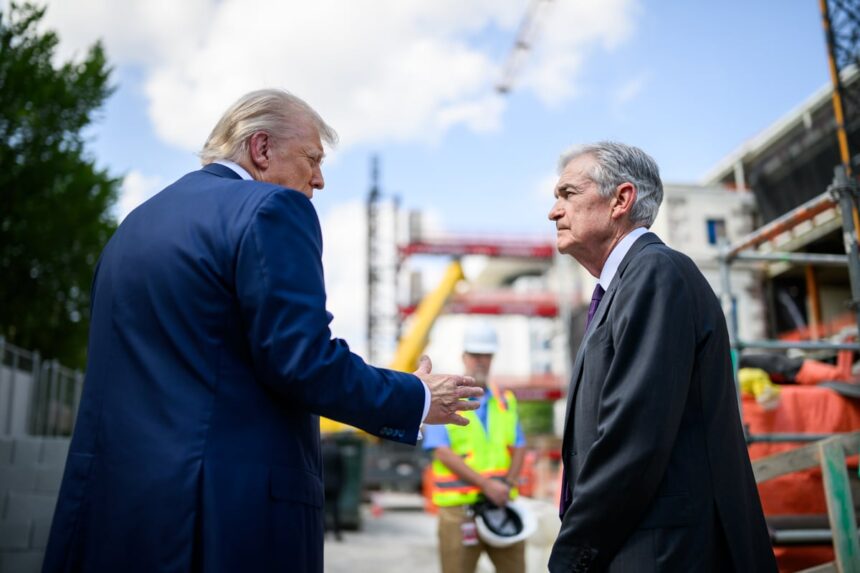
Powell’s comments have also reignited debate over the Fed’s independence. The central bank is designed to operate free from political pressure, setting monetary policy based on economic data rather than electoral considerations. But Trump has repeatedly criticized Powell, demanding lower interest rates to boost growth and stock prices. The president’s tariff policy, however, makes rate cuts harder to justify. If inflation stays elevated, the Fed can’t ease without risking runaway prices. Powell is effectively caught between the White House’s desire for cheap money and the economic reality created by the White House’s own trade policy.
Wall Street is taking notice. The S&P 500, Dow Jones Industrial Average, and Nasdaq Composite have all pulled back in recent weeks, reflecting investor anxiety over inflation and the Fed’s next move. For six of the last seven years, the S&P 500 has rallied by at least 16 percent annually, buoyed by factors like artificial intelligence, strong corporate earnings, and the 2017 Tax Cuts and Jobs Act. But that momentum is fragile. If the Fed halts its rate-easing cycle or even reverses course with rate hikes, the historically expensive stock market could face a sharp correction.
The core question is whether Powell is justified in singling out tariffs, or whether he’s deflecting blame for the Fed’s own policy missteps. Some conservative economists argue that inflation remains elevated because the Fed kept rates too low for too long during the pandemic, flooding the economy with cheap money. They view Powell’s focus on tariffs as a convenient scapegoat. But mainstream economic analysis supports Powell’s position. The Bureau of Labor Statistics data shows that goods inflation has been more persistent than services inflation, and tariffs are the most obvious explanation for that divergence.
I spent time in Brussels last month speaking with European Union trade officials who are watching this drama unfold with a mix of concern and relief. “If the U.S. is raising tariffs on China, it creates opportunities for European exporters,” one official told me. “But if Trump turns his attention to us next, we’ll face the same pressure.” The EU has already prepared retaliatory measures in case Trump imposes broad tariffs on European goods, a move that would escalate a transatlantic trade war and further complicate global inflation dynamics.
For Powell, the path forward is narrow. The Fed’s next inflation data will be critical. If the March report shows inflation moderating, the central bank may resume rate cuts, giving the economy breathing room. But if inflation remains sticky—or worse, accelerates due to energy shocks and tariffs—the Fed could be forced to hold rates higher for longer. That would slow growth, increase unemployment, and likely provoke a political firestorm from the White House.
What’s clear is that Powell isn’t backing down. By explicitly linking tariffs to inflation at two consecutive FOMC meetings, he’s signaling that the Fed will not ignore inconvenient truths for political convenience. Whether that’s an act of institutional courage or a dangerous provocation depends on your perspective. But in a world where central bank independence is increasingly contested, Powell’s willingness to speak plainly about tariffs may be one of the most consequential acts of his tenure.
The road ahead is uncertain. Trump’s tariffs are policy choices with economic consequences, and those consequences are now landing squarely in Powell’s lap. How the Fed responds will shape not just inflation and interest rates, but the broader relationship between monetary policy and political power. For now, Powell has made his position clear: tariffs are fueling inflation, and the Fed’s ability to cut rates depends on whether the White House’s trade policy shifts. The ball is back in Trump’s court.