A small plane went down at Pitt Meadows Regional Airport Monday morning, sending one person to hospital with serious injuries. Emergency crews responded just after 11:15 a.m. to what would become a multi-agency effort to secure the scene and treat the injured pilot.
The aircraft, identified as a Cessna 172, is a familiar sight at regional airports across the country. It’s a four-seater often used by flight schools and private pilots building their hours. What went wrong during this particular flight remains under investigation.
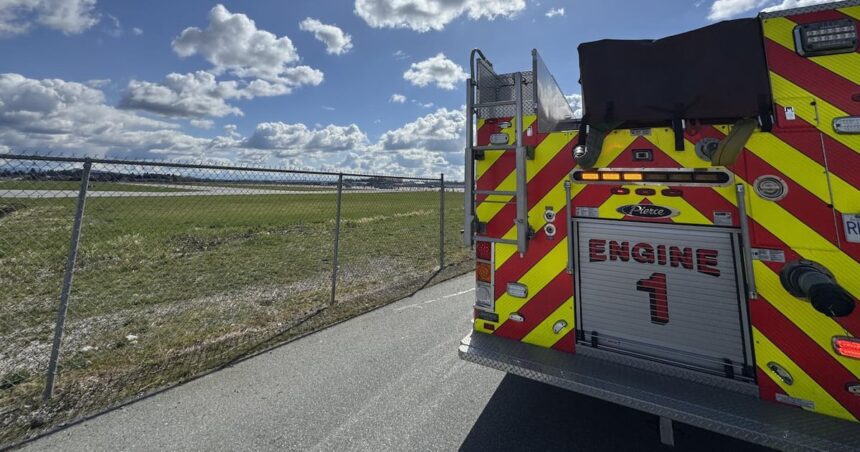
Pitt Meadows Fire Rescue arrived quickly and established a safety perimeter around the wreckage. Their priority was clear: assess the patient, contain any fuel leaks, and ensure no further risk to surrounding aircraft or facilities. The team posted about their response on social media, noting the coordinated effort with other agencies.
B.C. Emergency Health Services dispatched two ambulances and a supervisor to the airport. One unit carried primary care paramedics while the other brought advanced care specialists. That level of response suggests first responders anticipated significant injuries even before reaching the site.
The injured person was stabilized and transported to hospital in serious but stable condition. No other injuries were reported. The fact that only one person was aboard may have limited the scope of the tragedy.
The Transportation Safety Board confirmed it has sent investigators to Pitt Meadows. Their job is to gather physical evidence, interview witnesses, and review flight records. The TSB’s statement was brief, noting only that they would assess the occurrence and determine next steps.
This kind of crash raises immediate questions for anyone who flies or lives near small airports. Pitt Meadows is one of the busiest general aviation hubs in British Columbia. Flight schools operate there daily, training the next generation of pilots. Private aircraft come and go throughout the week.
Aviation incidents at regional airports are uncommon but not unheard of. The Cessna 172 has been in production since the 1950s and is considered one of the most reliable training aircraft ever built. That reputation doesn’t eliminate risk, especially during takeoff and landing phases when most accidents occur.
Investigators will look at several factors. Weather conditions at the time matter, even on what appeared to be a routine Monday morning. Mechanical failure is always a possibility, though the Cessna’s simple design makes catastrophic breakdowns rare. Pilot error, whether from inexperience or distraction, is another avenue the TSB will explore.
The airport remained open following the crash, though activity near the accident site was restricted. Other flights continued as scheduled, a sign that authorities deemed the broader facility safe for operations.
For those unfamiliar with Pitt Meadows, the airport sits east of Vancouver in a largely residential area. It serves a vital role in regional aviation, hosting everything from student pilots practicing circuits to small businesses using private planes for travel. The facility doesn’t have commercial airline service, but its economic and educational contributions are significant.
Local residents have grown accustomed to the sound of small planes overhead. That familiarity doesn’t make news of a crash any easier to process. When an aircraft goes down in your backyard, even a non-fatal incident shakes confidence.
The injured person’s identity has not been released, nor has their role—whether student, instructor, or private pilot. Privacy laws and ongoing investigation protocols typically keep such details under wraps until families are notified and officials determine what information is relevant to public safety.
Flight training in Canada is tightly regulated by Transport Canada. Student pilots must log specific hours under supervision before flying solo. Instructors are certified professionals with extensive experience. Yet accidents still happen, reminding us that aviation carries inherent risks no amount of regulation can fully eliminate.
The TSB’s investigation will take time. Preliminary findings might emerge within days, but a full report could take months. Investigators will examine the wreckage, interview the injured pilot once medically cleared, and review maintenance records for the aircraft.
This crash serves as a reminder of the skill and vigilance required every time someone takes to the skies. It also highlights the professionalism of first responders who train for exactly these scenarios. Their quick action likely prevented a more serious outcome.
For now, one person recovers in hospital while investigators work to understand what went wrong. The community around Pitt Meadows waits for answers, hoping this incident remains an anomaly rather than a sign of deeper safety concerns at a facility so central to local aviation.