Article – The Canadian Human Rights Tribunal approved a sweeping child welfare agreement for Ontario First Nations this week. The decision brings partial closure to a fight that has stretched nearly two decades. It also highlights a deepening fracture in how Indigenous communities across Canada approach federal reconciliation efforts.
Monday’s ruling allows chiefs in Ontario to move forward with their own arrangement. This comes after national leadership rejected a broader $47.8 billion package twice in 2024. The tribunal issued what it called a “letter decision” to fast-track funding. A formal ruling will follow later, but officials wanted Ontario communities to receive resources without delay.
The tribunal’s language carried weight beyond policy mechanics. It described Canada’s choice to work directly with the Chiefs of Ontario and Nishnawbe Aski Nation as a meaningful break from “racist, paternalistic, colonial, and assimilationist policies.” Those systems have shaped child and family services for generations. The decision acknowledged that First Nations in Ontario are exercising their right to determine what happens to their own children.
This battle began in 2007 when the Assembly of First Nations and the First Nations Child and Family Caring Society filed a joint complaint. They argued the federal government was shortchanging on-reserve child welfare systems. The tribunal agreed in 2016, finding clear evidence of discrimination. It ordered reforms and continued oversight.
Since then, negotiations have been tense and fragmented. The national deal presented last year offered nearly $48 billion to overhaul child welfare across the country. But chiefs voted it down twice, saying it fell short of eliminating systemic discrimination. Many felt the money didn’t address root causes or guarantee long-term change.
Ontario chiefs took a different path. They voted in favor of a separate provincial deal that mirrors much of the rejected national framework. Ontario Regional Chief Abram Benedict explained the decision plainly: waiting for national consensus meant more harm to children caught in a broken system. His comments reflected a growing impatience with prolonged negotiations while real damage continued on the ground.
The tribunal acknowledged that urgency in its letter decision. It reserved the right to adjust its ruling after the formal decision is released. But it made clear that Ontario First Nations should not lose a full year of funding while bureaucratic processes play out. That kind of delay has real consequences for families and communities already stretched thin.
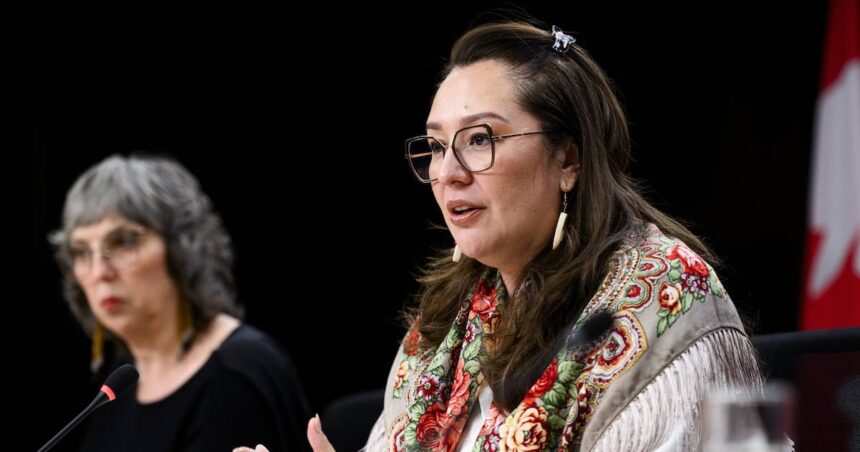
Indigenous Services Minister Mandy Gull-Masty held a press conference in Ottawa the same day the decision was released. She has previously indicated the government is willing to let regions decide how to allocate resources. That includes prevention programming, infrastructure upgrades, and information technology systems. The federal proposal outside Ontario offers $35.5 billion through the 2033-34 fiscal year, followed by $4.4 billion annually after that.
Two competing plans for child welfare reform outside Ontario were presented to the tribunal in December. One came from the federal government. The other was drafted by First Nations leaders who remain unsatisfied with Ottawa’s approach. The tribunal has not yet ruled on those proposals.
The split between Ontario and the rest of the country raises questions about what national reconciliation actually means. Some see regional deals as pragmatic steps forward. Others worry they weaken collective bargaining power and fragment Indigenous advocacy. There is no clear answer, only trade-offs that communities must weigh for themselves.
Funding alone does not guarantee systemic change. The 2016 tribunal ruling pointed to discrimination baked into structures and policies, not just budget shortfalls. Money can expand services and hire more workers. But it does not automatically dismantle colonial frameworks or shift decision-making power to communities. That requires deeper transformation in how governments and institutions operate.
Ontario First Nations chiefs were expected to speak publicly about the decision Monday afternoon in Toronto. Their comments will likely focus on what comes next: implementation timelines, accountability measures, and how funding translates into safer outcomes for children. These details matter as much as the agreement itself.
The child welfare system in First Nations communities has long been a flashpoint. Rates of children in care remain disproportionately high compared to the general population. Many families face investigations and removals driven by poverty and housing shortages, not neglect or abuse. The system often treats symptoms rather than addressing causes rooted in decades of policy failure.
The tribunal’s decision recognizes that First Nations in Ontario are ready to take control. They represent their own children, and they have chosen self-determination over waiting for a consensus that may never arrive. That choice carries risk, but so does inaction.
What happens in Ontario will likely influence negotiations elsewhere. Other provinces and regions will watch closely to see if the deal delivers meaningful change or falls short in practice. Trust between First Nations and the federal government remains fragile. Past promises have been broken too many times for optimism to come easily.
This agreement is not an ending. It is a pivot point in a much longer struggle. The tribunal’s oversight continues, and advocates remain vigilant. The real test will be whether children and families feel the difference in their daily lives. That is the measure that matters most.