Two North Carolina economics professors and a former state Republican legislative leader have joined a legal battle that could reshape the boundaries of presidential trade power. Edward Lopez of Western Carolina University, Michael Munger of Duke University, and former NC House Speaker Pro Tem Paul “Skip” Stam signed onto a friend-of-the-court brief filed Friday at the US Court of International Trade. The brief supports 22 state attorneys general and two Democratic governors who are suing President Donald Trump over his use of “Section 122” tariffs—a provision of the Trade Act of 1974 that, according to the filing, “was dead on arrival” and has never been invoked by any president until now.
The amicus brief, organized by Advancing American Freedom—a group founded by former Vice President Mike Pence—frames the legal challenge as more than a policy disagreement. It’s a constitutional question about how much latitude a president has to impose economic burdens on Americans without explicit congressional authorization. Other signers include the California-based Independent Institute, New York University Law School professor Richard Epstein, and academic economists from Illinois, Florida, South Carolina, and Utah. The coalition cuts across ideological lines, uniting free-market conservatives and state-level Democrats in opposition to what they describe as executive overreach.
The tariffs at the center of the lawsuit were imposed in February, just hours after the Supreme Court struck down an earlier round of duties that Trump had issued under the International Emergency Economic Powers Act. Those IEEPA tariffs had already cost American importers billions of dollars before being invalidated. Now, according to the brief, the administration is struggling to process refunds while consumers and businesses absorb losses that can never be recovered. “The Americans who paid higher prices, lost jobs, or missed out on economic opportunities because of the illegal tariffs will never be made whole,” the filing states.
Section 122 was designed in the 1970s to address balance-of-payments crises—currency emergencies that occurred under the Bretton Woods fixed exchange rate system. That system formally ended in 1976, rendering the statute’s underlying conditions obsolete. The lawsuit argues that Trump is “contorting” the term “balance of payments” by cherry-picking trade deficits while ignoring massive inflows of foreign investment. The legal challenge asserts that a true balance-of-payments crisis—the kind Congress envisioned—no longer exists in a world of floating currencies and global capital flows.
North Carolina Attorney General Jeff Jackson, who joined the Oregon-led lawsuit, cited research from the John Locke Foundation estimating that the state’s farming industry and rural economy could lose approximately $1.9 billion and 8,000 jobs due to retaliatory tariffs and market disruptions. Jackson’s office projects that the new tariffs could cost North Carolina households between $800 and $1,300 this year. “North Carolinians have already paid billions in unlawful tariffs—our farmers, our manufacturers, and our communities can’t bear more,” Jackson said in a news release. The attorney general’s participation represents a rare moment of bipartisan agreement, with conservative economists and progressive state officials aligned against what they view as unlawful executive action.
The economics professors involved in the brief have long been skeptical of tariffs on both policy and constitutional grounds. Lopez and Munger have published extensively on public choice theory and the distortions created when government intervention picks winners and losers in the economy. Their involvement signals that opposition to Trump’s tariffs isn’t purely partisan—it reflects deeper concerns about rule of law and the separation of powers. Stam, a Republican who served in the North Carolina General Assembly for over two decades, adds further weight to the argument that this isn’t a left-versus-right issue. It’s a question of whether any president, regardless of party, can impose sweeping economic measures without clear statutory authority.
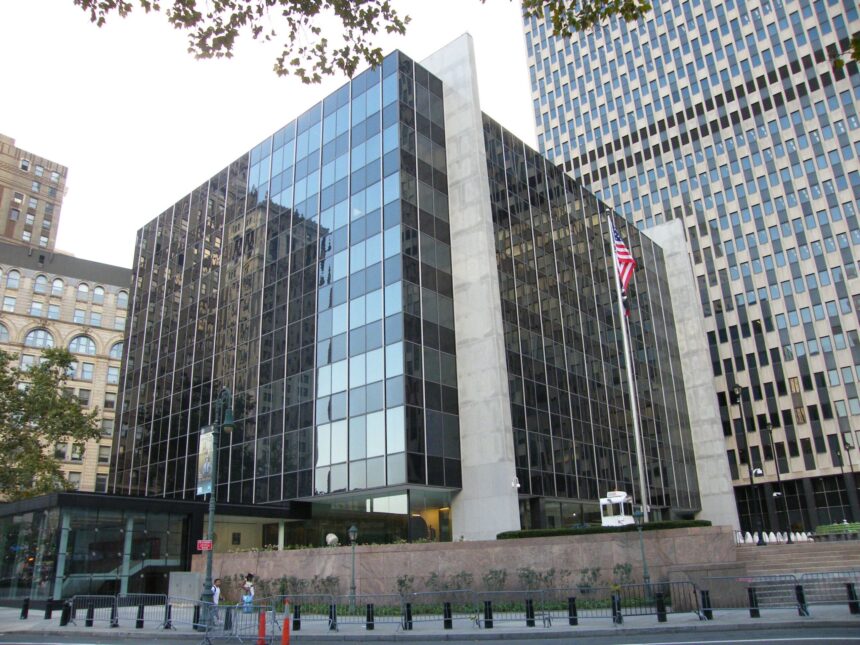
The Court of International Trade has set an expedited schedule for the case. A three-judge panel—Chief Judge Mark Barnett and Judges Claire Kelly and Timothy Stanceu—will hear oral arguments on April 10 in New York City. The Trump administration faces an April 3 deadline to respond to the lawsuits, with final briefing due four days later. Plaintiffs have already filed motions for summary judgment, which would allow the court to rule without a full trial. The panel previously issued a permanent injunction against Trump’s IEEPA tariffs in 2025, though an appellate court stayed that ruling. The brief urges the court to act quickly this time and to deny any stay, given the ongoing harm to American businesses and consumers.
The complaint filed by the states seeks a declaration that Section 122 tariffs are illegal and demands refunds for duties already collected. According to Jackson’s office, the new tariffs apply to an estimated $1.2 trillion worth of annual imports nationally. North Carolina’s agriculture sector is especially vulnerable. The state’s farmers depend on export markets that are now subject to retaliatory duties from trading partners. Jeffrey Dorfman, a professor of agricultural and resource economics at North Carolina State University, authored a January report for the John Locke Foundation that detailed the risks to NC agriculture. His research found that tariffs and retaliation could devastate rural economies that have little cushion to absorb prolonged trade disruptions.
The legal arguments in the case rest on two core claims. First, the plaintiffs assert that Trump is redefining “balance of payments” to suit his political goals, ignoring the statutory requirement of a “large and serious” deficit that threatens the currency system. Second, they argue that the conditions Congress contemplated in 1974—fixed exchange rates and currency crises—no longer exist. The Bretton Woods system collapsed half a century ago, making Section 122’s trigger conditions effectively impossible to meet. “The President has once again exercised tariff authority that he does not have,” the lawsuit states, “to upend the constitutional order and bring chaos to the global economy.”
If the court rules in favor of the states, the decision could have far-reaching implications for presidential power. It would establish that even broad statutory language must be interpreted in light of contemporary economic realities and that presidents cannot invoke dormant legal provisions to circumvent judicial rulings. The case also raises practical questions about the administrative burden of refunding billions in tariffs and the long-term costs of policy uncertainty. Importers who paid IEEPA tariffs are still waiting for refunds, and the government has acknowledged it needs time to adjust its processes. Meanwhile, businesses are making decisions in the dark, unsure whether current tariffs will stand or be invalidated months from now.
The involvement of NC scholars and former legislators underscores the breadth of concern about Trump’s trade policies. This isn’t a dispute confined to Washington think tanks or coastal elites. It touches farmers in Sampson County, manufacturers in the Piedmont, and consumers across the state. The legal challenge reflects a growing recognition that tariffs are not just taxes on foreign goods—they’re taxes on American families and businesses. And when those tariffs lack legal authority, the stakes go beyond economics. They test whether the rule of law can constrain presidential ambition or whether statutes become whatever a determined executive says they are.