The doctor’s face appeared on Maria Leblanc’s phone screen at 9 p.m. on a Tuesday. Her daughter had a fever that wouldn’t break, and the clinic had closed hours ago. Within minutes, they had a plan. No drive through February slush. No emergency room wait. Just care, delivered through pixels and bandwidth.
That convenience might be changing, though no one seems sure when or how.
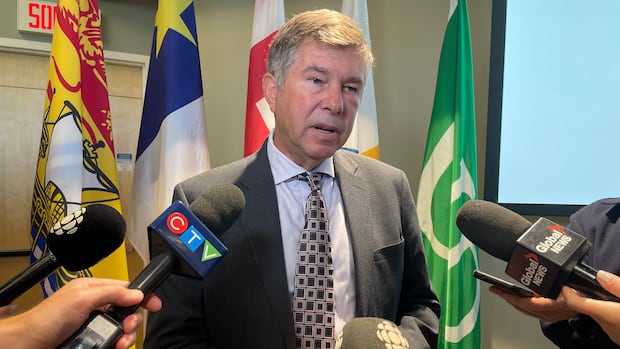
Health Minister John Dornan stood before reporters last week with a message that tied itself in knots. The company meant to take over New Brunswick’s virtual healthcare service by April 1st isn’t ready. But according to Dornan, there’s no delay. The current provider, eVisitNB, will keep working for another 90 days. Meanwhile, Foundever, a Luxembourg-based corporation that already runs the province’s 811 Telecare line, doesn’t yet have a signed contract to do the work they’re supposed to start in days.
The math doesn’t quite add up, and opposition politicians aren’t buying the minister’s arithmetic.
eVisitNB has served New Brunswickers from its base in Woodstock for four years. The platform connects people with doctors and nurse practitioners through video calls, offering prescriptions, referrals, and medical advice when family doctors are unavailable or nonexistent. In a province where one in five residents lacks a primary care provider, according to recent Health Canada data, virtual care has become more necessity than novelty.
Yet last month, the provincial government announced it wouldn’t renew eVisitNB’s contract. Instead, Foundever would take the reins. The transition was set for April 1st. Now, with that date looming, the new provider apparently lacks both readiness and a signed agreement.
Bill Hogan, the Progressive Conservative representative for Woodstock-Hartland, didn’t mince words. He called the situation mismanagement, possibly incompetence. His constituents include the people who built and operate eVisitNB. He’s watched a local success story get edged out by a multinational corporation that now can’t deliver on promised timelines.
The irony sits heavy. A homegrown company that’s been providing reliable service is being replaced by an international firm that isn’t prepared to do the job. Eleven companies applied to take over the virtual care contract. Foundever emerged as the province’s first choice, though Dornan offered no clear explanation why. He assured reporters there’s no reason to believe the preferred provider won’t eventually deliver.
That “eventually” is doing a lot of work in his statement.
Virtual healthcare surged during the pandemic, transforming from experimental to essential almost overnight. The World Health Organization reported that telehealth usage increased by more than 60 percent globally between 2020 and 2022. In Canada, virtual visits became lifelines for rural communities, elderly patients, and anyone without easy access to in-person care.
New Brunswick’s geography makes virtual care particularly valuable. The province stretches across forests, farmland, and coastline. Getting to a doctor can mean driving an hour each way. Winter roads add risk and time. For parents like Maria Leblanc, for elderly residents managing chronic conditions, for workers who can’t take time off during clinic hours, virtual care removes barriers that have nothing to do with medicine and everything to do with logistics.
Green Party Leader David Coon sees the transition delay as an opportunity to rethink the entire approach. Instead of handing the service to another private company, he suggests bringing virtual healthcare into the public system through Vitalité Health Network, one of the province’s two regional health authorities. His argument rests on accountability and integration. Public delivery would connect virtual care directly to hospitals, clinics, and patient records, creating continuity rather than fragmentation.
The debate touches a deeper tension in Canadian healthcare. As provincial governments struggle with rising costs and workforce shortages, private partnerships become tempting. Contracting out services can look like efficiency on a budget spreadsheet. But it also raises questions about data security, service continuity, and whether profit motives align with patient needs.
Foundever operates call centers and customer service operations in 60 countries. The company brings scale and infrastructure. Yet healthcare isn’t customer service. The stakes are higher. The trust required runs deeper. A delayed prescription or missed diagnosis can’t be resolved with a refund or apology.
Dornan promised New Brunswickers will experience seamless care with no gaps during the transition. That promise now rests on two companies working together while one exits and another enters without a finalized contract. The 90-day extension was built into eVisitNB’s original agreement, a safety valve for exactly this kind of uncertainty.
What happens if Foundever still isn’t ready in July? Dornan didn’t address that possibility. He focused on reassurance, insisting negotiations are progressing and a contract signing is imminent. But imminent doesn’t mean done. And in healthcare, gaps aren’t abstractions. They’re people waiting, worrying, sometimes worsening while systems sort themselves out.
Maria Leblanc doesn’t follow provincial politics closely. She works full-time, raises two kids, and tries to keep everyone healthy and fed. When her daughter spiked that fever, she opened the eVisitNB app because it worked. Simple as that. She doesn’t know who Foundever is or why the transition is stumbling. She just hopes that when the next fever arrives, someone will still answer from the other side of the screen.
The coming months will test whether Dornan’s confidence is justified or misplaced. Virtual healthcare has proven its value. The question now is whether New Brunswick can manage the transition without losing what already works while chasing what might be better.