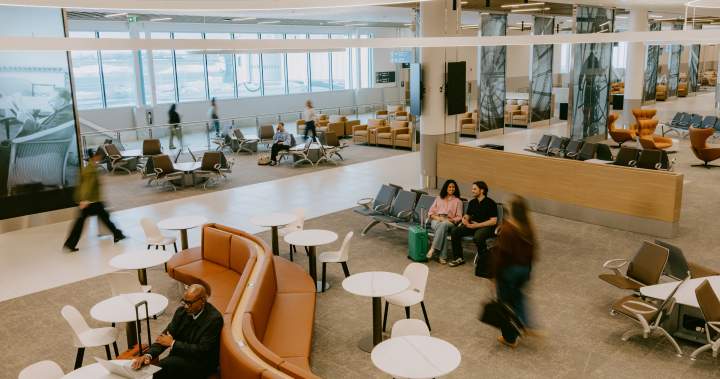
Montreal Metropolitan Airport is making a quiet but deliberate play to reshape how people think about flying in and out of the city. The new terminal at MET opens June 15, and the timing matters more than it might seem at first glance.
This isn’t just about adding gates or expanding capacity. It’s about reintroducing a piece of infrastructure that once defined Montreal’s connection to the world. Saint-Hubert Airport opened in 1927, making it the oldest airport in Canada. For years, it was the main gateway to the city until wartime needs shifted commercial operations to Dorval in 1940. Now, nearly 85 years later, the site is being reimagined as a regional complement to Pierre Elliott Trudeau International.
The new terminal spans 21,000 square metres and comes with nine boarding bridges and seating for 900 passengers. Porter Airlines and Pascan Aviation will anchor operations, connecting Canadian cities from coast to coast. The design reflects a deliberate choice to focus on single-aisle aircraft, which are quieter and more fuel-efficient than larger jets. That’s not an accident. It’s a clear signal about what kind of airport MET wants to be.
YHU Infrastructure Partners designed, built, and will operate the terminal. The retail offerings are entirely Quebec-based: Bâton Rouge, Café Dépôt, and a convenience store for travelers. That’s a nod to regional identity, but it’s also a business decision. Airports are increasingly looking to differentiate themselves beyond flight schedules, and local branding is part of that strategy.
What stands out is the historical framing. The terminal incorporates design elements referencing the 1930 arrival of the R-100 airship, a moment that drew massive crowds and symbolized technological ambition. It’s a subtle but intentional link between past and future, a way of anchoring this new chapter in a longer story about innovation and mobility.
The bigger question is whether Montreal actually needs a secondary airport. Other major cities operate multi-airport systems, and the model works when there’s enough demand to support it. Toronto has Pearson and Billy Bishop. New York has three major hubs. London has six. Montreal is now joining that list, but the success of MET depends on how travelers respond and whether airlines see enough potential to expand routes.
Porter Airlines has already committed, and that matters. The airline has carved out a niche with regional connectivity and a focus on business travelers who value convenience over sprawling international terminals. Pascan Aviation, a smaller carrier with strong regional ties, adds another layer of coverage. Together, they offer a foundation, but the terminal is designed to welcome additional carriers in the future. That flexibility will be critical.
There’s also a political dimension here. Infrastructure projects of this scale don’t happen without government buy-in at multiple levels. Federal, provincial, and municipal authorities all had to align on the vision and the logistics. That kind of coordination isn’t always easy, especially when competing priorities and jurisdictional questions come into play. The fact that this terminal is opening suggests that enough stakeholders saw value in diversifying Montreal’s air travel options.
For passengers, the appeal is straightforward. MET is located in Saint-Hubert, south of the city, which could mean shorter travel times for people living on the South Shore or in nearby suburbs. Traffic to Trudeau International can be unpredictable, especially during peak hours or winter weather. A second option eases pressure on both the airport and the roads leading to it.
The environmental angle is also worth noting. Single-aisle aircraft produce fewer emissions per passenger than larger planes, and focusing on that aircraft type aligns with broader climate goals. It’s a modest step, but it’s part of a larger conversation about how the aviation industry can reduce its carbon footprint without sacrificing connectivity. MET won’t single-handedly solve aviation’s environmental challenges, but it’s positioning itself as part of the solution.
There’s a pragmatic side to this too. The terminal was built by a private consortium, which means the financial risk is shared differently than with fully public projects. That structure can lead to more efficient construction timelines and operational flexibility, but it also raises questions about accountability and long-term governance. Private operators answer to investors, and their priorities don’t always align perfectly with public interest. How that balance plays out over the next few years will be telling.
Montreal’s air travel landscape is shifting, and this terminal is a clear signal of that change. It’s not a replacement for Trudeau International, but it’s more than just an overflow option. It’s a bet that the city can support a more distributed network of air travel, one that offers travelers more choice and airlines more flexibility.
The June 15 opening will be watched closely by industry analysts, municipal planners, and passengers alike. If MET can establish itself as a reliable and convenient alternative, it could reshape regional travel patterns and influence how other Canadian cities think about airport infrastructure. If it struggles to attract consistent traffic, the lessons will be just as important.
For now, the new terminal represents a significant investment in Montreal’s transportation future. Whether it becomes the “airport of choice” for regional flights remains to be seen, but the foundation is in place. And in a city with as much history and ambition as Montreal, that’s not a small thing.