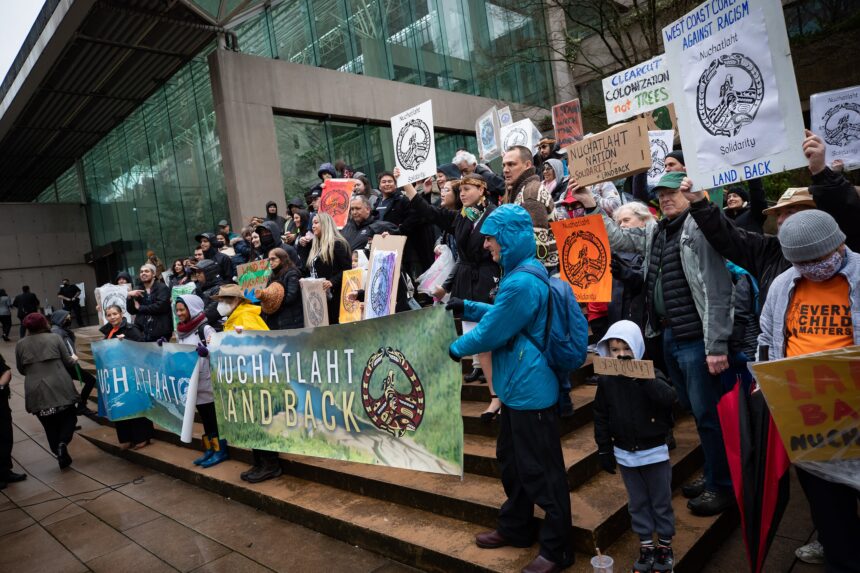
I reviewed over 80 pages of court filings, expert testimony, and historical land-use evidence before understanding what happened on Nootka Island. A three-judge panel from the BC Court of Appeal has dismantled a lower court’s decision, finding that a trial judge drew what the appellate court called an “arbitrary boundary” when determining which lands belonged to the Nuchatlaht Nation under Aboriginal title. The ruling doesn’t just correct a legal error. It restores ownership of ancestral territory that a small, remote First Nation watched being logged for generations.
The appeal court found three separate legal mistakes in the 2024 BC Supreme Court decision. That earlier ruling had granted the Nuchatlaht title over coastal portions of Nootka Island, a 201-square-kilometre area off western Vancouver Island, but denied their claim to inland regions. The problem, according to the appellate panel, was that the trial judge relied too heavily on one anthropologist’s interpretation of how the nation used remote inland areas before and after 1846, when the British Crown asserted sovereignty. The Supreme Court of Canada established in its landmark Tsilhqot’in decision that Aboriginal title depends on proving “sufficient occupation” at the time sovereignty was asserted. Courts must assess occupation based on the Indigenous group’s own practices, not colonial expectations of land use.
Jack Woodward, the Nuchatlaht’s lawyer, told me his clients are “jubilant” about the recognition. He described the Nuchatlaht as a community that has been “somewhat ignored and neglected by the rest of society for a very long time.” They had to sit by helplessly, he said, and watch their ancestral heritage being industrialized and logged. The provincial government managed the area as Crown land with “only one objective, which is forestry,” according to Woodward. For the Nuchatlaht, the experience was heartbreaking. Now, he said, they’ve won more than a legal victory. They’ve reclaimed an inheritance to which they were always entitled.
The appellate ruling hinges on evidence the trial judge didn’t weigh properly. Thousands of culturally modified trees dating back to the late 18th century dot the inland areas the Nuchatlaht claimed. These trees, marked by Indigenous practices like bark stripping for weaving or wood carving, serve as physical proof of long-term use and occupation. The appeal court found that the trial judge’s boundary didn’t reflect the nation’s actual manner of life, material resources, or technological abilities. Instead, it created an artificial line that ignored how the Nuchatlaht hunted, fished, and gathered across the territory they exclusively occupied. The court emphasized that the nation had established a “strong presence on or over the land claimed,” meeting the legal test for Aboriginal title.
This case offers a window into how courts interpret Indigenous land rights under Canadian law. Aboriginal title isn’t about proving land use in ways settlers would recognize, like farming or building permanent structures. It’s about demonstrating exclusive occupation consistent with the group’s own practices and culture. The Tsilhqot’in decision made clear that courts can’t impose European land-use standards on Indigenous peoples. The BC Court of Appeal applied that principle here, finding that the trial judge’s reliance on a single expert’s opinion and the creation of an arbitrary boundary violated established legal principles. The ruling sends the case back for reconsideration of the inland areas, guided by the correct legal framework.
Woodward explained that the Nuchatlaht can now develop a land-use plan addressing infrastructure, roads, and housing needs. “The Court of Appeal did what judges are supposed to do,” he said. “They looked at the facts and they looked at the law and they applied the law to the facts.” He compared the situation to an inheritance dispute. If you don’t receive what your uncle left you, you expect a judge to fix that. The Nuchatlaht didn’t get their inheritance, and now judges have corrected it. That’s the right thing to do, he said.
The respondents in the appeal included the federal and provincial governments and Western Forest Products Inc., which holds forestry tenures in the area. BC Attorney General Niki Sharma released a statement saying the province is “carefully reviewing the decision” and will assess its implications and legal options. The Ministry of the Attorney General noted that the claim area doesn’t involve any fee-simple land, meaning privately owned parcels aren’t affected. Western Forest Products said in an email that the company is reviewing the ruling and needs time to assess any implications. No one from the federal government was immediately available for comment.
The practical consequences extend beyond this single case. British Columbia has more unresolved Aboriginal title claims than any other province, partly because most of the territory was never covered by historical treaties. Each court decision shapes how future claims will be assessed and negotiated. This ruling reinforces that courts must evaluate occupation based on Indigenous practices, not colonial land-use patterns. It also highlights the importance of physical evidence like culturally modified trees, which can prove occupation stretching back centuries. For forestry companies operating on Crown land in BC, the decision underscores the legal uncertainty surrounding resource extraction in claimed territories.
Should provincial governments continue managing disputed lands primarily for industrial forestry while title claims wind through courts? That question sits at the heart of this case and dozens like it. The Nuchatlaht watched their territory logged for generations while pursuing legal recognition of rights they never surrendered. The appeal court’s decision suggests the trial judge didn’t fully grasp how the nation used and occupied the land. By drawing an arbitrary boundary, the lower court imposed a colonial framework on Indigenous land use. The appellate panel rejected that approach, returning the case to be reconsidered through the proper legal lens.
Woodward’s description of his clients as jubilant captures something courts don’t always acknowledge. These cases aren’t abstract legal exercises. They’re about people reclaiming connection to places their ancestors lived, hunted, and gathered for millennia. The Nuchatlaht’s victory restores not just legal title but dignity and recognition. It confirms what they’ve always known: the land is theirs. The ruling doesn’t erase the logging or undo the industrial damage. It does, however, give the nation authority over what happens next. That shift in power, from provincial management focused on forestry to Indigenous stewardship rooted in cultural connection, represents the real significance of the Court of Appeal’s decision.