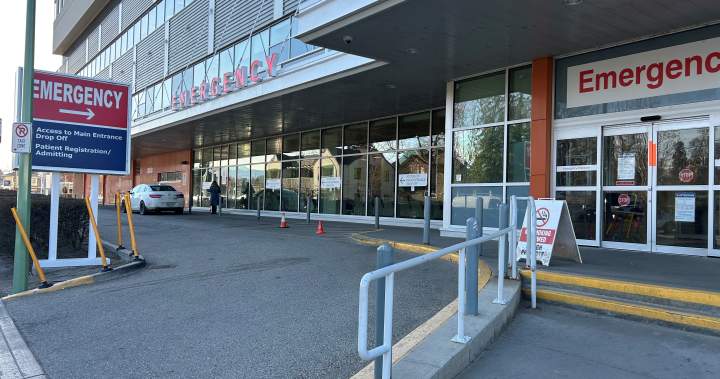
When Dr. Jared Baylis walks through the emergency department at Kelowna General Hospital on a Tuesday afternoon, he sees what most visitors don’t. Behind the steady flow of patients and the hum of medical equipment, he notices the tight corners where staff navigate around each other. He watches people in the waiting room, some holding ice packs, others staring at their phones, all wondering when their name will be called. This is the space where over 101,000 people sought care last year, making it the second-busiest emergency room in British Columbia.
Now, that space is about to change. The KGH Foundation is launching a $2.5 million fundraising campaign called Give Where It Matters Most, designed to reshape how emergency care works in the Interior’s largest hospital. Baylis, who serves as the emergency department’s medical director, says the improvements will focus on the parts of care that patients often find confusing or frustrating. He wants people to move through the system with less waiting and more clarity about what happens next.
The campaign targets specific bottlenecks that medical teams and Interior Health have flagged for years. Patient registration will be redesigned. Triage capacity will expand, giving nurses more room to assess people as they arrive. New diagnostic equipment, including two mobile ultrasounds and a dedicated ECG and lab area inside the ER, will reduce the back-and-forth that currently slows treatment. Lindsay Taberner, the executive director of clinical operations at KGH, explains that more triage space means faster assessments. Faster assessments mean quicker results and treatment.
Triage is where the emergency department makes its first critical decisions. A nurse evaluates each person who walks in, determining how urgent their condition is and what care they need. But when the waiting room fills up, people sit for longer periods without being seen. Baylis calls triage “a bit of a danger zone” because someone might arrive with chest pain or a head injury that worsens while they wait. Better sightlines in the redesigned space will help staff monitor vulnerable patients more closely, catching changes before they become emergencies.
Right now, the journey through KGH’s emergency room can feel like a maze. A patient gets triaged, then might be sent for lab work, or asked to sit back down until a doctor is available, or directed to radiology for an X-ray. The sequence isn’t always clear, and staff often have to explain the same steps multiple times. Baylis hopes the new setup will create a more logical flow, where each step follows naturally from the last. He describes it as making the care journey “more seamless.”
The campaign is the final piece of a much larger effort. Over the past several years, the KGH Foundation has been working toward a $40 million Closer To Home campaign, focusing on bringing advanced care to the Okanagan region so fewer people have to travel to Vancouver or other cities for treatment. This emergency room upgrade represents the last major goal of that initiative. Baylis says the medical staff feel energized by the prospect of working in a space designed around current needs rather than adapting to outdated infrastructure.
Kelowna’s population has been growing steadily, and that growth shows up in emergency department numbers. Every year, more people walk through those doors. Taberner acknowledges that the hospital is continually recruiting staff to meet rising demand, but recruitment alone won’t solve the problem if the physical space can’t accommodate the workflow. Better design can help existing teams work more efficiently, reducing the strain on everyone from triage nurses to diagnostic technicians.
Emergency rooms are unique in healthcare because they must be ready for anything. A child with a broken arm arrives at the same time as someone having a stroke. A mental health crisis unfolds while doctors are stabilizing a car accident victim. The space has to accommodate both routine care and life-threatening situations, often simultaneously. Redesigning that space requires input from everyone who works there, which is why the improvements were identified collaboratively by medical teams and Interior Health rather than imposed from above.
Work on the upgrades is expected to begin later this year, with completion targeted for fall 2027. That timeline reflects the complexity of renovating an active emergency department. Construction will have to happen around ongoing patient care, which requires careful planning and phased implementation. Tabernner and Baylis both emphasize that the hospital won’t shut down during renovations. The emergency room will keep operating, even as the space around it transforms.
Fundraising campaigns for hospital improvements often focus on high-tech equipment or specialized surgical units, but this effort centers on something more fundamental. It’s about the experience of walking into an emergency room when you’re scared or in pain, and having that experience be as efficient and humane as possible. It’s about nurses having the space to do their jobs well, and doctors being able to access the tools they need without delays.
For the thousands of people who will visit Kelowna General Hospital’s emergency department this year, the changes might eventually become invisible. Shorter waits will feel normal. Clear pathways through treatment will seem obvious. But behind that improved experience will be years of planning, millions of dollars in community support, and the collective effort of healthcare workers who saw what needed to change and pushed for it. The KGH Foundation website has information for anyone interested in contributing to the campaign, though the real measure of success will be felt in the moments when someone in crisis gets help a little faster, with a little less confusion, in a space designed to support healing rather than complicate it.