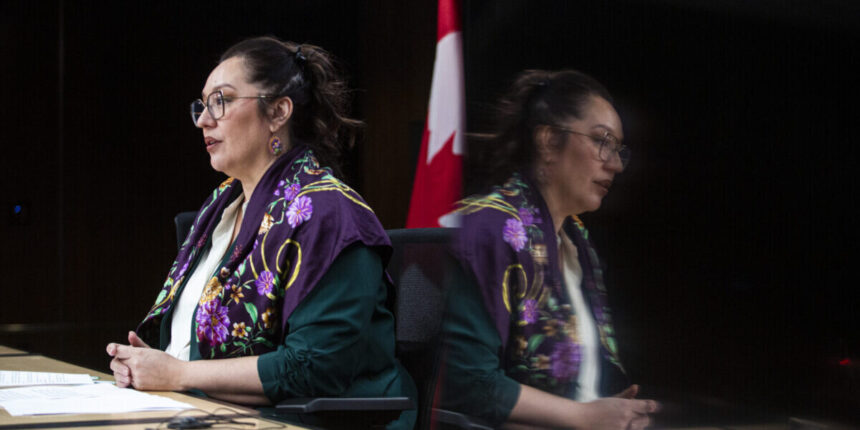
Indigenous Services Minister Mandy Gull-Masty stood before cameras last month to announce fifty-five million dollars for emergency management. The funding was described as new. But here’s the thing. When you’re topping up a program that already exists, calling it new feels a bit hollow.
This is continuation funding for the Emergency Management Assistance Program. It keeps the lights on starting April 1. That’s essential, sure. But it’s not exactly groundbreaking when communities have been waiting for adequate support for years.
Every time Indigenous Services Canada releases one of these eye-watering dollar figures, the initial reaction is positive. Big numbers sound impressive. Then you do the math. There are more than six hundred First Nations across the country. Divide that funding pool accordingly. Suddenly the per-community allocation starts looking thin.
The Emergency Management Assistance Program has a dual mandate. It supports emergency preparedness planning in every community. It also funds responses to active crises. Spread across both functions and hundreds of communities, the question becomes obvious. Is this actually enough?
Government spending data from GC-Infobase tells a troubling story. Indigenous Services Canada spent roughly five hundred ninety-five million dollars responding to emergencies in 2023-2024. The following year, that number jumped to six hundred seventy-eight million. Now look ahead. Planned spending for 2026-2027 sits at just one hundred eleven million dollars.
So what does that fifty-five million announcement actually represent? Either it’s existing funds repackaged with better optics, or it’s a small top-up acknowledging a massive shortfall. Neither scenario inspires confidence. Both suggest the department knows full well it lacks the resources to meet coming demands.
This isn’t just about budgets and line items. The planet is changing faster than our institutions can adapt. Global insurance companies are sounding alarms. Their risk models, built on decades of historical data, no longer hold up. When the insurance industry worries about catastrophic exposure, governments should be paying attention.
Consider what happened in Lytton, British Columbia, back in 2021. A wildfire tore through the village in minutes. Forty-five homes gone. The Lytton First Nation band office destroyed. Entire lives upended. The Insurance Bureau of Canada pegs the damage at over one hundred million dollars. That’s one fire. One community. One catastrophic event.
Fast forward to 2025. Seventy-three First Nations were evacuated because of wildfires. That’s forty-five thousand Indigenous people displaced from their homes. Put that in context. Across Canada that year, eighty-five thousand people total were evacuated due to fires. Indigenous communities represented more than half that number.
Some officials called 2025 unprecedented. They weren’t wrong. But here’s the unsettling part. Unprecedented events are becoming the new baseline. More than six thousand wildfires burned across Canada that year. The only reason the damage wasn’t worse is geography. Most of this country remains sparsely populated. But Indigenous communities are often remote, isolated, and directly in harm’s way.
When the federal government announces emergency funding, we need to ask harder questions. Does this money actually close gaps, or does it barely keep pace with existing needs? Reconciliation isn’t just a talking point. It requires material investment that reflects real risk and real lives.
Canada has committed publicly to reconciliation. The rhetoric is there. Now match it with action. Indigenous communities deserve the same level of emergency preparedness and response as any other Canadian jurisdiction. Anything less is a failure of governance. Probably a legal one too.
We’ve already seen the courts step in to force equitable funding. Child welfare. Education. The pattern is clear. Governments underfund. Communities suffer. Courts intervene. Compensation follows. Why not skip the litigation and fund properly from the start?
Elders and chiefs across First Nations have been saying for years that the Earth is speaking. Floods and fires aren’t just natural disasters anymore. They’re symptoms of a planet in distress. Human activity has altered weather patterns, intensified storms, and made fire seasons longer and deadlier.
Climate change isn’t a distant threat. It’s here. It’s reshaping infrastructure, displacing families, and eroding any sense of stability. Federal budgets should reflect that reality. Emergency management funding should anticipate growing risks, not react to last year’s damage.
When you serve Indigenous communities as though they’re full citizens with equal rights, the funding decisions look different. You plan for worst-case scenarios. You build resilience before disaster strikes. You don’t wait until the evacuation orders go out to wonder if there’s enough in the budget.
This fifty-five million dollar announcement might sound generous in a press release. But measured against actual need, projected climate risks, and the government’s own spending history, it falls short. Way short.
Indigenous Services Canada operates in a context where demand is rising and resources remain stagnant. That’s not sustainable. It’s not reconciliation. And it’s definitely not the kind of leadership that protects vulnerable communities from predictable crises.
The math is simple. The risks are documented. The funding gap is measurable. What’s missing is political will to treat Indigenous emergency preparedness with the seriousness it deserves. Until that changes, announcements like this one will continue to feel more like public relations than genuine policy.