There’s a fracture forming in North Battleford that goes deeper than administrative restructuring. Two school divisions are stepping back from a partnership that has quietly anchored Indigenous students for nearly a decade, and the ripple effects could reshape how culturally responsive education survives in Saskatchewan.
Living Sky School Division and Light of Christ Catholic Schools announced they will withdraw from their joint management role with the Battlefords First Nations Joint Board of Education at Sākewew High School. The partnership, which began in 2016, ends on June 30, 2027. Both divisions released a joint statement on March 30 explaining their decision. They cited their own improved Indigenous programming as justification for the exit.
“The school was created to expand access to culturally responsive academic programming and this is no longer the case,” the divisions stated. They now claim strong internal capacity in Indigenous education, enhanced student supports, and improved community relationships within their own buildings. It’s a bold assertion, but one that leaves a critical question unanswered: if those systems work so well, why are Indigenous students still choosing Sākewew?
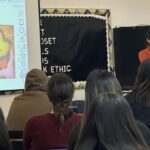
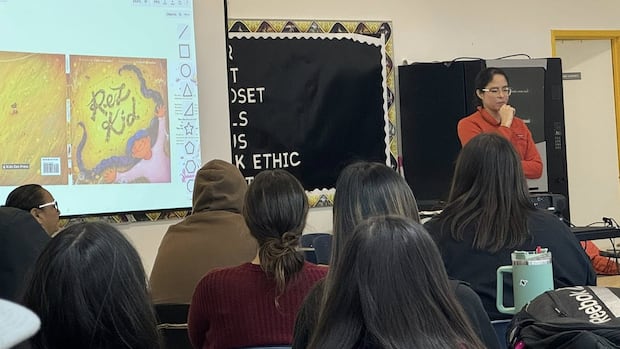
The answer sits in a Grade 12 classroom where Yarrow Harlingten can finally breathe. She transferred to Sākewew after experiencing racism in mainstream schools. Her grades improved. She’s on track to graduate and pursue environmental sciences at the post-secondary level. She describes teachers who check in regularly, who ask if students understand the material, who create space for safety.
“It’s a place where a lot of people feel safe at, especially Indigenous people,” Harlingten said. Many of the school’s teachers are Indigenous or First Nations. The culture isn’t an add-on or a module during reconciliation week. It’s embedded in daily learning through Cree language classes and Indigenous cultural activities.
Sākewew serves students who haven’t found success in public or Catholic systems. That’s not a niche population in Saskatchewan, where educational outcomes for Indigenous youth continue to lag provincial averages. The school also runs a daycare for teenage parents and brings in elders to pass on cultural knowledge. These aren’t luxuries. They’re survival mechanisms for students navigating systems that weren’t designed with them in mind.
Now the Battlefords First Nations Joint Board of Education faces a steep administrative climb. Board member Randy Fox confirmed the organization will maintain authority over operations and may continue independently. But independence comes with funding complications. The board hopes to meet with the provincial education ministry to establish a mechanism for per-capita student funding. Right now, students living on-reserve are funded through a separate joint tuition agreement. Provincial students attending Sākewew need a different pathway.
“That could be a challenge, ensuring that provincial students that come to the school are funded,” Fox said. “There are a number of things that have to be addressed and will be over time.” That timeline matters. Two years sounds like breathing room, but building a funding framework from scratch while maintaining educational quality is a tightrope walk.
The building itself needs repairs, according to the Battlefords First Nations Joint Board of Education. The board noted that “the role and key purpose of Sākewew might influence decisions regarding the location, current or otherwise, of the school.” That’s careful language for a potential relocation or closure. It’s also a reminder that infrastructure funding for Indigenous-focused education remains chronically underfunded compared to mainstream systems.
Provincial school divisions across Saskatchewan have indeed expanded Indigenous programming in recent years. Saskatoon’s Cree bilingual school recently opened a new building, signaling investment in language immersion models. Treaty education has become mandatory curriculum. Land-based learning pilots are sprouting in urban and rural districts. These are meaningful shifts, but they don’t replace what Sākewew offers: a fully Indigenous-centered environment where students aren’t the minority adapting to mainstream culture.
The divisions’ statement carries an implicit argument. If we’ve built internal capacity, the logic goes, a separate partnership school becomes redundant. But capacity and culture aren’t interchangeable. A Cree language class taught twice a week in a predominantly non-Indigenous school doesn’t replicate the daily cultural affirmation Sākewew students describe. Neither does having an Indigenous support worker on staff, however well-intentioned.
Harlingten’s story exposes the gap between policy improvements and lived experience. She didn’t leave her previous school because it lacked Indigenous curriculum. She left because of racism, because she didn’t feel safe, because the system wasn’t built for her success. Sākewew worked because it inverted the model. Indigenous students are the center, not the accommodation.
The timeline gives all parties two years to negotiate. Living Sky, Light of Christ, and the Battlefords First Nations Joint Board of Education have expressed openness to discussing the situation with students and families. Those conversations will determine whether Sākewew survives as an independent entity, relocates, or closes altogether. The provincial ministry holds considerable power in that outcome, particularly around funding mechanisms.
Saskatchewan’s Indigenous population is young and growing. Nearly half of the province’s children under 15 identify as Indigenous, according to census data. Educational systems that fail to serve those students aren’t just missing a moral obligation—they’re undermining the province’s economic and social future. Sākewew represents one model that’s working for students who’ve been failed elsewhere.
The irony is sharp. School divisions are exiting a partnership because they claim their own Indigenous programming has improved enough to make Sākewew unnecessary. But the students at Sākewew are there precisely because those mainstream systems didn’t work for them. Someone’s math doesn’t add up, and it’s the students who’ll pay the cost if the school disappears.
Two years is both a deadline and an opportunity. The Battlefords First Nations Joint Board of Education can build the administrative infrastructure to operate independently. The provincial government can demonstrate whether its reconciliation commitments extend to funding models that support Indigenous-led education. And students like Harlingten can show why places like Sākewew matter—not as historical artifacts or symbolic gestures, but as functioning alternatives that change lives.
The question isn’t whether mainstream schools have improved their Indigenous programming. The question is whether Saskatchewan is willing to fund and sustain education models designed by and for Indigenous communities, even when they exist outside traditional bureaucratic structures. June 30, 2027 will answer that.