The housing crisis gripping Conklin, a rural Métis community in northeastern Alberta, isn’t just about numbers or construction delays. It’s tearing families apart, pushing people into addiction, and leaving elders stranded in hospitals because their off-grid homes are deemed unfit.
Joanne Rita Richards has watched it happen. She’s lived it herself. After years of trying to secure stable shelter, she’s still without a home. “In Conklin, the housing crisis has divided families,” Richards says. “Members have had to move away and give up family unity and our culture for basic human amenities like heat, power, and plumbing.”
The official data backs up what Richards sees every day. A community report from the Conklin Resource Development Advisory Committee found that 86% of survey respondents face housing insecurity. That means their shelter is inadequate, unsafe, or unstable. Children, elders, and working families are all affected.
Richards points to a troubling pattern. “I have seen more homes available in Conklin, but you have to have an income to move into one,” she explains. “Most of our homeless are jobless, do not hold a seat on a leadership board, or are just not favored by leadership.”
She mentions five brand new homes that have sat vacant since June of last year. Meanwhile, people like her remain homeless, squatting on Crown land without proper heat or plumbing.
When housing security depends on who you know or what role you hold, the system fails the people it’s meant to serve. Richards says she’s been passed over repeatedly. “In my situation, I am not favored, so they won’t allocate me a home,” she notes. “Losing my application paperwork is an excuse they use on everyone.”
The impact reaches beyond individual hardship. When families can’t access stable housing, they scatter. Youth leave for cities like Fort McMurray, Lac La Biche, or Edmonton. Cultural teachings stop being passed down. Connections fray.
“People living in these new homes become more judgmental and look down on people who were not allocated one,” Richards says. “I have witnessed lifelong friends break up.”
Elders face a particularly cruel twist. Richards’ own mother is stuck in a Fort McMurray hospital because officials consider the family’s off-grid living situation unhealthy. “Hospitals won’t let our seniors come home anymore,” she says. The very way of life that sustained generations is now labeled unfit.
Recent housing developments offer a glimmer of hope, but serious gaps remain. In November 2024, CRDAC celebrated the opening of 15 new homes for vulnerable families and elders. Funding came from Cenovus and the Government of Alberta through the Indigenous Housing Initiative, a program supporting Indigenous communities near oil sands operations.
The initiative has committed substantial resources and aims to build hundreds of homes across multiple First Nations and Métis communities. On paper, it’s progress. In practice, Richards sees a different story unfolding.
“It helped the ones in Conklin who had homes already get into new homes,” she says. “But most of our homeless are still homeless.”
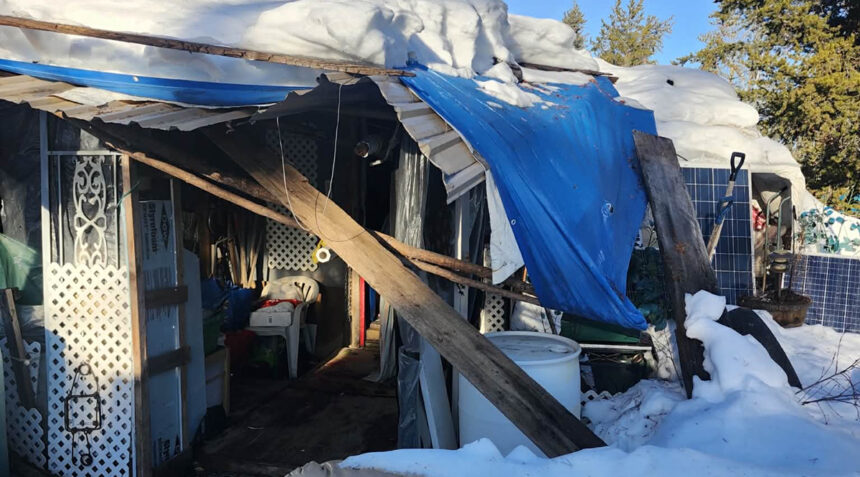
Richards’ personal journey illustrates how housing insecurity becomes a cycle. In 2012, she purchased an old mobile home and began fixing it up. When the roof caved in on her previous residence, she moved into the unfinished trailer prematurely. She’s lived there since 2014. This winter, that roof caved in too.
“I am proof. I am still homeless,” Richards states plainly.
The allocation process troubles her deeply. She questions why community members aren’t consulted about planning and development decisions. “We don’t get asked for our opinions or if we have ideas,” Richards says. “The planning and development is done by one family that sits on the leadership board that Cenovus allocated Conklin’s funding to.”
Local residents are hired only for temporary work, maybe once or twice a month for a single day. Meanwhile, six major oil and gas companies operate nearby. Most of Conklin remains unemployed, homeless, or both.
Richards believes the community holds the capacity for solutions if given the chance. “A new leadership board would open up new opportunities for our locals, bring fresh ideas, and make us all independent again,” she suggests.
She’s tried participating in CRDAC meetings. “We are allowed to attend but not allowed to speak,” Richards explains. “If we try to speak, they halt the meeting.”
That silence carries weight. When people with lived experience can’t contribute to decisions about their own housing, solutions miss the mark. Policies get designed without input from those they’re meant to help.
Richards was homeless and squatting on Crown land in 2017. Nine years later, she’s in the same situation. The homes got built. The funding arrived. But the people who needed help most are still waiting.
Housing insecurity in Indigenous communities isn’t new, and Conklin isn’t alone. Across Canada, First Nations and Métis communities face chronic shortages of adequate housing. Federal and provincial programs often lag behind need. Funding mechanisms can be complex. Local governance structures sometimes struggle with transparency or capacity.
What makes Conklin’s situation particularly stark is the proximity to resource wealth. Oil sands operations generate billions in revenue. Yet families in the surrounding Métis community live without basic amenities.
Richards emphasizes that housing is about more than four walls. “In Conklin, the housing crisis is more than buildings,” she says. “It’s about our people, our culture, and our future.”
When families scatter, cultural knowledge goes with them. Language transmission weakens. Traditional practices fade. Youth lose connection to their heritage. The social fabric frays in ways that can’t be easily repaired.
Richards sees people she grew up with now struggling with addiction on city streets. The connection isn’t hard to trace. Displacement breeds instability. Instability creates vulnerability. Vulnerable people fall through cracks.
She’s also watched community relationships deteriorate. Those who secured new housing sometimes look down on those still waiting. Resentment builds. Long friendships collapse under the weight of unequal access to basic needs.
The elders trapped in hospitals represent another loss. They want to return home. They want to be with family, on the land, living as they always have. But institutions deem their living situations unsuitable.
Who decides what’s healthy or fit? When off-grid living sustained communities for generations, why is it suddenly unacceptable? Richards doesn’t get answers to those questions.
Moving forward requires more than construction projects. It demands transparent allocation processes, meaningful community consultation, and recognition that local knowledge matters.
Richards believes Conklin residents should have real input into housing decisions. They should be hired for more than occasional day jobs. They should participate in planning their own community’s future.
“With the right support and involvement, we can create real change,” Richards says.
That change starts with listening to people like her. Not just hearing them, but actually incorporating their perspectives into policy. It means tracking who gets housing and who doesn’t, then asking why disparities exist.
It means ensuring funding reaches the people who need it most, not just those with connections. It means creating governance structures that prioritize accountability and inclusion.
The housing crisis in Conklin reflects broader challenges facing Indigenous communities across Canada. But it also presents an opportunity. With substantial resources already committed and more potentially available, solutions are within reach.
What’s missing isn’t money or materials. It’s the political will to center community voices, reform allocation processes, and prioritize those most in need.
Richards remains hopeful despite her own struggles. She sees potential in her community. She knows the strengths her neighbours possess. She wants them to have the chance to use those strengths.
For now, she continues living in a home with a caved-in roof, still waiting for her application to be found, still hoping leadership will change, still believing that Conklin’s people deserve better.