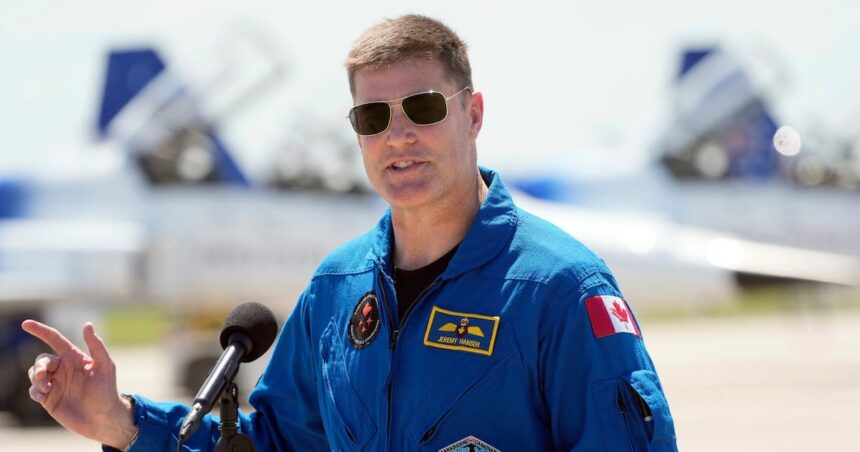
The roar that shook Florida’s Kennedy Space Center on Wednesday morning wasn’t just propulsion. It was history igniting. Canadian astronaut Jeremy Hansen, strapped inside the Artemis II capsule, rode that fire toward the moon with three NASA colleagues. His final broadcasted words before liftoff carried the weight of what this moment meant: “We’re going for all humanity.”
Hansen became the first non-American to travel beyond low Earth orbit. That distinction matters in ways that ripple far past national pride. For sixteen years, this fifty-year-old from London, Ontario prepared for ten days that will rewrite what Canadians believe possible. The mission will take humanity to the moon for the first time in over half a century. Crews will see the far side of the lunar surface with their own eyes—a first for humankind.
Watch parties erupted across Canada as the rocket climbed. People gathered in community centers, living rooms, and public squares. They cheered for Hansen, yes, but also for something bigger. This wasn’t just a man fulfilling a dream. It was collective ambition taking physical form.
The mission specialist role Hansen holds demands precision. He joins veteran NASA astronauts Reid Wiseman, Victor Glover, and Christina Koch on the ten-day lunar fly-around. Each crew member brings specific expertise. Hansen’s background as a fighter pilot and his three decades with the Royal Canadian Air Force shaped him for this. Lt.-Gen. Jamie Speiser-Blanchet, commander of the RCAF, said Tuesday she couldn’t be prouder watching his hard work crystallize this way.
But getting to Wednesday’s launch demanded more than professional skill. Hours before liftoff, issues with the flight termination system threatened the February schedule. Crews worked through technical problems while families waited. Catherine Hansen, Jeremy’s wife, wrapped her arms around their children as her husband stood behind a barricade in his bright orange spacesuit. He mouthed “I love you” and flashed a thumbs-up before boarding the vehicle to the crew capsule.
Catherine Hansen is an accomplished obstetrician-gynecologist. She met Jeremy in Moose Jaw, Saskatchewan when visiting her brother’s Air Force pilot wings ceremony. Jeremy told her immediately he planned to become an astronaut. She thought it was crazy to say out loud. But contemplation changed her mind. If he voiced it, he meant it. Getting to know him over days, weeks, and months confirmed he meant every word.
They married twenty-three years ago. Most of that marriage has orbited around NASA. Catherine said they examined their lives together, what they wanted, and how both could accomplish their goals. Lifting each other up became foundational. He supported her work and business. She supported his trajectory with the space agency. They couldn’t have managed without extended family, friends, the Canadian military, government supports, and the space agency itself.
Hansen was a fighter pilot when the Canadian Space Agency selected him as one of two recruits in 2009. Watching him live out his childhood dream feels like no less than a miracle, Catherine said. She told reporters Tuesday the family would try absorbing every single moment. She encouraged everyone—especially herself—to stay present and allow whatever emotions surfaced. Excitement, exhilaration, terror, and fear would all arrive.
The mission carries symbolic weight beyond the technical. Hansen is bringing a personal mission patch created by Anishinaabe artist Henry Guimond. The patch’s shape and depicted animals reference traditional First Nations teachings of the Seven Sacred Laws, shared with Hansen before departure. A Canadian flag at the top recognizes everyone across the country who made this possible. Other symbols acknowledge his RCAF service, humanity broadly, and his family specifically.
That deliberate inclusion matters. Hansen isn’t just representing government or military structures. He’s carrying forward the aspirations of people who watched from living rooms and town squares. Catherine said her husband may be sitting on the rocket, but it’s not just his dreams being realized. He understands he’s sharing this with millions who will never leave Earth’s atmosphere.
King Charles sent Hansen and his crewmates heartfelt wishes for their momentous endeavor. The statement, posted on social media, referenced the Astra Carta framework for sustainability in space exploration. It wished for stars aligning in their favor and a safe return that would inspire countless others to uphold values of sustainability, cooperation, and wonder.
Those values aren’t abstract for the Hansen family. Catherine said the days before launch were spent enjoying time together when possible. It will be incredible watching her husband represent Canada, but she’s equally excited for him to share the experience with Canadians afterward. He has the heart for wanting people to go on this ride with him. He looks forward to describing something very few humans have ever experienced.
Sixteen years of preparation compressed into ten days of lunar orbit. The Artemis II mission represents more than technological achievement. It’s about what becomes possible when individuals commit fully, families sacrifice collectively, and nations invest in exploration. Hansen’s journey reminds us that dreams spoken out loud—no matter how improbable—can become reality with enough support, preparation, and determination.
Canadians will watch the mission unfold knowing one of their own is circling the moon. They’ll feel pride, certainly. But perhaps they’ll also feel something more profound: recognition that audacious goals require community support, that representing a nation means carrying everyone’s hopes, and that looking toward the stars sometimes helps us see each other more clearly here on Earth.