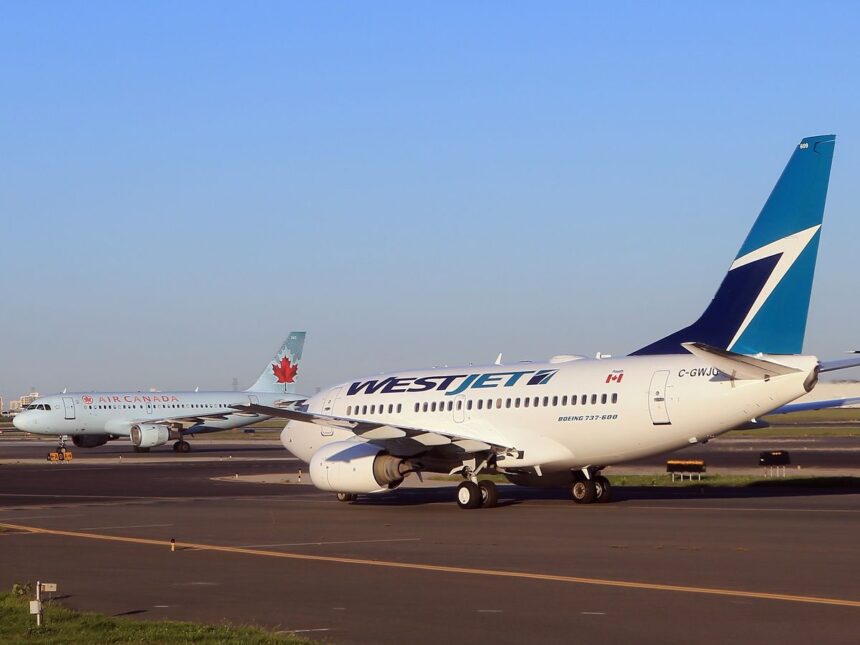
Early last September, chaos nearly unfolded at Toronto Pearson. An Air Canada Airbus carrying 122 passengers roared down the runway, picking up speed for takeoff. Nearby, a Bombardier test plane rolled past a critical safety line meant to prevent ground collisions. Controllers barked urgent warnings. The Bombardier stopped, but its nose jutted 35 feet into the active runway. The Airbus lifted off just before reaching that spot, narrowly avoiding catastrophe.
No one got hurt that day. But Monday’s tragedy in New York showed how quickly things can go wrong. An Air Canada Express plane struck an airport fire truck while landing at LaGuardia just before midnight Sunday. Both pilots died. The plane’s nose was crushed beyond recognition. It was a grim reminder of what aviation experts call “runway incursions”—when aircraft, vehicles, or people end up where they shouldn’t be on airport pavement.
Most passengers have never heard the term. But safety officials have worried about it for years. And the numbers suggest the problem is getting worse, at least in Canada. Annual runway incursions here nearly doubled between 2010 and 2021, climbing to 471 incidents that year. By 2024, that figure had jumped to 639, according to the Transportation Safety Board of Canada.
Flying remains incredibly safe overall. Statistically, you’re more likely to be hurt driving to the airport than flying from it. Yet even a small fraction of high-risk incursions could spell disaster. “The consequences of a collision could be catastrophic given the potential for injury or loss of life from a single accident,” the TSB noted in a 2022 report. One bad moment can claim hundreds of lives.
The United States has seen similar concerns. While overall incursion numbers have held steady since 2017, the most dangerous close calls appear to be rising. Jennifer Homendy, chair of the U.S. National Transportation Safety Board, spoke about this at a 2023 safety roundtable. She cited a near-miss in Austin, Texas, where a landing FedEx cargo plane and a packed Southwest jet came within 115 feet of each other. “Any of these events could’ve had devastating consequence,” Homendy said.
History bears that out. One of aviation’s darkest days happened in the Canary Islands in 1977. A KLM Boeing 747 began its takeoff run and slammed into a Pan Am 747 still taxiing on the same runway. All 583 people aboard both planes died. In 2000, a Singapore Airlines 747 tried taking off during a typhoon, struck construction equipment on the runway, and killed 83 people.
What’s driving this troubling trend in Canada? Marcelo Cabral, a safety expert with Nav Canada, pointed to one primary culprit: communication breakdowns. People assume the message got through when it didn’t. In an article for Transport Canada last year, Cabral stressed that assumptions have no place in the high-pressure environment of airport operations. “Deliberate and purposeful briefings are essential,” he wrote.
Recent efforts have reduced high-risk incursions in Canada somewhat. Airlines, airports, and air-traffic controllers have worked together on the issue. But low-risk incidents remain “elevated,” Cabral noted. That’s concerning because even low-risk situations can escalate quickly under the wrong conditions (weather shifts, equipment failures, human error piling up).
Kevin Durkin heads the aviation law practice at Chicago-based Clifford Law Offices. He believes the U.S. problem stems partly from a chronic shortage of air-traffic controllers. He’s experienced the issue firsthand—he’s been on three flights that aborted landings because equipment was blocking the runway. “You have increasing flights, you have airports that are congested,” Durkin said in an interview. “You put it all together and you have a recipe.”
Air travel’s popularity keeps climbing. More passengers mean more flights. More flights mean tighter schedules and busier runways. Controllers juggle planes landing and taking off every few minutes, sometimes every few seconds. Add in ground vehicles, construction crews, and the occasional runway repair, and the margin for error shrinks.
Durkin used a grim phrase to describe how safety improvements often come about: “graveyard engineering.” Changes happen after people die. He hopes the investigation into Monday’s LaGuardia crash will spur meaningful advances. The TSB has sent a team to New York to assist with that investigation.
Back in 2019, the TSB issued a report on several incursions involving Pearson’s two close, parallel runways. The board made four recommendations for change. As of last year, only one had been rated “fully satisfactory” in terms of implementation. Progress has been slow, in other words.
Still, the industry has made some headway. Training programs have been enhanced. Communication protocols have been tightened. Airports have installed better signage, improved lighting, and clearer hold-short markings to prevent accidental runway entries. Technology is also playing a role. New systems can detect potential incursions and alert controllers or pilots automatically. “Autonomous runway incursion warning systems” and “runway occupancy awareness systems” are being deployed at various airports.
Nav Canada has set up dedicated runway safety teams at several locations. These teams focus specifically on preventing incursions and reviewing incidents when they occur. The goal is to identify patterns and address weak points before they lead to tragedy.
But technology and training can only go so far. Human factors remain critical. Fatigue, distraction, miscommunication, or simple mistakes can override even the best systems. A pilot misreading instructions. A controller juggling too many tasks. A ground crew member taking a shortcut. Any of these can trigger a chain of events leading to disaster.
The surge in Canadian incursions—from 268 in 2010 to 639 in 2024—demands attention. That’s a 138 percent increase over 14 years. Even if most incidents are low-risk, the sheer volume raises the odds of a catastrophic event. It’s a numbers game no one wants to play.
Public awareness matters too. Passengers should know that while flying is safe, the ground operations supporting those flights face real challenges. Holding airlines, airports, and regulators accountable requires understanding what’s at stake. Every time a plane lands or takes off safely, it’s the result of countless decisions and actions going right.
Monday’s crash at LaGuardia was a stark reminder that complacency kills. Two pilots are dead. Families are grieving. And the aviation community is once again asking how to prevent the next tragedy. The answer likely involves better staffing, improved technology, stricter protocols, and a culture that prioritizes safety over speed or cost.
Canada’s rising incursion numbers are a warning. The system is being stretched. As airports get busier and skies more crowded, the pressure on everyone involved—from controllers to pilots to ground crews—intensifies. Without decisive action, the next near-miss might not have a happy ending.
The TSB’s ongoing work matters. So does Nav Canada’s focus on runway safety. But real change requires sustained commitment from all stakeholders. That includes adequate funding for controllers, investment in technology, and a willingness to implement recommendations even when they’re inconvenient or expensive.
Graveyard engineering is a luxury no one can afford. Better to act now than mourn later.