Article – Calgary’s rezoning fight won’t end this week. Mayor Jeromy Farkas says the public hearing will likely stretch past Easter, pushing any final vote into late April.
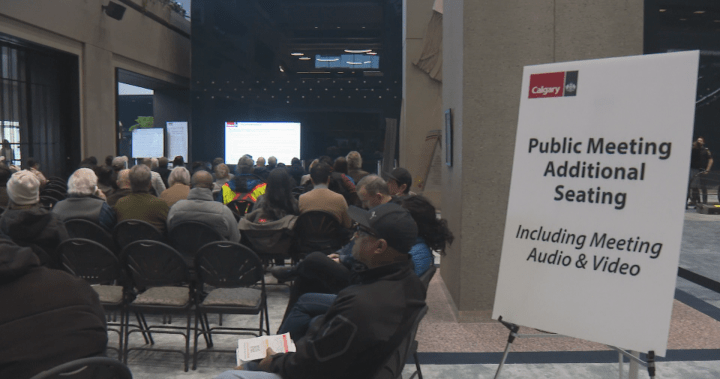
The hearing started over a week ago. Hundreds of Calgarians are waiting to speak about whether council should scrap a policy that changed how homes get built across the city.
Council has a packed schedule this week. Tuesday and Wednesday are filled with regular meetings. Friday is a stat holiday. That leaves only Thursday and Monday for the public hearing to continue.
Alex Williams waited six days to share his thoughts. He supports keeping the rezoning rules in place. Williams, who advocates for better transit, told council the city needs many housing options, not just one fix.
Back in August 2024, council changed Calgary’s default zoning to allow rowhouses and townhomes on land that once only permitted single-family homes. The goal was simple: build more homes and make them more affordable.
But the Calgary Real Estate Board now says the policy failed on both counts. Ann-Marie Lurie, the board’s chief economist, urged council to hit pause and rethink how the city plans growth. She wants council to use neighbourhood plans that spell out where denser housing makes sense.
Lurie compared it to shopping for a home in a new subdivision. Buyers know exactly what surrounds them. She wants existing neighbourhoods to have that same clarity.
As of Monday morning, 526 people had signed up to speak. That’s less than half the crowd from April 2024, when over 1,100 Calgarians registered to weigh in on the original rezoning proposal. Back then, only 736 actually spoke over 15 days. Most opposed the blanket change.
Lori Williams teaches policy studies at Mount Royal University. She thinks fewer speakers this time might reflect council’s current mood. Most councillors seem ready to repeal the policy and find something less sweeping.
Williams said many want a middle path. They want more housing without drastically altering the look and feel of established streets. That shift may have cooled some of the earlier anger.
Ward 13 councillor Dan McLean says he’s still open to persuasion. But he hopes debate starts this week. Calgarians want this settled soon, he said. He agrees with them.
The mayor and Ward 14 councillor Landon Johnston sparred over timing this past weekend on social media. Johnston said constituents want a vote without delay. Farkas pushed back, insisting the city can’t rush the public hearing.
Farkas said Monday he won’t cut corners. More people keep signing up to speak, which he called a good thing. He knows some want a decision fast. But debate can’t start until everyone gets their turn at the microphone.
If council votes to repeal citywide rezoning, the change won’t happen right away. City staff say the rollback wouldn’t take effect until August 4, 2026. That’s more than a year from now.
The policy has divided Calgarians since it first surfaced. Supporters say it’s the only way to tackle a housing crisis that’s pricing out young families and renters. Opponents worry it will change quiet streets forever and erase the character of older neighbourhoods.
Transit advocates like Williams argue the city needs a mix of solutions. High-rise towers near train stations won’t solve everything. Neither will the rezoning rules council passed last year. But both help, he said.
Real estate professionals see it differently. Lurie and others say the policy created uncertainty without delivering results. Developers still face red tape. Homebuyers still struggle with high prices. And neighbourhoods lost control over their own futures.
The original hearing last spring was one of the longest in Calgary’s history. Residents lined up for hours. Some spoke with anger. Others pleaded for change. Council meetings stretched late into the night.
This time feels different. The mood is quieter. Fewer people are signing up. Council seems less divided. And the mayor appears willing to let the process run its course, even if it takes another week or two.
McLean’s comment about being “amenable to persuasion” suggests he hasn’t locked in his vote yet. That matters. Every vote counts when council is this closely split.
Johnston’s frustration is also telling. He represents a ward where housing costs have climbed sharply. His constituents want action, not delays. But Farkas holds the gavel and sets the schedule.
The stat holiday this Friday interrupts momentum. Council can’t meet. The hearing pauses. Speakers wait. And the city’s housing policy hangs in limbo.
City administration has made it clear that even a vote this month won’t change things overnight. The August 2026 timeline gives developers, homeowners, and planners time to adjust. It also gives council room to craft a replacement policy.
What comes next is anyone’s guess. Council could repeal the rezoning entirely and return to the old rules. Or they could tweak the policy, targeting certain neighbourhoods while leaving others alone. Local area plans might guide future decisions.
Williams from Mount Royal University thinks council is searching for nuance. They want to thread a needle between growth and preservation. That’s hard to do when emotions run high and housing is so politicized.
For now, Calgarians keep signing up to speak. The hearing grinds on. And the debate over how this city grows will likely stretch into the week after Easter.