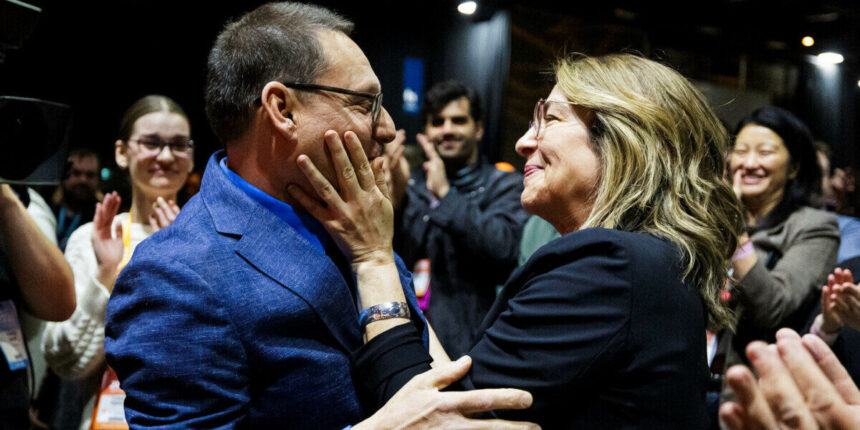
CHELSEA, QUE.—There’s something amusing about watching the political establishment work itself into a frenzy over someone they’ve already decided is unelectable. That’s been the story with Avi Lewis since well before his decisive win as federal NDP leader last week.
The narrative was set early. Too radical. Too out of touch. A guaranteed disaster for his party and for provincial NDP governments trying to hold onto power. His ideas would send voters running, collapse the oil industry, and apparently transform Canada into some unrecognizable state where basic services might actually serve the public.
The critique goes further. He’d supposedly nationalize everything from your local grocery store to your Netflix account. He’d drain defence budgets just as military spending finally rebounds. And he’d commit the ultimate political sin of calling what’s happening in Gaza a genocide, pushing for foreign policy grounded in something other than carefully managed ambiguity.
Which leads to an obvious question. What exactly makes these positions radical?
Maybe the word itself needs examination. Prime Minister Mark Carney recently called Donald Trump “transformative,” a descriptor so elastic it could mean almost anything. Radical works the same way, depending on who’s using it and why.
Consider what doesn’t get called radical. Expanding oil production and pipeline infrastructure while climate change reshapes our country in real time. That’s considered pragmatic, responsible, even necessary to protect jobs.
Northern communities now expect summer wildfires as routine. The permafrost melts and infrastructure built on it fails. Crop losses mount, driving food prices higher. Communities relocate. The costs accumulate every year, financial and human.
Yet the sensible position, we’re told, involves pumping more oil to global markets and keeping emissions climbing. This protects a shrinking workforce in an industry with a clear expiration date. The oil sector, allegedly strangled by regulation, continues posting record profits while resisting serious emission reduction measures.
Lewis proposes something different. More heat pumps across the country. An east-west electricity grid connecting provincial systems. Major public transit investments and transportation electrification. Transitioning oilsands workers into emerging green sectors. Leveraging Canada’s massive hydro, wind, and solar capacity.
None of this should sound unfamiliar. Justin Trudeau championed similar ideas as prime minister, remember the “just transition” promise? Those plans withered under pressure from oil companies and their political allies, combined with Trudeau’s own wavering commitment.
There was a period when oil companies at least pretended to support net zero targets. They floated technologies for producing “decarbonized” oil, which sounds like desalinated salt. They accepted industrial carbon pricing, a system pioneered by former Alberta premier Rachel Notley. That consensus evaporated.
Recently some producers have argued that stricter methane emission limits, once considered a cheap fix, would cause financial ruin. They’re chipping away at industrial carbon pricing mechanisms. They want governments to largely fund a carbon capture pipeline north of Edmonton, a project with questionable emission reduction potential. The consortium behind it, previously called Pathways Alliance, recently rebranded as Oil Sands Alliance.
Draw your own conclusions from that name change.
Rumours suggest the federal government might put public money into a northwest coast oil pipeline after all. Apparently nationalization only counts when it benefits the public rather than energy giants.
Lewis won’t become prime minister tomorrow, possibly not ever. Even if he did, he’s not proposing immediate production shutdowns. He wants to accelerate Canada’s shift from oil to green technologies, capturing the jobs and revenue they generate. Mark Carney made similar arguments before entering politics.
Moving away from fossil fuels isn’t considered radical everywhere. Europe, South America, and China are reducing oil dependency without economic collapse. The current Middle East conflict actually strengthens the case for expanding green energy access and escaping global oil price volatility, rather than doubling down on domestic production.
Those protecting current arrangements will reject Lewis’ proposals. Public grocery stores, reimagined Canada Post, affordable telecommunications, expanded childcare, comprehensive medicare. All aimed at ensuring “a dignified life for every working person in this country, awash in wealth.” The objections follow familiar patterns: too new, too risky, too expensive.
Lewis faces genuine skepticism embedded in our national character, intensified during the Trump era. Conservative Leader Pierre Poilievre effectively highlights economic victims of our unbalanced system: homeless populations, young people priced out of housing, struggling rural Canadians. But his solutions lean toward tax cuts and smaller government rather than substantive intervention.
Lewis won’t convert those benefiting from current arrangements, but they’re a minority. Everyone else mostly hears right-wing messaging, the Liberals’ bureaucratic responses, and mainstream media that often uncritically repeats official talking points.
After his March 29 victory, Lewis told reporters that right-wing populists imagine “conspiracies of immigrants, or Jews, of a tiny class of puppeteers who control the world.” Left-wing populists, the so-called radicals like himself, believe “that capitalism concentrates wealth and power in the fewest hands and we need policies that actually respond to the 99 per cent.” Government serving people, an endangered ideal.
Personal warmth, humour, and plain speaking beat slogans and volume every time. Lewis brings charm, clarity, and intelligence, along with his late father’s ability to captivate audiences and his journalist mother’s progressive clarity. If he maintains focus on problems rather than personal attacks, he might exceed expectations.
The country needs his perspective. Our current Parliament, featuring a capable prime minister and a tired opposition leader, remains too connected to powerful interests. Oil executives, banks, telecommunications giants. Perhaps they’re simply too comfortable with existing arrangements to fight for public priorities like climate action or healthcare preservation.
Even before winning a seat, Lewis could serve as necessary pressure, challenging complacency, offering hope to discouraged Canadians, including some currently attracted to Poilievre’s politics of grievance.
He said he hopes “there is some curiosity in the storytelling class in Canada about what left-wing populism can offer.”
Some of us are listening closely.