Brian Riley never planned to resurrect American bicycle manufacturing. His entry into the industry began with family trauma—a grandfather’s near-fatal crash after panic-braking sent him over the handlebars. That accident, two decades ago, planted the seed for what would become Guardian Bike Company, a rare attempt to build bicycles entirely in the United States at a time when nearly every bike sold here arrives from overseas.
Riley’s pitch to the Trump administration is simple but loaded with implications. He wants steeper tariffs on foreign-made bikes to level a playing field tilted sharply toward Asian manufacturers. The request has turned into a quiet flashpoint in the broader trade debate, pitting a homegrown factory against an industry that depends almost entirely on imports. It’s also testing whether tariffs can actually revive domestic production or just raise prices for families already stretched thin.
The challenge Riley faces is enormous. For decades, American bike brands like Schwinn and Huffy have slapped their logos on frames welded in China, Vietnam, and Taiwan. Manufacturing moved offshore long before most people noticed, driven by labor costs that no U.S. factory could match without radical reinvention. Riley knew this when he started Guardian. His answer was automation, short supply chains, and a product story compelling enough to justify prices two or three times higher than what Walmart charges.
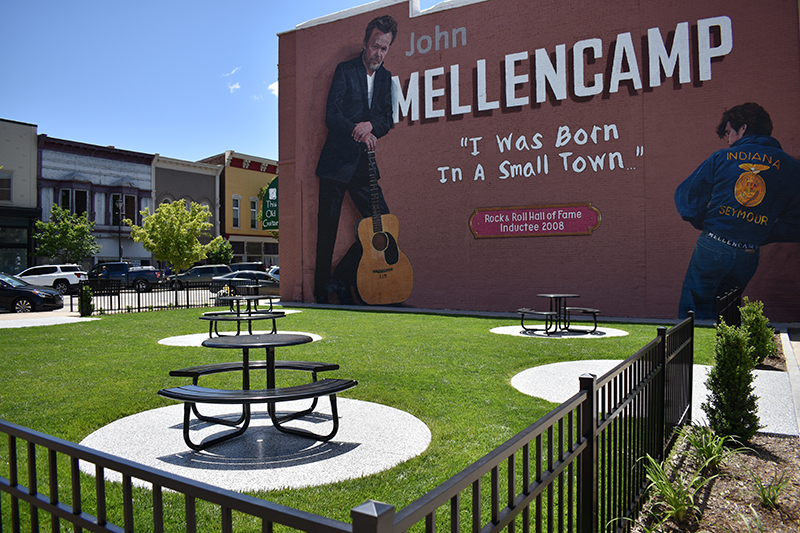
Guardian’s factory in Seymour, Indiana, is a study in contrasts. The town of twenty-two thousand sits halfway between Indianapolis and Louisville, best known as John Mellencamp’s birthplace and a logistics crossroads. Nearly a third of local jobs are in manufacturing, well above the national average. Seymour still has the muscle memory of making things, which made it ideal for Riley’s experiment. He needed workers comfortable around machinery and suppliers close enough to deliver steel tubes within hours, not weeks.
Inside the factory, a fiber laser slices through steel like fabric, guided by software that maximizes material use. The machine cost over a million dollars, but it does the work of a dozen people. Welding robots handle the intricate joins that form bike frames, supervised by a handful of technicians. Four workers can produce four to five hundred frames daily, a productivity level that narrows the wage gap between Indiana and Shenzhen. Starting pay is around twenty-two dollars an hour with benefits, which sounds reasonable until you calculate total labor costs per unit against factories paying a fraction of that overseas.
The speed of domestic production offers advantages imports can’t match. When the Barbie movie sparked a run on pink bikes last year, Guardian ramped up production within days. A Chinese supplier would need weeks to adjust orders, ship containers, and clear customs. Riley built his supply chain to be nimble—steel from a mill twenty miles away, assembly and painting under one roof, direct sales through the company website to avoid retailer markups. The model works for Guardian’s niche, mostly children’s bikes featuring the SureStop braking system Riley developed in college. One lever controls both wheels simultaneously, reducing the risk of the kind of accident his grandfather suffered.
But agility doesn’t erase the price gap. Guardian bikes run from one hundred fifty to four hundred dollars. Down the road at Walmart, imported kids’ bikes sell for as low as eighty-eight dollars. That difference matters enormously in a market where families are having fewer children and budgets are tight. If a parent opts for a cheaper import or skips the bike altogether, the entire industry loses a future customer. Kids who don’t learn to ride young rarely pick it up later.
Riley’s tariff request targets that price disparity. He wants the administration to extend its fifty percent steel and aluminum tariffs to the metal content in bikes and components made abroad. Imported bikes already face tariffs that vary by country of origin, but Riley is pushing for a blanket levy that would raise costs across the board for foreign manufacturers. The argument hinges on national security, a designation that strikes many observers as a stretch for children’s bicycles. Riley counters that the real issue is preserving manufacturing capability itself. If the United States loses the skills and infrastructure to build even simple goods, restarting production during a crisis becomes nearly impossible. You can’t spin up an industrial base overnight.
More than twenty-five hundred bicycle retailers and importers aren’t buying it. They flooded the Commerce Department with opposition letters, warning that higher tariffs would push bikes out of reach for low-income families. Matt Moore, policy counsel for People for Bikes, a trade group representing those businesses, argues the market is already under pressure. Raising prices could accelerate a decline that hurts everyone, from corner bike shops to major importers. The industry depends on creating new riders young, building loyalty that lasts decades. Price families out now, and you lose generations of customers.
The conflict exposes a deeper tension in U.S. trade policy. Tariffs designed to protect or revive domestic industries inevitably raise costs for consumers and businesses that depend on imports. Guardian employs about two hundred fifty people in Seymour, filling old factory buildings and sending workers to local coffee shops. That economic impact is real and visible. But the broader bike industry employs thousands more in retail, distribution, and service jobs tied to selling imports. A tariff that helps Guardian could squeeze those businesses, forcing layoffs or closures elsewhere.
Riley insists Guardian can survive without additional tariffs, but acknowledges they would accelerate growth and possibly inspire other U.S. companies to try domestic bike manufacturing. The company expects to sell around half a million bikes this year, buoyed by strong reviews and repeat customers as kids outgrow smaller models or younger siblings need their own. Guardian has already generated spinoff work for local suppliers, including a Seymour plastics firm now making training wheels. The question hanging over the factory is whether this model can scale or remain a boutique exception in a globalized industry.
The Supreme Court’s recent decision striking down many of Trump’s import taxes has created uncertainty about which tariffs will survive legal challenges. The administration may view bikes as an opportunity to demonstrate that targeted tariffs can rebuild manufacturing without causing widespread economic disruption. Or it could decide that protecting Guardian isn’t worth alienating thousands of retailers and raising prices for families.
Riley’s story fits neatly into political narratives about bringing jobs back from China and revitalizing small-town America. Seymour has benefited tangibly from Guardian’s presence, with employment and investment flowing into a community that knows how to build things but has watched too many factories close. Yet the economics remain stubborn. Even with automation and efficiency, U.S. labor and regulatory costs create a baseline disadvantage against countries where wages are a fraction of Indiana’s and environmental standards are less stringent.
The bicycle industry’s future in America may not hinge on tariffs alone. Guardian’s success depends on convincing enough customers that safety features, quality, and supporting domestic jobs justify paying significantly more. That’s a harder sell in an economy where many families struggle with basic expenses. If tariffs artificially narrow the price gap, they might boost Guardian and encourage competitors. They might also just shift costs onto consumers who can least afford it, reducing overall bike sales and leaving everyone worse off.
Riley’s grandfather survived his crash, sparking a chain of events that led to Guardian’s founding. Whether the company can thrive without protection, or whether tariffs represent essential support for an infant industry trying to compete against entrenched global players, remains unresolved. Seymour’s factories show that American manufacturing isn’t dead, but reviving it sector by sector requires choices about who benefits and who pays. Guardian Bike Company has become an unlikely test case for those choices, with implications reaching far beyond children’s bicycles.