The jump seat flew a hundred meters through the night sky above LaGuardia. Solange Tremblay was still strapped in.
Most people wouldn’t survive what happened Sunday evening when Air Canada flight 8646 collided with a fire truck on a New York runway. The pilots didn’t. But Tremblay, a flight attendant from Lachute, Quebec, was found alive on the tarmac—still buckled into the seat that had been ripped from the aircraft.
Her daughter, Sarah Lépine, called it a miracle. That’s not an overstatement.
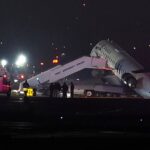
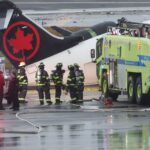
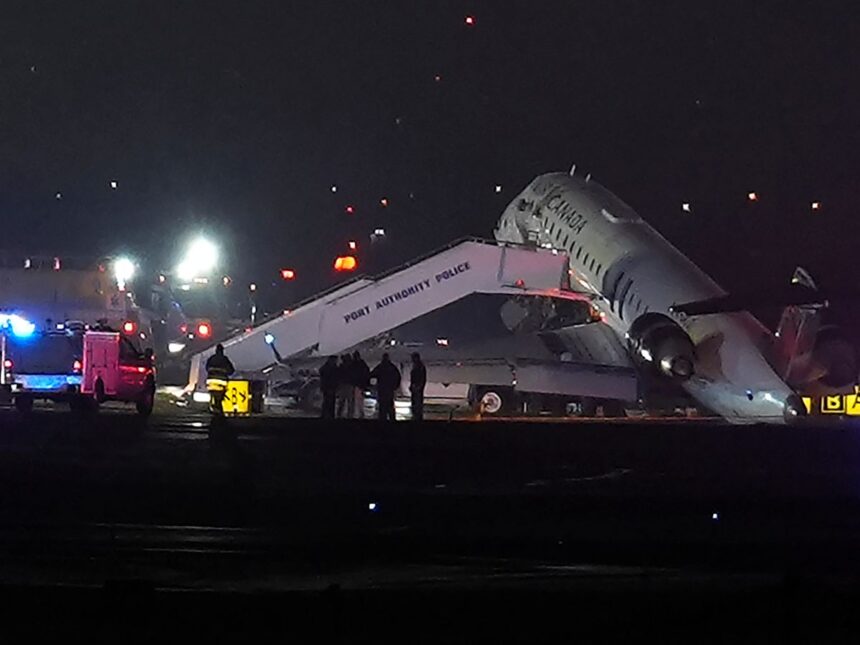
The crash happened just before 8 p.m. The CRJ-900 jet was preparing for takeoff when it struck a Port Authority fire truck that had been cleared to cross the runway. The truck was responding to an emergency at another plane. Witnesses reported hearing a loud bang followed by flames and debris scattered across the asphalt.
According to law enforcement sources cited by WNBC and CNN, Tremblay was seated near the cockpit in one of two jump seats used by cabin crew. The impact tore that section of the fuselage apart. She was ejected, still strapped in, and landed more than a hundred meters away from the wreckage.
Lépine told TVA Nouvelles her mother had a guardian angel watching over her. She’s not wrong. The two pilots were killed instantly. Thirty-nine of the seventy-two passengers were taken to hospital. At least nine remained in critical condition as of Monday evening. Tremblay suffered a broken leg and was transferred to another facility for surgery.
The other flight attendant’s condition hasn’t been confirmed publicly. Two occupants of the fire truck also sustained non-life-threatening injuries.
Air Canada Jazz president Doug Clarke released a statement Monday morning. He called it an incredibly difficult day for the airline and extended condolences to the families of the two pilots. He also pledged support for those injured in the crash.
The U.S. National Transportation Safety Board is leading the investigation. Canada’s Transportation Safety Board sent a team to assist. Both agencies will examine radio communications, cockpit voice recorders, and flight data to determine what went wrong.
Runway incursions are rare but not unheard of. LaGuardia has a complex layout with intersecting runways and heavy traffic. Controllers manage hundreds of movements daily. Clearances are issued carefully. But mistakes happen. A miscommunication or a misunderstood instruction can turn deadly in seconds.
Shakti Denis, a former Air Canada flight attendant now working as a reporter for New Jersey’s News 12, explained the protocol. Cabin crew wait for the pilots to give evacuation orders after an impact. If they don’t hear anything, they use their own judgment. Tremblay was seated near the cockpit. She would have had only seconds to react before the collision.
The Bombardier CRJ-900 is a regional jet used frequently by Air Canada on shorter routes. According to schematics from Fly Radius and other travel sites, the aircraft has two jump seats for cabin crew. One is near the tail. The other is near the cockpit. Tremblay was in the forward position when the plane struck the fire truck.
Jump seats are built to withstand significant force. They’re positioned to protect crew during takeoff and landing. But they’re not designed to survive being ejected from an aircraft. The fact that Tremblay remained strapped in and landed without fatal injuries defies logic.
Her Facebook page filled with messages Monday. Dozens of friends, mostly writing in French, expressed concern and wished her a speedy recovery. Lépine said she hadn’t spoken to her mother since Monday morning. The surgery was scheduled for later that day.
LaGuardia is one of the busiest airports in the United States. It handles more than thirty million passengers annually. Sunday’s crash was the first fatal commercial aviation accident in New York since 2001. The last major incident at LaGuardia was in 2009 when US Airways Flight 1549 landed in the Hudson River. All passengers and crew survived.
This time, the outcome was different. Two pilots are dead. Dozens of passengers are injured. A flight attendant was thrown from a plane and somehow lived to tell about it.
The investigation will take months. Preliminary findings could come within weeks. The NTSB will examine whether the fire truck had proper clearance to cross the runway. They’ll review communications between the tower and both the aircraft and the emergency vehicle. They’ll also look at visibility conditions and whether any equipment malfunctions contributed to the collision.
Air Canada has grounded its CRJ-900 fleet pending safety checks. The airline is cooperating fully with investigators. Passengers from flight 8646 are being offered counseling and support services.
Lépine told reporters her mother is strong. She’s been a flight attendant for more than a decade. She knows the risks. But no one expects to be ejected from a plane and survive.
Lachute is a small town northwest of Montreal. The community has rallied around Tremblay’s family. Local officials sent messages of support. Friends organized a vigil at a church near her home.
The pilots who died have not been publicly identified. Air Canada is working with their families to arrange memorials. The airline has also set up a fund for passengers affected by the crash.
Tremblay’s story is extraordinary. It’s also a reminder of how fragile life is at thirty thousand feet—or on a runway where everything can go wrong in an instant. She was doing her job. She was buckled in. She was prepared for takeoff. Then the world exploded around her.
She’s alive because of engineering, luck, and something that can’t be explained. Her daughter called it a miracle. Maybe that’s the only word that fits.