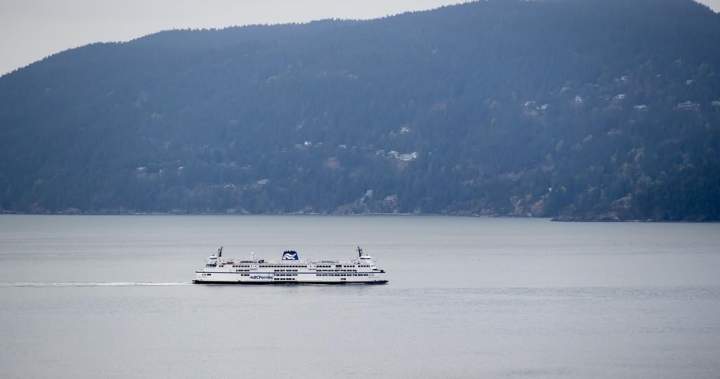
The Queen of Surrey limped back into service Sunday morning with what must have felt like cautious optimism from BC Ferries. Forty minutes later, the vessel was pulled from the water again. Steering panel troubles surfaced almost immediately after departure, forcing cancellations across the Horseshoe Bay-Langdale route and stranding passengers who’d already been waiting hours.
This wasn’t a minor hiccup. By early afternoon, six sailings had been scrapped. A replacement vessel was scrambled into position for the 2:25 p.m. departure, but the ripple effect continued. One return trip to Vancouver Island got axed. Two return sailings between Horseshoe Bay and Duke Point on Monday followed suit.
Darlene Buttle Parsons, stuck in a car lineup for roughly 12 hours, described the communication as “very minimal.” She said workers would approach vehicle windows with little more than vague updates and directions to the front office for refunds. That kind of experience doesn’t sit well when you’re relying on a ferry not just for convenience, but to get home.
BC Ferries issued a statement promising affected passengers would hear from its customer service centre. Rebooking or full refunds were offered depending on availability. Four 12-person water taxis and one 38-person water taxi were deployed to shuttle foot passengers at no charge until regular service resumed.
The Queen of Surrey had just come out of what was described as a scheduled retrofit earlier in the week. Steering issues were identified during that process. The vessel was supposed to be fixed and ready. Instead, it lasted less than an hour before the same system failed again.
This breakdown didn’t happen in isolation. The Spirit of Vancouver Island was pulled from service this past week due to a generator malfunction, sidelining it over Easter weekend. That same vessel had only returned the previous Sunday after another breakdown during spring break. Meanwhile, the Coastal Celebration has been docked at Swartz Bay since March 8 for its annual retrofit. A smaller ferry serving Texada Island also broke down Friday and Saturday, forcing BC Ferries to reroute yet another vessel.
The pattern is hard to ignore. BC Ferries acknowledged in its statement that these recurring issues “underscore the challenges of operating an aging fleet.” The agency applied to the BC Ferry Commissioner for approval to acquire a fifth New Major Vessel. That proposal was rejected. Without that extra ship, the statement said, “our ability to absorb disruptions like this is limited.”
Diana Mumford, former chair of the Sunshine Coast Ferry Advisory Committee, put it more bluntly. She told Global News that residents need ferry service they can depend on, not just sometimes or most of the time. “It is something we need all of the time and we have one breakdown after another,” she said.
For communities like those on the Sunshine Coast, ferries aren’t optional infrastructure. They’re the road in and out. When that road closes repeatedly, it doesn’t just inconvenience tourists. It affects workers commuting to jobs, medical appointments, family visits, and supply chains.
Last March, the Office of the British Columbia Ferries Commission approved four new major vessels for the fleet. Those ships are slated to replace the Queen of Alberni, Queen of New Westminster, Queen of Coquitlam, and Queen of Cowichan. All four are the oldest major vessels still operating. But new ships take time to build and deploy. In the meantime, the current fleet keeps aging.
Eric McNeely, provincial president of the BC Ferry and Marine Workers’ Union, described the situation as a convergence of pressures. An aging fleet requires more maintenance. Maintenance teams are stretched. Planning hasn’t kept pace with demand. “Our engineering crews are working as much as they can to get the vessels back into service,” McNeely said. “But as vessels get older, they require more maintenance and they require the resource to do that. You know, that’s money, but that’s also time and also skills.”
He added that maintenance crews have reported that the time allotted for refits has been “compressed.” That’s a polite way of saying there isn’t enough time to do the work properly. When you rush a repair on a complex mechanical system like a ferry, the risk of a repeat failure climbs.
BC Ferries said it expected to accommodate all traffic staged at both terminals by the end of Sunday. But the agency also warned that no further standby space would be available on the route for the rest of the day. If you weren’t already in line, you weren’t getting on.
This isn’t just a bad day for BC Ferries. It’s a symptom of deferred capacity planning and fleet renewal that’s now catching up. The request for a fifth major vessel wasn’t a luxury item. It was a buffer against exactly this kind of cascade. Without it, a single mechanical failure becomes a system-wide disruption.
Passengers waiting 12 hours in parking lots aren’t interested in bureaucratic explanations. They want to know when the service will be reliable again. Right now, that answer remains unclear. New vessels are coming, but not soon enough to prevent the next breakdown. And with an aging fleet still carrying the load, it’s likely only a matter of time before another steering panel, generator, or propulsion system gives out.
The question isn’t whether BC Ferries can patch things together for another season. It’s whether the system can hold until the replacements arrive. Based on this weekend, the margin for error is gone.