There’s a moment in trade war history when the rhetoric shifts from principle to liability. For Democrats, that moment arrived somewhere between the Supreme Court striking down Trump’s sweeping tariffs and Iowa soybean farmers watching their export markets evaporate. Now, as the 2026 midterm cycle accelerates, party strategists have made a calculation: attacking the former president’s signature economic policy isn’t just safe politics—it’s essential.
The Democratic Congressional Campaign Committee marked the one-year anniversary of what Trump called “Liberation Day” with a blunt assessment. House Republicans who championed tariffs as a cure for economic anxiety have transformed their central campaign promise into their most glaring vulnerability. The memo, circulated Thursday among Democratic operatives, frames the tariffs not as ideological dispute but as broken covenant. Voters were promised relief. They got price hikes instead.
Rep. Suzan DelBene, who chairs the DCCC, told reporters the narrative practically writes itself. Republicans pledged tariffs would inaugurate a “golden age” and fade quickly once leverage was established. Neither claim survived contact with reality. Grocery bills climbed. Manufacturing costs surged. The promised jobs renaissance never materialized in the communities Trump insisted would benefit most.
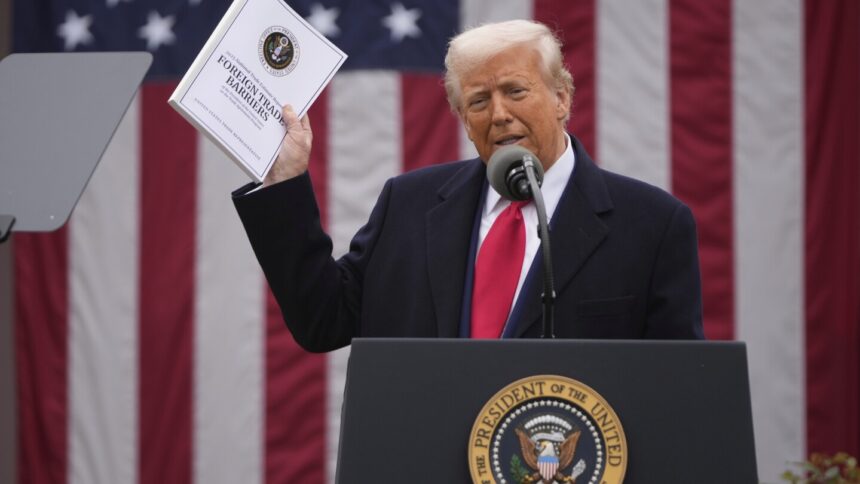
Trump imposed his tariff regime unilaterally last April, upending decades of incremental movement toward liberalized trade. He framed the duties as economic patriotism, a correction to imbalances he blamed on foreign exploitation and domestic complicity. China, Mexico, the European Union—all faced levies Trump argued would reshore production and rebalance ledgers. What followed was predictable to economists and surprising to almost no one except, apparently, the administration itself: retaliatory tariffs, supply chain disruptions, and consumer sticker shock.
The political risk for Democrats isn’t trivial. Working-class voters, particularly in Rust Belt communities still scarred by factory closures, have shown consistent support for protectionist measures. These are constituencies Democrats desperately need to reclaim after Trump’s dominance among non-college whites in 2020 and 2024. Unions, traditionally aligned with Democratic campaigns, have also backed tariffs as defensive measures against unfair competition. Criticizing Trump’s trade war could alienate precisely the voters and institutions Democrats have spent years courting.
Yet polling suggests the ground has shifted beneath that assumption. Pew Research Center released data Wednesday showing 63 percent of Americans express little or no confidence in Trump’s tariff management. That’s not a marginal dissatisfaction. It’s a supermajority spanning political demographics, reflecting frustration that transcends partisan reflex. When two-thirds of the country doubts your economic centerpiece, vulnerability becomes bipartisan.
Democratic leaders insist their opposition isn’t merely opportunistic repositioning. They point to constitutional concerns—Trump bypassed Congress entirely, invoking emergency authorities intended for national security threats, not trade negotiations. The Supreme Court agreed in February, ruling the president lacked authority to impose tariffs without legislative approval. Trump has since attempted workarounds through alternative executive channels, but the legal cloud remains. For Democrats, this isn’t just bad policy. It’s executive overreach with price tags attached to milk and steel.
Rep. Marcy Kaptur represents northwest Ohio, agricultural territory where trade policy isn’t abstract theory but quarterly income statements. She’s no free-trade purist. Kaptur opposed NAFTA and remains skeptical of agreements she views as corporate giveaways dressed in diplomatic language. But Trump’s tariffs, she argues, inflicted fresh wounds without healing old ones. Farmers in her district can’t export beef or grains at competitive rates because retaliatory tariffs locked them out of foreign markets. The administration promised protection. It delivered isolation instead.
“Trump isn’t making it better,” Kaptur said bluntly. “He’s making it worse.” That assessment from a Democrat with protectionist credentials signals how thoroughly the politics have evolved. If even tariff-sympathetic members are condemning implementation, Republicans defending the policy face hostile terrain.
The DCCC plans to embed tariff criticism into television and digital advertising, tying duties directly to cost-of-living anxieties that dominated 2024 campaigns. The strategy assumes voters will connect premium prices on electronics, clothing, and groceries to trade policy rather than vague economic forces. It’s a gamble, but one Democrats believe Republican rhetoric has already set up. GOP candidates spent 2024 hammering inflation and promising relief. If those same officials now defend policies that demonstrably raised costs, the contradiction becomes campaign fodder.
Trump did relent on some tariff rates in the weeks and months following Liberation Day, negotiating bilateral deals that lowered levies with select partners. But those adjustments often came after visible economic damage and typically involved concessions that undermined the original justification. If tariffs were necessary to correct imbalances, why negotiate them downward? If they were temporary leverage, why maintain them a year later? Democrats are betting voters notice the inconsistency.
Internal Democratic strife over criticizing tariffs has largely evaporated, replaced by confidence that the issue cuts favorably. Party officials who worried about alienating labor or seeming elitist now see polling and constituent feedback suggesting broad frustration. This isn’t coastal liberals complaining about wine prices. It’s midwestern families struggling with grocery budgets and farmers watching export markets collapse.
Republicans will counter that Democrats supported protectionism when it suited them, that trade skepticism was bipartisan before Trump made it signature policy. They’ll argue any economic pain is transitional, necessary sacrifice for long-term industrial renewal. But that requires voters to tolerate present hardship for hypothetical future gains, a political ask that grows harder as midterms approach and material conditions remain stagnant.
The Democratic bet is simple: Republicans own this policy now, and ownership comes with accountability. Trump’s tariffs aren’t theoretical debate points. They’re lived experience at checkout counters and grain silos. If Democrats can successfully tie GOP candidates to those price hikes, the party that ran on economic relief becomes the party that delivered economic pain. That transformation, from promise to liability, is exactly the vulnerability the DCCC memo identifies and the strategy Democrats plan to exploit from now until November 2026.