The Supreme Court ruling that just dismantled Donald Trump’s trade war architecture has left India in a peculiar position. After months of hard negotiation and painful concessions, New Delhi now sits with a trade agreement that was essentially born from illegal leverage. The question is no longer whether India made the right deal. It’s whether the deal still matters at all.
I spoke to exporters in Gujarat’s industrial belt last month, and the mood was cautiously bitter. One textile manufacturer told me his shipments to the U.S. had dropped 40 percent during the tariff spike. “We pivoted to Europe and the Gulf,” he said, leaning against a roll of cotton fabric destined for Hamburg. “Why would we rush back now?” That sentiment is spreading. India’s export ecosystem didn’t just endure Trump’s tariffs. It adapted around them.
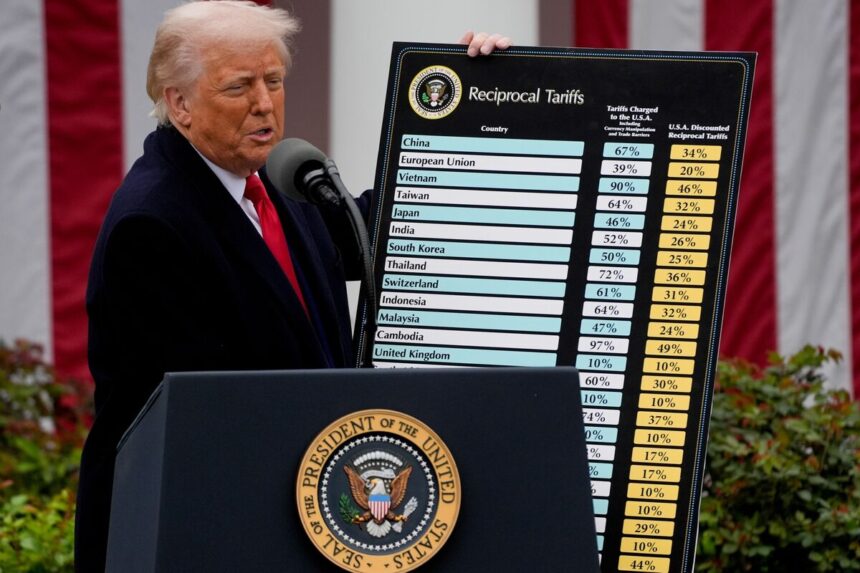
The timeline tells a story of escalation and miscalculation. April 2024 marked Trump’s so-called Liberation Day, when reciprocal tariffs hit India at 26 percent. New Delhi responded with strategic patience, offering concessions on bourbon and Harley-Davidson motorcycles. These were symbolic gestures aimed at Trump’s personal fixations, not genuine trade reform. But the relationship soured fast after India disputed Trump’s narrative about a ceasefire with Pakistan. By August, tariffs on Indian goods doubled to 50 percent, officially justified by India’s continued purchase of Russian crude oil.
That justification was always thin. India buys Russian oil because it’s cheap and because energy security trumps geopolitical theater. The International Monetary Fund noted in a February report that India’s oil imports from Russia kept domestic inflation manageable during a period of global energy volatility. Punishing India for pragmatism made little economic sense, but Trump’s tariff policy was never really about economics. It was about dominance.
The trade deal signed in February looked like a win for Washington. India agreed to purchase $500 billion in American goods and lower barriers on agriculture, chemicals, and medical devices. In exchange, tariffs dropped to 18 percent. But the Supreme Court’s decision declaring those tariffs unconstitutional has gutted the foundation of that agreement. Ajay Srivastava, founder of the Global Trade Research Initiative in New Delhi, told me the ruling “removes the gun from the table.” Without the threat of punitive tariffs, India has space to recalibrate.
That recalibration is already happening quietly. India’s Ministry of Commerce has been reviewing the joint statement with the U.S., looking for wiggle room. Agricultural concessions remain politically toxic for Prime Minister Narendra Modi, whose ruling coalition depends on rural voters. Opening India’s farm sector to American imports could destabilize domestic markets and fuel unrest. Modi’s government drew red lines during negotiations, and those lines haven’t moved.
Meanwhile, the Middle East conflict is scrambling the entire equation. Brent crude dipped below $100 per barrel this week on optimism that the Iran war might wind down, but oil markets remain jittery. India’s dependence on Middle Eastern energy makes any prolonged conflict a direct economic threat. The recent chaos over jet fuel prices illustrates the vulnerability. India’s government rolled back a record hike in domestic aviation fuel within hours of announcing it, a rare intervention that signals just how sensitive energy costs have become.
The aviation sector is caught in a vise. Longer flight routes to avoid conflict zones mean higher fuel consumption. Airspace restrictions over parts of the Middle East have added 30 to 45 minutes to key international routes, according to data from the Directorate General of Civil Aviation. For carriers like IndiGo and Air India, already operating on thin margins, these added costs are unsustainable. Domestic passengers got a reprieve, but international fliers are paying the full fuel surcharge. The disparity reflects a government prioritizing political optics over market logic.
Energy pressures are compounding trade uncertainties. India’s cooking gas shortage, driven by supply chain disruptions and increased domestic demand, is forcing households to make hard choices. A think tank in Mumbai recently published research showing that lower-income families are cutting back on essentials to afford liquefied petroleum gas. The trade-offs are stark. Data centers and digital infrastructure projects are consuming energy at unprecedented rates, creating competition for resources that once went to kitchens.
Trump’s tariff gamble reshaped global supply chains, but not in the way he intended. Instead of pulling manufacturing back to the United States, companies diversified. Indian exporters shifted focus to Europe, Southeast Asia, and the Gulf. A report from the United Nations Conference on Trade and Development found that U.S. tariffs led to trade diversion, not trade correction. Goods that once flowed to American ports now land in Rotterdam, Dubai, and Singapore.
India’s exposure to the U.S. market has always been asymmetric. America remains India’s largest trading partner, but India represents a fraction of U.S. trade volume. That imbalance gave Washington leverage, until it didn’t. The Supreme Court ruling has flipped the power dynamic. India can now argue that concessions made under duress should be revisited. Whether New Delhi has the political will to push that argument is another question.
The broader issue is trust. Trade agreements require predictability. Trump’s volatile approach to tariffs eroded that. One Indian official, speaking on background, told me that the uncertainty was worse than the tariffs themselves. “We can plan for costs,” he said. “We can’t plan for chaos.” That chaos is now baked into U.S.-India economic relations.
Normalcy won’t return until the Middle East conflict ends and energy markets stabilize. India’s trade strategy is in limbo, caught between an invalid tariff regime and a deal built on shaky legal ground. The next few months will reveal whether New Delhi uses the Supreme Court ruling as leverage or accepts the status quo. Either way, India’s exporters have learned a hard lesson about relying too heavily on any single market.
The anniversary of Liberation Day arrived with little fanfare in New Delhi. For India, it marked a year of disruption, adaptation, and uncomfortable compromise. What comes next depends less on trade policy and more on whether the world can find its footing again.