I spent the morning in a cramped Washington office watching customs brokers scroll through spreadsheets that stretched into oblivion. One column listed companies owed money. Another tracked tariff payments dating back nearly a year. The third showed interest ticking upward like a taxi meter nobody could turn off. This is what happens when the world’s largest economy has to reverse itself at breakneck speed.
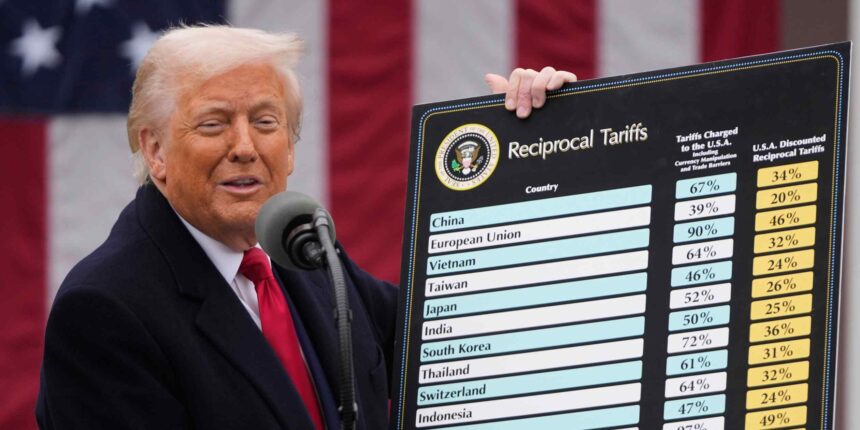
The U.S. government now faces an unprecedented logistical crisis: refunding $166 billion in tariffs that the Supreme Court ruled unconstitutional in February. President Trump had imposed these duties under the International Emergency Economic Powers Act, branding them as “reciprocal” measures and tools to combat fentanyl flows. The Court disagreed. Now the Treasury must undo what took months to collect, and the clock is working against everyone involved.
U.S. Customs and Border Protection is scrambling to launch a digital refund portal by late April. The system, called the Consolidated Administration and Processing of Entries, represents the agency’s first serious attempt to handle refunds electronically at this scale. Until February, CBP was still mailing paper checks. That analog process couldn’t possibly manage what lies ahead: processing over 1.6 billion lines of customs documentation, a task equivalent to 4.43 million hours of manual labor according to agency estimates.
Only 26,000 of the 330,000 companies eligible for refunds have completed the necessary preparations—setting up dedicated accounts and electronic banking channels. Those 26,000 represent nearly 80 percent of the import volume in question, which offers some relief. But the gap reveals how unprepared the system was for this moment. A CBP official admitted the agency “has never been ordered to, nor has it attempted to, process a volume of refunds anywhere near the volume of total entries” now demanded by the Court’s ruling.
I spoke with customs brokers who’ve become unexpected heroes in this mess. Nippon Express Holdings deployed roughly 50 employees across its U.S. operations to help clients navigate the refund maze. The Japanese logistics giant serves over 1,000 companies and holds the shipment records that will make or break refund claims. “Many tasks, such as extracting various data to determine which shipments are eligible for refunds, can only be performed by customs brokers,” an air cargo division head told me. Without these intermediaries, importers would be flying blind through customs bureaucracy.
V. Alexander, another customs broker working with major trading houses like Mitsui & Co., is bracing for a flood of documentation requests. Chief Operating Officer Michael Muntean explained his firm’s role: verifying shipment accuracy, correcting legal violations flagged by CBP, and supporting customers when discrepancies emerge. It’s tedious work that blends forensic accounting with diplomatic negotiation between importers and federal authorities.
The financial stakes climb daily. The Cato Institute calculated that interest accrues at $23 million per day on the outstanding refunds. That compounds at annualized rates between 4.5 and 6 percent. If the Trump administration drags this process through the end of its four-year term, interest alone could reach $25 billion—roughly equivalent to NASA’s annual budget. Trump hinted at postponing refunds, but the math makes delay ruinously expensive for taxpayers already on the hook.
Then there’s the consumer backlash brewing beneath the surface. The Federal Reserve Bank of New York found that roughly 90 percent of Trump’s tariff burden passed directly to American consumers and companies. In March, Costco customers filed a class-action lawsuit demanding refunds on tariff costs they paid at checkout. That legal action could inspire similar claims as importers receive government checks and shoppers ask why they’re not seeing relief at retail counters.
Stan Veuger, a senior fellow at the American Enterprise Institute, captured the absurdity perfectly: “It’s really the worst of both worlds. You get all the distortions associated with imposing a new tax at the IEE by tariff, and none of the revenue.” The tariffs disrupted supply chains, inflated consumer prices, and strained trade relationships. Now the revenue vanishes while the economic damage lingers.
Historical precedent offers little comfort. The Supreme Court previously ordered tariff refunds in a smaller case that took seven years to complete. The current volume dwarfs that earlier episode. CBP openly admits the task would be “impossible without a dedicated system,” which explains why the Court postponed its refund order until the portal goes live.
Nippon Express spent the past year building internal systems to visualize and manage customer shipment data, anticipating future tariff volatility. That foresight now positions the firm as a critical node in the refund network. Companies that relied on brokers for tariff payments must now lean on those same intermediaries to recover their money. It’s a relationship that highlights how much of international trade runs through invisible middle layers most people never consider.
The refund portal itself represents a crash course in government digitization. Eligible companies will upload lists of tariffed items. The system will automatically calculate refund amounts based on payment records and customs documentation. That automation is essential given the scale, but it also introduces new risks. Data mismatches, clerical errors, and legal violations could delay individual claims even as the broader system churns forward.
I keep thinking about the border patrol agents and customs officials who will staff this operation. They’re tasked with verifying billions of data points while fielding inquiries from anxious companies and their brokers. It’s unglamorous work that demands precision under political pressure. Any delays will generate headlines. Any errors could spawn lawsuits.
The broader geopolitical lesson here is stark. Unilateral tariff actions create cascading consequences that outlast the policies themselves. Even when courts reverse executive overreach, unwinding the damage requires time, money, and bureaucratic capacity that strains government institutions. The $166 billion refund isn’t just a line item in a budget. It’s a stress test for federal systems designed for routine operations, not emergency reversals.
For now, customs brokers like Nippon Express and V. Alexander remain the linchpins holding this process together. Their client relationships, documentation expertise, and navigational knowledge will determine how smoothly—or chaotically—the next six months unfold. Companies that ignored preparation deadlines may find themselves locked out when the portal launches. Those that acted early will see their money first, compounding competitive advantages in industries already squeezed by trade uncertainty.
The U.S. Treasury is essentially running a reverse auction where speed and accuracy determine winners. Interest keeps climbing. Lawsuits keep filing. And somewhere in a Washington server room, engineers are building a system that must work perfectly the first time.