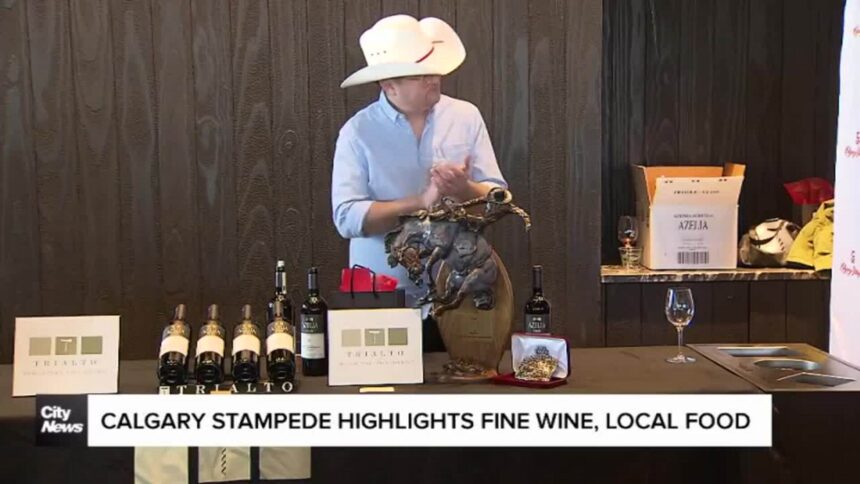
The morning air smelled like turned earth and barbecue smoke when I arrived at the Calgary Stampede grounds last July. Thousands had come for the bucking broncos and the midway lights. But tucked between the livestock barns and the grandstand, something quieter was unfolding. Sommeliers in crisp shirts leaned over rows of wine glasses, swirling and sniffing. Chefs plated bison tartare with pickled saskatoons. A rancher from southern Alberta talked about regenerative grazing while pouring a glass of Okanagan rosé.
The Stampede has always been about celebrating what grows here. Cattle and wheat. Barley and canola. But in recent years, the festival has started asking a different question. What if the land could also give us something elegant, something unexpected? What if Alberta’s food story included more than beef on a bun?
The agri-food and wine competition launched quietly a few years ago, but it’s been gaining attention. Judges taste wines from across Western Canada, scoring them on balance, structure, and sense of place. Local chefs compete to showcase ingredients grown within a few hundred kilometers. The goal isn’t to replicate Napa or Bordeaux. It’s to prove that prairie soil and mountain water can produce something worth savoring.
Jillian Code, a food and agriculture reporter who has covered the competition, says it reflects a broader shift in how Canadians think about regional food systems. Consumers want to know where their meals come from. They want stories behind the glass. And they want those stories to be local, traceable, and rooted in the landscape they call home.
The wine entries come mostly from British Columbia’s Okanagan Valley, but a growing number arrive from smaller operations in Alberta and Saskatchewan. These aren’t mass-market labels. They’re small-batch vintages made by people who understand frost dates and short growing seasons. Some wineries are experimenting with cold-hardy hybrids that can survive a prairie winter. Others are working with Indigenous communities to incorporate traditional knowledge into fermentation and flavor profiles.
One winemaker I spoke with described her work as an act of faith. She plants vines knowing they might not survive. She harvests in October, racing against the first snow. And she bottles the results with a label that says, simply, “Made here.” That phrase carries weight in a province often defined by oil fields and cattle ranches. It suggests that Alberta’s agricultural identity is still being written.
The food competition runs parallel to the wine tasting, and it’s just as revealing. Chefs use bison, elk, and venison alongside heirloom grains and foraged mushrooms. They pickle rhubarb and cure trout. They make ice cream from chokecherries and bread from Red Fife wheat. The dishes aren’t showy. They’re quiet and confident, the kind of food that tastes like memory.
One chef told me she sources everything within a three-hour drive. That means working with farmers she knows by name. It means adjusting menus based on what’s ripe. And it means educating diners about seasonality, a concept that can feel abstract in a world of year-round avocados and imported strawberries.
The competition isn’t just about taste. It’s about resilience. Climate change is reshaping agriculture across the Prairies. Droughts are longer. Frosts are less predictable. And farmers are adapting, experimenting with new crops and old techniques. The wine and food entries at the Stampede reflect that innovation. They show what’s possible when people pay attention to the land instead of fighting it.
There’s also an economic dimension. Western Canada’s wine industry is worth hundreds of millions of dollars, and it’s growing. According to Wine Growers Canada, the sector supports thousands of jobs and attracts tourists who want to taste regional flavors. Competitions like the one at the Stampede help raise the profile of smaller producers who might otherwise go unnoticed. A medal or a mention can mean the difference between selling out a vintage and closing up shop.
But the real value might be cultural. Food and wine connect people to place. They create pride and curiosity. And in a region often overlooked by national media, they offer a counter-narrative. Alberta isn’t just oil and beef. It’s also experimental winemakers and third-generation grain farmers. It’s chefs who pickle and preserve. It’s people building a food culture from scratch.
Walking through the Stampede that day, I overheard a woman say she didn’t know Alberta had wineries. Her friend laughed and poured her a taste. The wine was bright and grassy, with a faint mineral edge. Not French. Not Californian. Just itself.
Later, I watched a panel discussion on regenerative agriculture. A rancher explained how rotational grazing improves soil health. A chef described cooking with those same cattle, knowing they’d been raised on native grasses. A sommelier talked about pairing the beef with a red from the Similkameen Valley. The conversation moved seamlessly between ecology, economics, and flavor. It was the kind of discussion that doesn’t happen often enough.
The Stampede has always been a showcase. But what it’s showcasing is changing. Rodeo and agriculture will always be central. But now there’s room for wine glasses and charcuterie boards. There’s space for conversations about terroir and tradition. And there’s recognition that celebrating the land means celebrating everything it can offer, not just what it’s always offered.
As the afternoon sun slanted across the tents, I tasted a final pour. It was a white blend, crisp and cold. The winemaker said it was made from grapes grown at the northern edge of their range. Risky, she admitted. But worth it. That willingness to take risks, to push boundaries, felt like the heart of the whole event. The Calgary Stampede isn’t abandoning its roots. It’s deepening them.