I crossed into Wilmington, Delaware, on a cold February morning in 2026, where a shuttered auto parts supplier sat hollow against the skyline. The promise had been bold: tariffs would restore American manufacturing. But inside that facility, I found only dust.
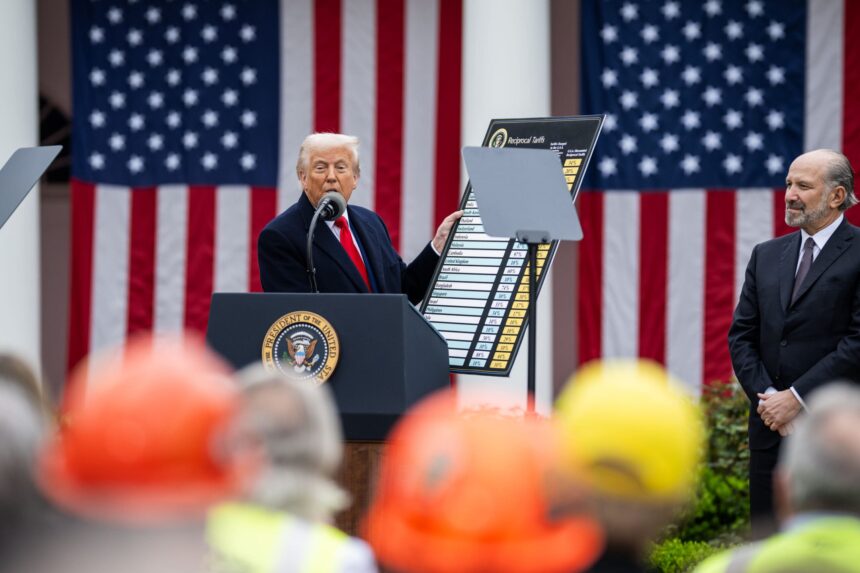
A year ago, President Trump stood before the nation and declared April 2 “Liberation Day.” He called it a new dawn for American industry. The idea seemed straightforward enough. The United States would mirror the tariff rates of its trading partners. From that single policy shift, Trump forecast trillions in revenue, a manufacturing renaissance, falling prices, and wealth redistribution back to American workers. The tariff structure imposed that day ranked as the steepest since 1911, amounting to a $3.2 trillion tax increase over ten years. It was sweeping. It was dramatic. And according to recent data from the Bureau of Economic Analysis, the Congressional Budget Office, and the Federal Reserve, it did not deliver on those promises.
The core claim was reciprocity. Trump repeated it in rallies and policy briefings alike. If a country charged us tariffs, we would charge them the same. But reciprocity requires measurement. And the method used by the United States Trade Representative’s office bore little resemblance to that principle. Instead of calculating foreign tariff schedules or cataloging trade barriers, the administration converted bilateral trade deficits into tariff rates. A country running a trade surplus with the U.S. faced higher tariffs, regardless of whether that surplus reflected competitive advantage, consumer preference, or currency dynamics. The system applied a minimum 10 percent tariff across the board. Trade imbalances do not measure protectionism. They reflect macroeconomic conditions, savings rates, and investment flows.
Then came the chaos. Within days of the Liberation Day speech, tariffs on China spiked to 125 percent during a month-long escalation. The combined U.S. tariff rate hit 21.5 percent when International Emergency Economic Powers Act tariffs merged with Section 232 sector-specific duties. Over the next ten months, the tariff regime changed more than 50 times. Rates rose. Rates fell. Product exemptions multiplied. By December 2025, the tariffs covered only 42 percent of imports, and the effective rate dropped to 13.6 percent before the Supreme Court ruled in February 2026 that the IEEPA authority did not authorize such tariffs. The policy became a moving target. Companies could not plan. Investors hesitated. And the promises made at peak tariff levels were tested against a far more inconsistent reality.
Trump also pledged an investment flood. He claimed $6 trillion had already arrived and projected $18 trillion by year’s end. I spoke with trade economists at the Peterson Institute for International Economics and reviewed data from the Bureau of Economic Analysis. Foreign direct investment into the U.S. totaled $288.4 billion in 2025. That figure sits below the ten-year average of $320.7 billion. It trails the totals from 2021, 2022, 2023, and 2024. No surge materialized. Some firms announced vague commitments to U.S. expansion, but those pledges did not translate into the macroeconomic data. The numbers remained flat, even sluggish.
Manufacturing employment told a similar story. Between April 2025 and February 2026, the sector shed 89,000 jobs. I visited a textile facility outside Charlotte, North Carolina, where the floor manager described the tariff regime as “impossible to navigate.” Raw material costs spiked. Orders slowed. Layoffs followed. The decline mirrored long-term trends rather than reversing them. Tariff-induced uncertainty appeared to weigh on hiring decisions rather than encourage expansion.
Revenue generation was another cornerstone of the Liberation Day vision. Trump cited the 1880s, when tariffs funded federal surpluses and the government ran leaner than a startup. He suggested tariffs could again make the Treasury wealthy. His advisor Peter Navarro estimated $600 billion annually. The historical comparison collapses under scrutiny. Federal spending in the 1880s averaged under 3 percent of GDP. In 2025, it hovered near 23 percent. The scale difference is enormous. Tariffs that once financed a minimal state cannot sustain modern entitlements, defense budgets, and infrastructure needs.
Actual tariff revenue came in well below projections. Before the Supreme Court struck down the IEEPA tariffs, they generated approximately $166 billion. Total customs duties for 2025 reached $264 billion, representing 4.9 percent of total tax receipts. That is meaningful revenue, but far short of Navarro’s forecast. And the net gain is smaller still, because tariffs reduce income and payroll tax revenue by slowing economic activity. Federal debt continued to grow throughout 2025. No debt was paid down. The surplus dream did not materialize.
Then there is the price question. Trump and his advisors repeatedly insisted Americans would not pay the tariffs. Foreign countries would absorb the cost. And because domestic production would rise, competition would increase and prices would fall. Tariffs are legally paid by importers. Economically, the burden is shared among importers, downstream businesses, consumers, and sometimes foreign exporters. When import costs rise, so do retail prices. Domestic producers often raise their own prices in response, knowing foreign competition just became more expensive.
Federal Reserve Chair Jerome Powell has directly linked inflation persistence to tariffs. In a recent press conference, he said elevated readings largely reflect goods sector inflation boosted by tariff effects. The Pricing Lab at Harvard estimates tariff pass-through to retail prices reached 24 percent through October 2025, adding a cumulative 0.76 percentage points to the Consumer Price Index. I spoke with shoppers outside a Target in suburban Maryland. They described higher costs on electronics, clothing, and home goods. Prices for both imported and domestically produced substitutes climbed.
Researchers at the Kansas City Fed found that tariffs likely reduced employment growth in 2025, though uncertainty levels remain high. A separate Federal Reserve study noted that price increases were gradual rather than sudden. Retailers adjusted slowly, perhaps hesitant amid the policy volatility. Uncertainty that deterred investment and hiring may have also limited how much of the tariff burden retailers passed directly to consumers in the short run. But the pressure built over time. Inflation did not vanish. It intensified.
I interviewed a small business owner in Pittsburgh who imports machine parts from Germany. She described the tariff landscape as a gamble. Rates changed. Exemptions appeared and disappeared. Planning became nearly impossible. She raised prices to cover costs and lost customers to larger competitors who could absorb temporary losses. This is not the industrial rebirth Trump promised. It is contraction dressed in policy jargon.
One year after Liberation Day, the evidence contradicts the administration’s central claims. The tariffs were not reciprocal in any meaningful sense. They did not spark an investment boom or revive manufacturing employment. Revenue fell short of projections and failed to reduce national debt. Prices rose instead of falling, and economic activity weakened rather than accelerated. The Supreme Court’s February ruling invalidated the legal foundation for much of the tariff structure, but the economic damage had already unfolded.
As policymakers weigh future trade actions under alternative legal authorities, these outcomes demand scrutiny. Tariffs are not inherently good or bad. They are tools. And tools must be evaluated by their results, not their rhetoric. The Liberation Day experiment produced volatility, inflation, and disappointed expectations. That is the record. And it should shape every conversation about trade policy going forward.