A First Nations advocate has taken audit findings worth nearly $29 million to Saskatoon police. He hopes criminal charges might follow. The money in question involves federal funding to the Federation of Sovereign Indigenous Nations. Ottawa says much of it was spent improperly.
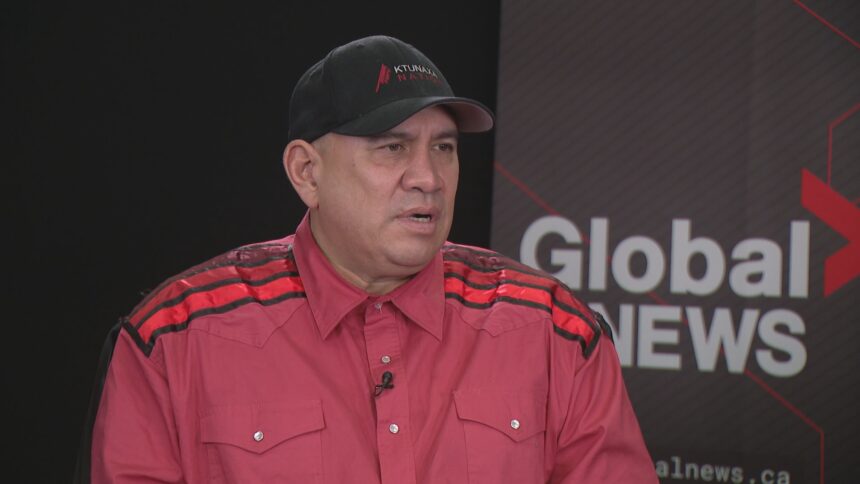
Rob Louie runs the Band Member Alliance and Advocacy Association of Canada. On Monday morning, he walked into Saskatoon police headquarters with a letter. That letter came from Indigenous Services Canada and demands the FSIN repay $28.7 million. Louie shared it publicly weeks ago. Now he wants law enforcement to look closer.
“What I hope to see is criminal charges being laid against those responsible,” Louie told reporters afterward.
The letter stems from a KPMG audit done last fall. Auditors reviewed $47 million in transactions between April 2019 and March 2024. They flagged $34.2 million as ineligible, questionable, or unsupported. That’s nearly three-quarters of what they examined.
Saskatoon police responded quickly. They told media they are not investigating. Instead, they said any credible complaint would go to the RCMP’s Federal Policing unit. The federal RCMP has not confirmed whether they plan to investigate.
“Quite frankly, we don’t care if it’s the Saskatoon police or the RCMP that’s going to carry out criminal charges,” Louie said. “We just want that to be done.”
The FSIN sees things differently. Last Tuesday, the organization called this a “fundamental disagreement in interpretation.” They say Ottawa is applying new rules retroactively. They also claim the federal government did not consider all the facts.
The biggest disputed item is COVID-19 spending. More than $23.2 million falls under that category. Indigenous Services Canada says the FSIN lacked documentation. They could not prove they bought personal protective equipment or show where it went. Delivery records were incomplete or missing.
FSIN Chief Bobby Cameron has said most of the 74 First Nations chiefs his group represents backed how PPE was handled. On Monday, the FSIN posted photos on Facebook. The images show spreadsheets listing PPE shipments to each member nation.
“Many of them, over 40, close to 50, have signed support letters, affidavits, statements about the PPE deliveries,” Cameron said at a news conference last week. He pushed back on claims that no First Nations received supplies.
When asked to provide these support letters, the FSIN sent a template instead. The template is addressed to two federal ministers. It has blank spaces where chiefs can write their nation’s name and the amount of PPE received.
Some chiefs did receive these affidavit requests by email. That happened two weeks before the repayment letter became public. The timing raises questions about when the FSIN knew trouble was coming.
The FSIN has also attacked Louie personally. In a Monday press release, they called his remarks “false and defamatory.” They questioned his credibility and said he has been on “the wrong side of the law.” They added they look forward to hearing from “actual experts.”
Louie did not back down. He said he would rely on “the defence of truth” if the FSIN pursued defamation claims. He called their response an old tactic meant to silence critics.
“The truth of the matter is I’m working off of the information provided to me, including the Indigenous Services Canada forensic audit report,” Louie said. “What FSIN is doing is textbook deflection.”
This dispute goes beyond spreadsheets and templates. It touches on accountability within Indigenous governance. Federal funding flows to organizations like the FSIN to support member nations. When that money cannot be tracked, trust erodes on multiple fronts.
Chiefs depend on the FSIN to represent their interests. Band members depend on chiefs to deliver services. Ottawa depends on audits to ensure public dollars are spent properly. When one link in that chain breaks, everyone suffers.
The COVID-19 pandemic created urgent needs across Indigenous communities. PPE shortages were real and dangerous. Many First Nations scrambled to protect elders and vulnerable members. If supplies arrived, that mattered deeply. But if records vanished or were never kept, questions will follow.
The FSIN’s decision to produce affidavits after the audit may seem like damage control. Or it could be an effort to gather evidence that was informally tracked during a crisis. Either way, the federal government has drawn a line. They want documentation that meets audit standards, not retroactive attestations.
Louie’s move to involve police shifts the conversation. Audits identify problems. Police investigate potential crimes. Whether fraud occurred is not for auditors to decide. That is why Louie believes law enforcement should step in.
The RCMP’s Federal Policing unit handles cases involving government funds and corruption. If they take this on, the investigation could stretch months or years. Charges, if any, would come only after investigators review thousands of pages of records.
For now, the standoff continues. The FSIN insists it did nothing wrong. Ottawa insists nearly $29 million must be repaid. Louie insists someone should face criminal accountability. And chiefs across Saskatchewan are left wondering what comes next.
This is not the first time Indigenous organizations have faced scrutiny over federal funding. Past audits have uncovered similar issues with documentation and eligible spending. But the scale here is large. So is the public attention.
Indigenous Services Canada has not said what happens if the FSIN refuses to repay. Withholding future funding is one option. Legal action is another. Either path could disrupt programs that serve thousands of people across the province.
Band members watching this unfold deserve clarity. They need to know their leaders are managing money responsibly. They also need to know Ottawa is not using audits as a weapon to control Indigenous governance. Both sides have work to do to restore confidence.