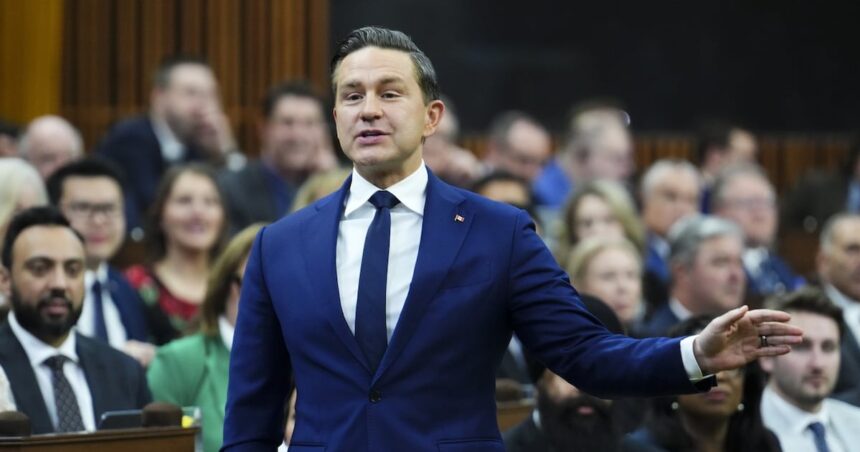
Pierre Poilievre’s return to Parliament came with a price tag most Canadians would find hard to stomach. Elections Canada data shows the Battle River-Crowfoot byelection cost taxpayers more than $2.3 million. That’s public money spent to secure a seat for a party leader who lost his own riding just months earlier.
The numbers tell a blunt story. When voters went to the polls in April 2025, Poilievre didn’t just lose narrowly. He lost his Ottawa-area seat by more than 4,500 votes to Liberal newcomer Bruce Fanjoy. For someone first elected in 2004, barely past his 25th birthday, that defeat stung. Two decades in Parliament ended with voters showing him the door.
Poilievre wasted no time finding a safer bet. Battle River-Crowfoot in Alberta is Conservative territory through and through. Damien Kurek, the MP who resigned to make way for his leader, had just won the riding with nearly 83 per cent of the vote. The math was clear. This wasn’t about representing constituents. This was about survival.
The August 2025 byelection played out as expected. Poilievre captured more than 80 per cent of the vote. But according to the chief electoral officer’s March 23 report, that certainty cost $2.342 million. That’s taxpayer money funding what amounted to a political rescue operation.
Context matters here. Since 2022, Canada has held 12 federal byelections costing a combined $21 million. That’s an average of $1.75 million per race. Battle River-Crowfoot ranks as the second most expensive in that span. Only the June 2024 Toronto–St. Paul’s byelection, at $2.47 million, cost more.
Elections Canada points to geography and timing as cost drivers. Urban ridings like those in Greater Toronto typically run higher bills. Electoral district location and the length of the campaign period both push expenses up. Fair enough. But those factors don’t fully explain why one riding in rural Alberta required such a hefty outlay.
The Longest Ballot Committee played a role. This group advocates for electoral reform by flooding byelections with candidates. More than 200 names appeared on the Battle River-Crowfoot ballot. Processing that many candidates, printing ballots, and managing logistics naturally drives costs higher. But the core question remains. Should the public bankroll a party leader’s second chance?
Duff Conacher from Democracy Watch doesn’t mince words. “Party leaders have the power to choose what riding they will run in each election,” he told reporters. “If they make the wrong choice or lose, the public shouldn’t have to pay the costs of those decisions.” That perspective cuts through the procedural justifications. Poilievre chose his original riding. Voters rejected him. The consequence shouldn’t land on taxpayers.
Byelections serve a legitimate purpose. They fill vacant seats when MPs retire, resign, or pass away. Communities deserve representation in Parliament. But this wasn’t about filling a vacancy created by retirement or death. Kurek stepped aside specifically to accommodate his party leader. That’s a different calculation entirely.
Three more federal byelections are scheduled for April 13 in Terrebonne, University-Rosedale, and Scarborough Southwest. Poilievre has already framed the Conservative pitch. “We will be running candidates on the platform of making Canada affordable at home and stronger at home,” he said in Ottawa earlier this month. He’s identified affordability as the top concern. “We think that the No. 1 issue in all three of these communities is that people can’t afford to eat.”
The irony isn’t lost on many voters. A party campaigning on affordability just cost taxpayers over $2 million to secure their leader a seat. That disconnect between message and action creates skepticism. People watching grocery bills climb and rent payments squeeze their budgets see the numbers differently. Public funds that could support housing initiatives or food security programs instead went toward political repositioning.
Provincial dynamics add another layer. Alberta has long been Conservative heartland. Winning Battle River-Crowfoot required minimal effort or resources from the party itself. The real expense fell on Elections Canada and by extension, Canadian taxpayers. That raises questions about accountability. When a party leader loses their seat, should there be limits on publicly funded do-overs?
Democracy Watch has been pushing for reforms that would address these scenarios. Conacher’s organization advocates for rules that make party leaders bear more financial responsibility for their electoral choices. Current regulations allow leaders to parachute into safe ridings without personal financial consequence. The public picks up the tab regardless of circumstances.
Poilievre’s office and the Conservative Party have not yet responded to requests for comment. Their silence on the cost question speaks volumes. Defending a $2.3 million byelection in a riding that was never competitive is politically awkward. Especially when your central message is fiscal restraint and affordability.
Elections Canada officials note that each byelection involves significant administrative overhead. Hiring returning officers, training poll workers, securing voting locations, and managing ballots all require funding. Those costs don’t disappear just because the outcome is predetermined. But that’s precisely the problem. When everyone knows the result before ballots are cast, the expenditure feels wasteful.
Rural Alberta voters in Battle River-Crowfoot likely didn’t object to their new MP. Poilievre aligns with their political preferences. But the broader Canadian electorate might question why they’re funding a seat swap. This wasn’t democracy in action. This was damage control with a public price tag.
The timing matters too. With three more byelections approaching, the cost question becomes more pressing. Each race will add to the tally. Terrebonne, University-Rosedale, and Scarborough Southwest will each require significant public investment. Those are legitimate electoral needs. Battle River-Crowfoot was something else entirely.
Transparency around byelection costs serves voters well. Elections Canada publishes detailed breakdowns, allowing citizens to see exactly where money goes. That accountability is crucial. But transparency alone doesn’t address the underlying issue. Should party leaders who lose their seats have automatic access to public funds for a second attempt?
Some will argue that ensuring party leaders have seats in Parliament serves the public interest. Opposition leaders need a platform to hold government accountable. That’s true. But it’s also true that voters made a choice in April 2025. They chose someone else to represent them. Overriding that decision with taxpayer money sets an uncomfortable precedent.
The $2.3 million spent in Battle River-Crowfoot won’t bankrupt the federal treasury. But it’s not about the amount in isolation. It’s about what that spending represents. It’s about priorities and accountability. It’s about whether political survival should come at public expense when voters have already spoken.