The mathematics of hunger in Toronto just shifted in a meaningful way.
North York Harvest Food Bank announced this week it secured the largest single donation in its history. The Sprott Foundation pledged up to $4 million through a matching program that turns every donated dollar into five. For an organization watching demand double and triple while its aging warehouse literally crumbles around donated produce, the timing feels less like fortune and more like necessity.
Ryan Noble runs the food bank as executive director. He framed the donation plainly during the announcement. Starting immediately, every contribution gets multiplied fivefold until the foundation hits its $4 million cap. That structure doesn’t just bring money in faster. It creates urgency among smaller donors who suddenly see their $20 becoming $100 in real grocery value.
The need behind this donation isn’t abstract. One in ten people across the city used a food bank last year, according to Noble’s numbers. At North York Harvest specifically, client visits have surged beyond what the current facility can reasonably handle. The organization supplies a network of 40 community food banks and supports breakfast programs in Toronto schools. When its capacity buckles, the ripple effect touches thousands of families across multiple neighborhoods.
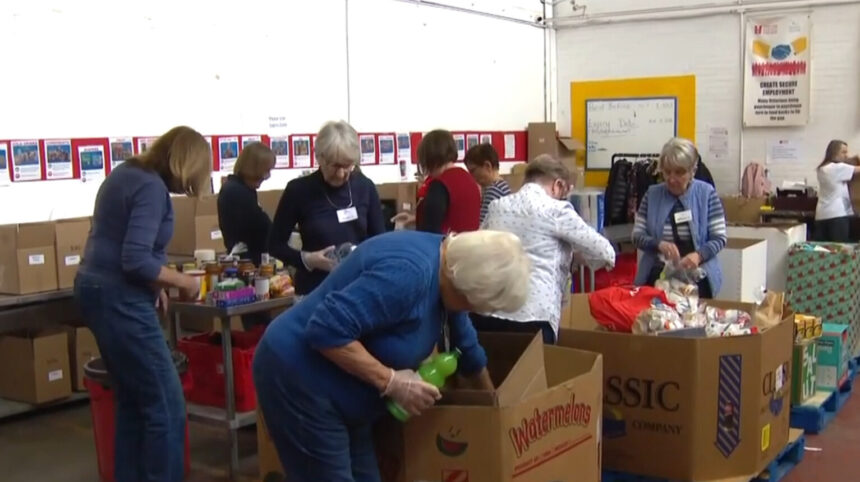
Their existing warehouse tells the story of infrastructure meeting its breaking point. A flood hit the building a couple years back. The refrigeration system failed not long after. Staff now operate in a condensed footprint with storage space that forces impossible decisions. Natasha Bowes, who directs development at the food bank, described the daily reality to CityNews. They routinely turn away hundreds of thousands of pounds of rescued food simply because there’s nowhere to put it.
That’s the part that stings for anyone working in food security. The food exists. Donors and grocery partners want to contribute. But without cold storage or dry goods space, perfectly edible items get refused while families go without adequate nutrition. Bowes put it directly. They do their best to give everyone something, but it falls short of what people actually deserve.
The $4 million infusion targets that gap head-on. Plans call for a new master food hub three times larger than the current space. The refrigeration system alone will grow tenfold in capacity. Construction starts within weeks, with the facility expected to open by December if timelines hold. That’s an aggressive schedule, but the urgency matches the demand curve food banks face across the Greater Toronto Area.
This isn’t just about more square footage. The expansion represents a philosophical shift in how the organization approaches its mission. Noble described the transition as moving from emergency response to long-term food security infrastructure. Emergency response means handing out what’s available and hoping it stretches. Food security means consistent access, nutritional quality, and dignity in how people receive support.
The Sprott Foundation’s matching model amplifies community participation in ways a flat donation wouldn’t. When individuals see their contributions multiplied, they’re more likely to give and to encourage others. That crowdfunding dynamic, even at a multi-million-dollar scale, builds broader ownership of the solution. It also pressures the foundation’s pledge in the best possible way, pushing toward that $4 million ceiling faster.
Timing plays a role beyond just facility needs. Food bank usage across Canada spiked during pandemic years and hasn’t receded as economic pressures continue. Grocery inflation hit staples hardest, the items families rely on daily. Rent increases pushed more households into choosing between housing stability and adequate food. Employment numbers don’t capture underemployment or the working poor who still can’t cover basics.
North York Harvest sits in a community where those pressures intersect with high density and diverse populations. Many newcomers to Canada settle in North York ridings, often facing barriers to employment that match their credentials. Seniors on fixed incomes cluster in aging apartment towers where rent takes most of their monthly budget. Families with children juggle precarious work schedules that don’t align with traditional food bank hours.
The new hub design accounts for those realities. Larger space means extended hours become feasible. Better refrigeration allows fresh produce and protein to stay available longer. Increased dry storage lets the food bank purchase in bulk when prices dip, maximizing donor dollars. The facility can also host programming beyond distribution, things like nutrition workshops or employment resources that address root causes alongside immediate need.
Bowes emphasized capacity during her interview, but the subtext was about waste and missed opportunity. Rescued food that gets turned away often ends up in landfills despite being perfectly usable. That’s an environmental failure layered on top of the social one. The new warehouse turns potential waste into community nourishment, which makes the infrastructure investment multiply in value beyond the immediate hunger relief.
Noble’s comment about serving 40 food banks deserves attention. North York Harvest functions as a hub within a hub-and-spoke model. Smaller neighborhood programs depend on it for inventory they can’t secure or store themselves. When the central hub struggles, every spoke feels the constraint. Strengthening that anchor point stabilizes the entire network across North York and surrounding areas.
Construction timelines in Toronto rarely inspire confidence, but December completion would land the facility before the hardest months. January through March typically see increased food bank usage as heating costs spike and holiday expenses catch up with families. Opening before that crunch would let the organization build operational rhythm in the new space before peak demand hits.
The Sprott Foundation’s role here extends a pattern of targeted infrastructure giving in Toronto’s social services sector. Rather than spreading funds thin across many organizations, concentrated investments in capacity-building create lasting change. A one-time equipment grant might help for a year. A facility that triples throughput helps for decades.
What remains to be seen is whether other major donors follow suit. Toronto has significant philanthropic capacity, but food security doesn’t always attract the same attention as hospitals or universities. This matching campaign could shift that calculation if results prove the model works. Success here might template how other food banks across Ontario approach capital campaigns.
For now, the immediate goal is clear. Hit that $4 million mark and get the warehouse built before winter. Every dollar donated between now and then carries five times its usual weight. That’s not metaphor in this context. It’s literal pounds of food reaching families who need it.