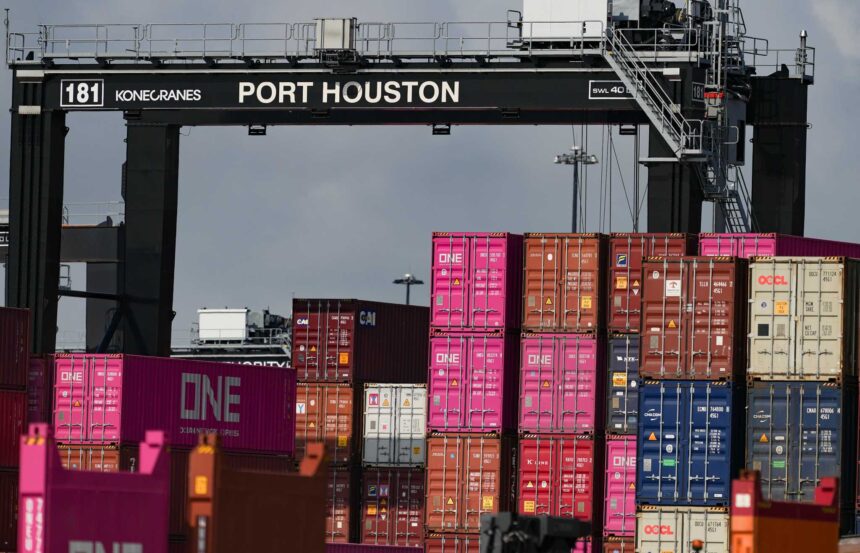
The warehouse sits just outside Houston, stacked floor to ceiling with electronics bound for retailers across the South. But the shipment isn’t moving. The owner, a third-generation distributor who asked not to be named, is caught in what he calls “economic purgatory”—tariffs paid under one administration, rates shifted under another, and no clear path to recover what may now be overpayments totaling six figures.
“We paid what customs told us to pay,” he said, leaning against a forklift in the humid March air. “Now the rules changed, and we’re just supposed to eat it?”
Across Texas, businesses are filing refund claims with U.S. Customs and Border Protection at unprecedented rates, according to trade attorneys and logistics firms. The surge follows abrupt policy reversals on Chinese imports, steel, and consumer goods—tariffs imposed, paused, or modified with little notice and even less consistency. Companies that dutifully paid levies are now scrambling to recoup funds they believe were collected under unstable or rescinded directives.
The problem isn’t just bureaucratic. It’s existential for small and mid-sized operators already squeezed by inflation, supply chain backlogs, and rising labor costs. A tariff refund delayed by six months can mean the difference between making payroll and closing a location. For Texas, a state that moves more than $300 billion in international trade annually, the stakes ripple through entire sectors—electronics, automotive parts, textiles, and agriculture.
CBP data obtained through public records requests shows refund claims filed by Texas-based importers jumped 68 percent between late 2023 and early 2024. The agency declined to comment on pending claims but confirmed processing times have stretched beyond 180 days in many cases. That’s double the standard timeline, leaving businesses in financial limbo.
Maria Delgado runs a midsize apparel company in El Paso, importing fabrics from Vietnam and Mexico. She paid $140,000 in tariffs on a January shipment under rules later suspended. Her refund claim, filed in February, remains unanswered. “I’ve called, emailed, even visited the port office in person,” she said. “They tell me it’s in review. That’s all I get.”
Delgado is not alone. Trade lawyers say the refund backlog stems from inconsistent enforcement, overlapping exemptions, and what one Dallas-based attorney described as “a customs system designed for stability, not whiplash.” When tariff schedules shift midstream, companies face a Catch-22: pay what’s demanded to avoid cargo detention, then fight for refunds with no guarantee of success.
The International Monetary Fund warned in a February report that abrupt tariff policy changes destabilize global supply chains and impose hidden costs on domestic businesses. Those costs, the IMF noted, are rarely absorbed by foreign exporters. They land on U.S. importers, who then pass them to consumers or absorb losses that threaten solvency.
In Texas, the pain is particularly acute. The state’s economy is deeply tied to cross-border commerce with Mexico, and many businesses operate on thin margins. A $50,000 tariff bill that later qualifies for exemption might seem like an accounting error in Washington. For a San Antonio distributor or a Laredo freight broker, it’s a crisis.
“We’re not asking for handouts,” said Carlos Mendez, who owns a logistics firm in McAllen. “We’re asking for our own money back. Money we paid because the government told us to, then changed its mind.”
Mendez filed claims for three clients, totaling $220,000. None have been processed. Meanwhile, his clients are considering lawsuits, though attorneys warn that legal action against CBP is costly and rarely fast. The alternative—writing off the overpayments—is unthinkable for companies already stretched thin.
The uncertainty extends beyond refunds. Businesses are now hesitant to commit to large shipments, unsure whether today’s tariff rate will hold tomorrow. That hesitation slows inventory restocking, delays orders, and dampens economic activity. A recent survey by the Texas Association of Manufacturers found that 41 percent of respondents have reduced imports due to tariff unpredictability, even when current rates are favorable.
“It’s not the tariff itself that kills you,” explained one Austin-based trade consultant. “It’s not knowing if it’ll still apply when your container arrives in Galveston.”
CBP’s Houston field office, one of the busiest in the nation, has added staff to handle the claims surge, according to sources within the agency. But even with reinforcements, the system struggles. Each refund requires verification of payment, policy review, and cross-referencing with constantly updated exemption lists. When those lists change weekly, backlogs compound.
The situation has drawn attention from Texas lawmakers. Senator John Cornyn’s office confirmed it has received “dozens” of constituent complaints and is pressing CBP for faster resolution. Representative Vicente Gonzalez, whose district includes major trade corridors, called the delays “unacceptable” and urged the agency to prioritize small business claims.
Yet political pressure has yielded little movement. CBP operates under constraints—limited personnel, aging IT systems, and the sheer volume of claims nationwide. Texas accounts for a significant share, but similar backlogs plague ports in California, New York, and Florida.
For businesses, the wait continues. Some are hiring specialized brokers to expedite claims, adding another layer of cost. Others are borrowing to cover cash shortfalls, gambling that refunds will eventually arrive. A few have simply given up, writing off the payments as sunk costs in an unpredictable trade environment.
The Houston distributor with the stalled electronics shipment has made his decision. He’s pulling back from Chinese suppliers, shifting to domestic sources despite higher prices. “I can’t plan around chaos,” he said. “If I don’t know what I’ll owe next month, I can’t compete.”
That sentiment, repeated across Texas and beyond, signals a deeper shift. Tariff policy, once a tool of economic strategy, has become a source of paralysis. And until the refund backlog clears, businesses will keep paying the price for a system in disarray.