The Canadian Human Rights Tribunal made history Monday by approving an $8.5 billion child welfare agreement for First Nations in Ontario. This decision brings partial closure to a discrimination case that has stretched nearly two decades.
The tribunal issued what it called a letter decision to fast-track the funding. Chiefs of Ontario and Nishnawbe Aski Nation negotiated the deal separately after national talks stalled. The formal written decision will come later, but the tribunal wanted Ontario communities to access resources immediately.
This approval follows months of political tension within Canada’s largest Indigenous advocacy body. Chiefs across the country twice rejected a $47.8 billion national proposal from Ottawa. Many felt that broader deal failed to address the root causes of discrimination in the child welfare system.
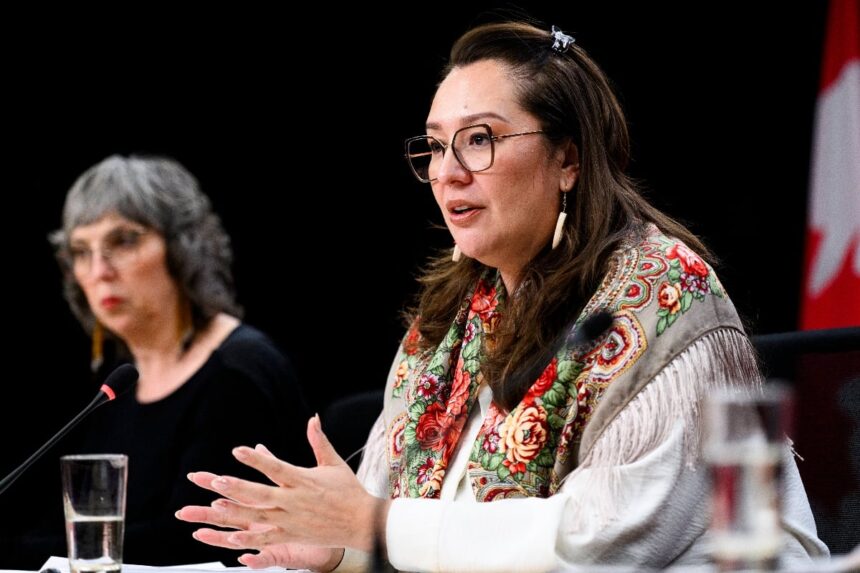
Ontario Regional Chief Abram Benedict called the day extraordinary during a Toronto news conference. He emphasized that approval marks a beginning, not an ending. The agreement runs through nine years but sets the stage for longer-term structural reform.
“This agreement does not end in nine years,” Benedict said. “It is the beginning of an opportunity for all of us together to continue to forge the way forward and reform this program that has done so much wrong to our people for so very long.”
The tribunal’s language was unusually direct in its assessment of federal responsibility. It stated that by working with Ontario chiefs and recognizing their authority over their own children, Canada takes an important step toward reversing racist and paternalistic policies. Those policies have been embedded in child welfare structures for generations.
The roots of this case stretch back to 2007. That year, the Assembly of First Nations and the First Nations Child and Family Caring Society filed a joint human rights complaint. They argued Ottawa systematically underfunded child welfare services on reserves compared to provincial systems serving non-Indigenous children.
Nine years later, the tribunal ruled in their favor. It found the federal government had indeed discriminated against First Nations children through inadequate funding. The tribunal ordered reforms, but implementation proved contentious and slow.
By 2024, frustration had reached a breaking point. Chiefs rejected the $47.8 billion national offer twice in one year. Critics said the proposal lacked accountability mechanisms and failed to guarantee long-term funding stability.
Ontario chiefs took a different approach. Representatives from Chiefs of Ontario and Nishnawbe Aski Nation had participated in the national negotiations. But when broader consensus collapsed, they pursued a provincial path forward. That separate deal largely mirrors the structure of the rejected national agreement.
Benedict explained at the time that Ontario couldn’t wait for national unity while children remained at risk. The tribunal echoed that reasoning in its letter decision. It didn’t want Ontario communities to lose a full year of potential funding while waiting for a final written ruling.
Indigenous Services Minister Mandy Gull-Masty said the agreement will reduce the number of First Nations children removed from their families. Speaking at an Ottawa news conference Monday, she framed the deal as proof that Indigenous-led solutions produce better outcomes.
“When First Nations lead, outcomes improve,” Gull-Masty said. “Today is an acknowledgment that we are on the right path.”
But that path remains unclear for First Nations outside Ontario. Two competing proposals for reforming child welfare in the rest of Canada landed before the tribunal in December. One came from the federal government, the other from First Nations leadership representing communities beyond Ontario’s borders.
The federal proposal offers $35.5 billion through 2033-34, followed by ongoing annual funding of $4.4 billion. Gull-Masty said Ottawa has introduced new flexibility, allowing regions to decide how they invest in prevention programs or technology infrastructure.
On Monday, the minister said she remains committed to reaching agreement with remaining First Nations. However, she offered no timeline for when that might happen. She stressed the importance of taking adequate time to get the work right.
National Chief Cindy Woodhouse Nepinak called the Ontario decision a positive step. Her office became a focal point of internal political conflict as chiefs debated strategy with Ottawa. In a written statement, she urged Canada to support any region pursuing a similar provincial path.
She also called for resuming work toward a comprehensive national agreement. And she emphasized the need for Ontario funding to flow quickly without bureaucratic delays.
The tribunal’s decision recognizes a fundamental principle that advocates have fought for since 2007. First Nations communities possess the authority and capability to make decisions about their own children. Decades of federal control produced outcomes that harmed generations of families.
Between 1960 and the late 1980s, thousands of Indigenous children were removed from their families and adopted into non-Indigenous homes. That period became known as the Sixties Scoop. The legacy of that era still reverberates through communities today.
Current child welfare systems continue to apprehend Indigenous children at disproportionate rates. In some provinces, Indigenous children represent more than half of those in foster care despite making up a small fraction of the total child population.
The Ontario agreement aims to shift resources toward prevention rather than apprehension. That means funding for community programs, mental health supports, and housing initiatives that keep families together. It also includes investments in training Indigenous social workers and building culturally appropriate care standards.
Whether this provincial model can be replicated nationally remains uncertain. Regional differences in governance structures, population sizes, and existing service arrangements complicate any one-size-fits-all approach.
Some observers worry that a patchwork of regional deals could create inequality between communities. Others argue that flexibility allows each region to design systems that reflect local realities and priorities.
What seems clear is that the status quo was untenable. Chiefs rejected the national deal because they believed it perpetuated federal control under the guise of consultation. Ontario’s separate path represents an assertion of self-determination that the tribunal has now validated.
The coming months will test whether other regions follow Ontario’s lead or pursue different strategies. Either way, Monday’s decision marks a significant shift in how Canada approaches Indigenous child welfare. The tribunal has affirmed that First Nations don’t need permission to care for their own children. They need adequate resources and respect for their authority.