The refund line for tariff payments stretches far beyond what most small business owners can see from their shop doors. Behind closed doors in Wisconsin, a textile company laid off workers just to cover the cost of tariffs on imported fabric. Now those same owners are left wondering if they’ll ever recover what they paid—or if the system is simply too complex for them to navigate alone.
Across the country, small importers paid billions under emergency tariff measures that the Supreme Court later struck down as illegal. The government owes them money. But getting it back requires filing claims through a newly updated system at U.S. Customs and Border Protection that demands detailed declarations, documentation, and persistence. For companies without legal teams or financial experts on staff, that’s a steep climb.
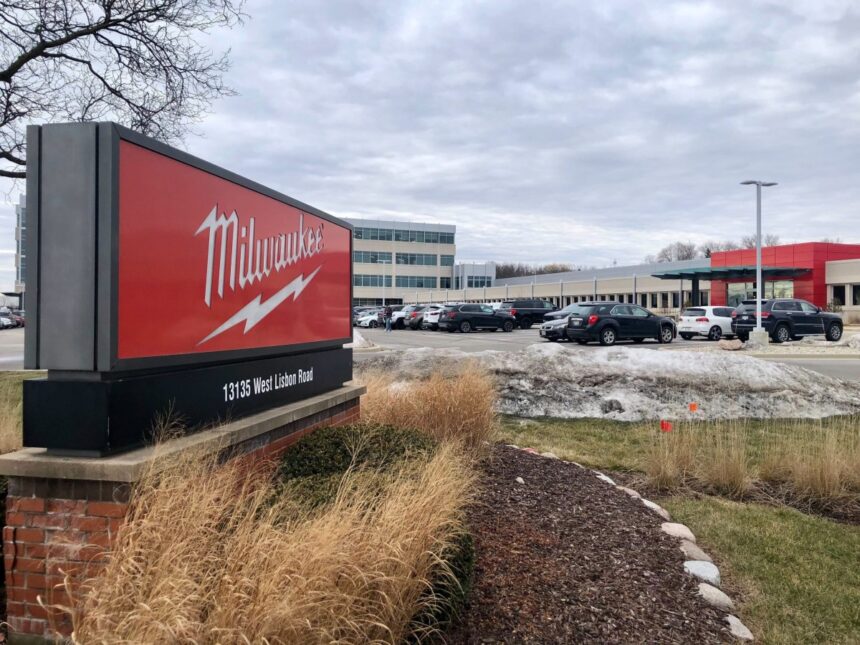
Senator Tammy Baldwin of Wisconsin met with business owners in her state who are stuck in exactly that position. “I’m fighting for that to happen, but most of it’s going to end up playing out in court,” she said. “It really matters to our small businesses in particular.” Wisconsin importers alone paid $3.5 billion in tariffs between March and December of last year, according to data from the coalition We Pay The Tariffs. More than a dozen companies in the state, including Milwaukee Tool and Kohl’s, have already filed lawsuits seeking refunds.
CBP is working to finalize a processing system capable of handling refund requests at scale. Officials face the task of reviewing over 53 million entries filed by importers that include emergency tariff payments. Court filings from last week indicate the development of new system functions to receive, process, and refund those duties is mostly complete. But completion of the system doesn’t solve the underlying problem: access.
The Trump administration is requiring business owners to file their own claims rather than issuing automatic refunds. That decision puts the burden squarely on importers, many of whom lack the resources to hire specialized counsel or dedicate staff time to paperwork. Chris Duncan, a former CBP attorney now working in tariffs and customs law, put it bluntly: “It’s incumbent on smaller importers to do what they need to do to get their money.”
Senator Ed Markey, the ranking Democrat on the Small Business Committee, sees that as fundamentally unfair. “Small businesses do not have teams of legal and financial experts to submit their forms,” he said during a call with business owners last week. “Small businesses do not have the time to navigate this convoluted system. Small businesses need their refunds, and they need them now.”
Markey and 19 other Democratic senators sent a letter to CBP Commissioner Rodney Scott on Friday demanding the agency automatically refund tariffs through its existing system rather than the updated one. “There is no principled reason for the Trump administration to conduct the refund process this way,” the letter states. “CBP already has the payment records it needs to issue refunds.” The senators argue that the agency possesses all the necessary information to return payments without forcing businesses to jump through additional hoops.
Markey, along with Democratic Senators Ron Wyden and Jeanne Shaheen, also introduced legislation that would require CBP to issue full tariff refunds with interest and prioritize returning money to small businesses. Without Republican support, however, the bill faces long odds. Democratic senators acknowledge that real change may depend less on Washington and more on local pressure.
“What is going to be most helpful is to create enough pressure in communities, particularly small communities,” said Wyden, the top Democrat on the Senate Finance Committee. The implication is clear: if federal action stalls, grassroots organizing may be the only leverage left.
Representative Mark Pocan, who represents the Madison area, voiced concern about the “dysfunction” likely to emerge as companies try to navigate the CBP refund system while also answering to consumers who absorbed price increases. “Bottom line is, we never should have done illegal tariffs to begin with,” Pocan said. “Congress should have stood up, as Democrats had asked for, for our constitutional authority around tariffs, and now we’re going to wind up creating all kinds of dysfunction for businesses and individuals.”
The Supreme Court ruled 6-3 in February to strike down the emergency tariffs. President Trump responded by saying he would continue his tariff agenda using alternative legal authorities and imposed a 15% global tariff, which Congress must vote to extend later this year. Trump allies in Congress defend the tariffs as short-term pain for long-term gain, arguing they will balance U.S. trade relationships and attract foreign investment. Polling shows the tariffs remain unpopular among voters.
Even some Republicans are open to the idea that refunds should reach consumers, not just companies. Representative Scott Fitzgerald, who represents suburban and rural areas west of Milwaukee, expressed cautious interest when asked about passing refunds on to shoppers. “If it’s something that they could actually draw, like a clear line or a bright line,” he said. “We had a lot of companies where the tariffs had a direct effect on aluminum out of Canada or textiles out of Vietnam—it was all part of the manufacturing process. So I’m not sure how that would shake out either, if it was one element of a larger manufacturing versus, like, a straight retailer who was selling some type of consumer goods.”
The distinction Fitzgerald raises points to a deeper complexity: determining who absorbed the cost of tariffs in the first place. Did manufacturers eat the expense, or did they pass it along the supply chain until it landed on the kitchen table of an ordinary family buying clothes or tools? That question has no easy answer, and it complicates any attempt to design a fair refund system that reaches beyond corporate ledgers.
For now, small businesses are left to figure it out on their own. They paid tariffs the courts later deemed illegal. They weathered the financial strain. And now they must file claims, hire lawyers if they can afford them, and hope the system works in their favor. The textile company in Wisconsin that laid off workers to cover tariff costs is still waiting. So are thousands of others across the country, caught between legal rulings and bureaucratic processing, between what they’re owed and what they can actually recover.