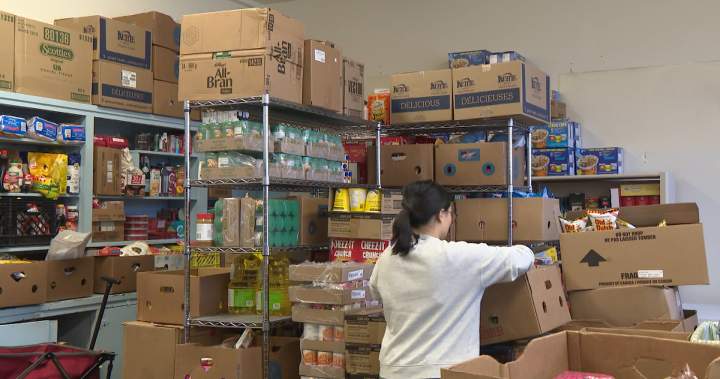
When the Moose Jaw food bank announced it would cut monthly visits from two to one, it wasn’t making headlines for political scandal. It was survival math. Demand had jumped 150 per cent in four years. The pantry couldn’t keep up.
This isn’t an isolated story. Food banks across Canada are scrambling to serve more people with less. They’re rationing hampers, trimming visit schedules, and turning away no one but offering less to everyone. It’s a coast-to-coast crisis that started quietly and now sits at the doorstep of every level of government.
Melissa From sits on the board of Food Banks Alberta. She’s also president and CEO of the Calgary Food Bank. She’s watched the numbers climb since COVID-19 first rattled employment and income security. Then came inflation. Mortgages climbed. So did fuel costs and grocery bills. People who never imagined needing help started walking through the door.
In Alberta alone, 132,402 people accessed food banks this month. More than a third of them are children. That’s not a typo or a rounding error. It’s a generation growing up hungry in one of the wealthiest provinces in the country.
From says smaller communities are hit hardest. They operate on thinner budgets and fewer donations. Some are giving less food to more people. Others are triaging clients, deciding who needs it most. No two food banks face identical struggles, but the pressures are universal.
Ontario tells a similar story. Feed Ontario reports that food banks in the province served over one million people in 2025. Those individuals accessed services more than 8.7 million times. Think about that. Millions of moments where someone walked into a building, stood in line, and asked for food to get through the week.
Only 33 per cent of Ontario food banks say they can meet current demand. The rest are improvising. Some shifted from weekly visits to biweekly. Others reduced hampers from seven days of food to five. Wraparound supports like nutrition counseling or job search help have been cut back or eliminated entirely.
Carolyn Stewart runs Feed Ontario. She says some food bank staff are buying groceries out of their own pockets to fill gaps. Donations have dropped as previous donors face their own financial crunch. The people who used to give are now the ones in need.
Still, Stewart insists no one should hesitate to ask for help. If you need food, come in. The system is stretched, but it’s not closed.
Food Banks Canada’s latest Hunger Count reveals the scale. Just over half of food banks in its network had to reduce the amount of food handed out in 2025. Nearly a quarter ran out of food entirely before meeting demand. These aren’t minor shortfalls. They’re operational collapses papered over by volunteers and hope.
Kirstin Beardsley leads Food Banks Canada. She points to housing costs as a major driver. Rent and mortgage payments are eating up income that used to cover groceries. The crisis spans from Vancouver and Toronto to Truro, Nova Scotia. Geography doesn’t matter. The struggle is everywhere.
Beardsley says governments at all levels need to respond with investment and policy. Affordable housing matters. So does addressing food prices. But she’s clear: there’s no silver bullet. What works in rural Saskatchewan won’t necessarily fit urban Ontario. Solutions need to be as varied as the communities they serve.
The COVID-19 pandemic didn’t create food insecurity in Canada. But it did expose how fragile the system was. When jobs disappeared overnight, so did paychecks. Emergency supports helped, but they were temporary. Inflation followed, compounding the damage. Grocery prices soared. Rent kept climbing. Wages didn’t keep pace.
Now we’re left with a network of charities doing the work that policy should address. Food banks were never meant to be permanent fixtures. They were stopgaps. Emergency relief. Somewhere along the way, they became infrastructure.
The people using them aren’t faceless statistics. They’re parents stretching meals. Seniors choosing between medication and milk. Kids who show up to school hungry. The Moose Jaw decision wasn’t about efficiency. It was about rationing dignity.
Food Banks Alberta, Feed Ontario, and Food Banks Canada are sounding the same alarm. Demand is up. Resources are down. The gap is widening. And while food banks adapt and innovate, they’re clear: this isn’t sustainable.
Governments talk about economic growth and fiscal responsibility. But when more than a million Ontarians rely on food banks, something fundamental has broken. Housing policy, wage policy, and social support systems aren’t keeping pace with the cost of living. The result is predictable and preventable.
Beardsley’s point about tailored solutions is crucial. Federal programs can’t ignore regional realities. What drives food insecurity in Halifax differs from what’s happening in Edmonton. Urban density, rural isolation, provincial economies, and local labor markets all matter. Cookie-cutter policies won’t cut it.
But neither will inaction. Food banks are charities, not social safety nets. They run on donations, volunteers, and goodwill. When donations dry up and demand surges, the math doesn’t work. Cutting services isn’t a choice. It’s a consequence.
The question now is whether elected officials will treat this as the policy emergency it is. Food insecurity isn’t a side issue. It’s a measure of how well a country provides for its people. When children make up more than a third of food bank users in Alberta, the failure is structural.
From, Stewart, and Beardsley aren’t asking for miracles. They’re asking for attention, investment, and responsive policy. Affordable housing. Living wages. Food price oversight. These aren’t radical ideas. They’re the basics of a functioning social contract.
Food banks will keep operating. They’ll keep adapting. But every reduction in service, every scaled-back hamper, is a signal. The system is failing people. And those people are your neighbors.