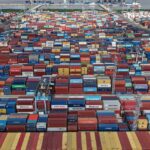
The steel mills outside Pittsburgh still hum at half capacity. Prices at grocery stores keep climbing. And in Washington, a handful of Democrats are trying to reframe the tariff debate as something bigger than economics—a constitutional crisis hiding in plain sight.
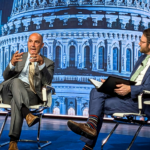
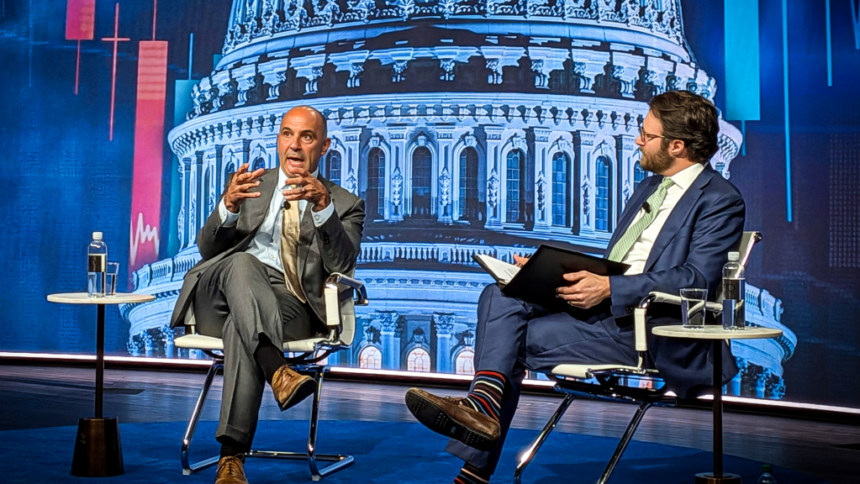
Rep. Jimmy Panetta stood in a conference room at the Cato Institute last Thursday and made an argument his party has struggled to articulate. Yes, tariffs hurt wallets. But they also represent something more corrosive: the slow erosion of congressional authority over one of its oldest constitutional powers.
“It starts with the prices,” Panetta said. “However, I do believe it is not only a threat to our economy. This is a threat to the rule of law.”
It’s a sweeping claim. And it raises a question Democrats will face in the coming midterm season: Can they sell voters on institutional principles when inflation still stings at the checkout line?
The Legal Machinery Behind the Tariffs
Trump’s tariff arsenal didn’t appear from nowhere. It’s built on decades of congressional delegation, laws passed with good intentions that handed presidents emergency powers over trade. Section 122 of the Trade Act of 1974. The International Emergency Economic Powers Act. These statutes were designed for crises, not economic policy by executive whim.
Panetta has been chasing this issue for nearly a year. He introduced legislation to abolish presidential tariff authority under Section 122 long before Trump grabbed it as a backup plan. That came after the Supreme Court struck down his attempt to use IEEPA for sweeping tariffs. The bill went nowhere in a Republican-controlled House.
His colleague, Rep. Suzan DelBene from Washington, pushed a companion measure targeting IEEPA. Same result. The proposals gathered dust while tariffs reshaped supply chains and trade relationships from Canada to Southeast Asia.
According to the Peterson Institute for International Economics, Trump’s second-term tariffs have imposed costs exceeding $80 billion annually on American consumers and businesses. The Congressional Budget Office projects GDP growth could slow by 0.4 percent if current policies continue through 2026. These aren’t abstractions. They’re mortgage payments, car loans, and college tuition.
A Constitutional Power Play
The Constitution grants Congress authority over commerce and taxation. Article I, Section 8 is unambiguous. Yet over decades, both parties chipped away at that power, handing presidents tools for quick action in emergencies. The Trade Expansion Act of 1962 started the trend. Subsequent laws widened the gap.
Bryan Riley runs the Free Trade Initiative at the National Taxpayers Union Foundation. He’s watched this institutional decay for years. “Democrats in Congress should reassert their constitutional authority over trade, regardless of who is president,” he told me via email. “Both on an institutional basis and in recognition of the fact that there is no telling who will be president in the future or which party they belong to.”
That last point cuts deep. Democrats might reclaim Congress in the midterms. But institutional power doesn’t care about party affiliation. The precedents set now will outlive any single administration.
The Biden presidency proved this. Despite campaign rhetoric about Trump’s reckless trade wars, Biden kept most of those tariffs in place. The United States Trade Representative maintained levies on Chinese goods worth hundreds of billions. Steel and aluminum tariffs remained. The difference wasn’t policy—it was political packaging.
The Disconnect Between Voters and Institutions
Here’s the challenge Panetta and his allies face: Most Americans don’t wake up worried about Article I powers or executive overreach. They worry about rent and gas prices.
During a focus group last month in suburban Detroit, the nonpartisan research firm Navigator found that voters understood tariffs hurt their wallets. But when researchers mentioned constitutional authority and separation of powers, eyes glazed over. People want solutions, not civics lessons.
Panetta acknowledged this tension after his Cato appearance. “I think we’ve learned our lesson the hard way, unfortunately, that when you give up your power—like Democrats and Republicans have over the past few decades—this is what can happen when you have someone in the White House who has had a 40-year fixation on tariffs,” he said.
That 40-year fixation is well documented. Trump has railed against trade deals since the 1980s, taking out full-page ads in major newspapers attacking Japanese imports. His worldview treats trade as zero-sum warfare. And Congress handed him the weapons.
The Credibility Problem
Democrats pushing institutional reform face a credibility gap. Where were these bills during the Biden years? Why wait until Trump returned to the White House to champion congressional authority?
The answer is uncomfortable: Political incentives didn’t align. With a Democratic president, reclaiming trade powers meant constraining their own party. Now, with Republicans in control, the institutional argument carries less political risk.
The World Trade Organization has documented over 200 trade disputes involving U.S. tariff policies since 2018. American farmers lost $27 billion in export revenue between 2018 and 2020, according to the American Farm Bureau Federation. Yet bipartisan momentum for reform never materialized when Democrats controlled both chambers and the presidency.
What Comes Next
Panetta’s optimism about Democratic control and reform feels familiar. Politicians often promise to rein in executive power when they’re out of office. Those promises tend to evaporate once they hold the keys.
The Brennan Center for Justice has tracked executive power expansion across administrations since 2001. Their data shows a consistent pattern: Parties criticize presidential overreach in opposition, then defend it in power. Trade policy follows the same cycle.
Still, the political dynamics might be shifting. Trump’s aggressive tariff escalation—threatening 25 percent levies on allies, invoking national security for consumer goods—has created real economic pain in swing districts. Republican senators from agricultural states are hearing complaints from constituents watching export markets collapse.
If Democrats capture Congress in the midterms, they’ll face a choice. They can pursue narrow political wins, using tariff relief as a bargaining chip with Trump. Or they can attempt genuine institutional reform, constraining future presidents regardless of party.
The latter requires sacrifice. It means giving up power when Democrats eventually return to the White House. It means prioritizing long-term governance over short-term advantage.
History suggests that’s a rare commodity in Washington. But Panetta insists his party has learned the hard way. “When we do take control, that’s going to be our opportunity—it’s going to be Congress’s opportunity,” he said.
The steel mills are still waiting. So are the farmers, the manufacturers, and the families watching grocery bills climb. Whether Democrats follow through on institutional reform or let the moment pass will tell us more about American governance than any single policy fight.
For now, it’s just talk. The test comes after Election Day.