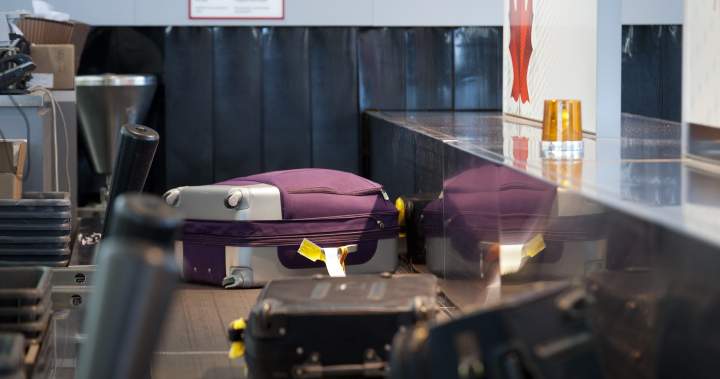
On February 19, Canada Border Services Agency officers flagged two suitcases bound for Germany. Inside each bag sat roughly 33 kilograms of cannabis. The passengers tagged to those bags had never seen them before. They were traveling separately, didn’t know each other, and according to investigators, had no idea their names were being used to smuggle contraband across international borders.
The RCMP stepped in. Officers arrested both German citizens. Each denied ownership. That denial, corroborated by digital check-in records and witness statements, became the first thread investigators pulled. Neither passenger had checked luggage at the counter. Neither had interacted with baggage staff in any unusual way. The bags were identical in make and model, stuffed with product worth tens of thousands of dollars on European markets, and deliberately routed under false pretenses.
What unraveled next was a scheme that relied on institutional access. An Air Canada employee working in the baggage sorting area had printed luggage tags bearing the names of unsuspecting passengers and affixed them to suitcases pre-loaded with cannabis. The travelers became decoys. Their boarding passes and travel itineraries were weaponized without consent. The operation depended on one assumption: that routine checks wouldn’t catch the substitution before the bags cleared customs on arrival in Germany.
Border agents did catch it. The German nationals cooperated fully and were released without charge. On March 12, the baggage handler was arrested. They now face two serious charges: possession for the purpose of export and conspiracy to commit an indictable offence. Both carry potential prison terms and would likely result in a criminal record that ends any career in secure or regulated industries.
The case raises uncomfortable questions about access and oversight in Canada’s busiest airport. Baggage handlers work in restricted zones. They process thousands of pieces of luggage daily. Most do so without incident. But the system depends on trust, and trust depends on accountability. When an employee with airside access decides to exploit that position, the consequences extend far beyond the individual. Innocent passengers get detained. Investigations consume resources. Public confidence erodes.
Legal experts I spoke with noted that cases like this hinge on proving intent and coordination. Prosecutors will need to show the accused knowingly participated in a broader conspiracy. That means establishing communication with others, demonstrating planning, and linking the cannabis to a distribution network. Court documents filed in Brampton suggest investigators are pursuing those leads. The conspiracy charge signals that authorities believe this was not a lone actor but part of a coordinated trafficking effort.
Cannabis remains illegal to export from Canada without a federal permit. While recreational use is legal domestically, international transport is tightly controlled. Exporting even small amounts without authorization is a criminal offence. Sixty-six kilograms is not a small amount. At street value in Europe, where cannabis laws remain restrictive in many jurisdictions, the seized product could generate significant revenue. That makes this a serious trafficking case, not a minor possession charge.
The accused was held for bail and later released under conditions. Those conditions, standard in cases involving alleged organized crime or flight risk, likely include travel restrictions, reporting requirements, and possibly electronic monitoring. The next court appearance is scheduled for April 10 in Brampton. At that hearing, the Crown may disclose additional evidence. Defence counsel will have the opportunity to challenge the evidence or negotiate terms. Trials in cases like this can take months or years, depending on witness availability and the complexity of the conspiracy allegations.
Air Canada has not publicly commented on the arrest beyond confirming the individual is no longer employed by the company. Internal reviews are likely underway. Airlines face regulatory pressure to audit security protocols, particularly when employees with privileged access are implicated in criminal activity. Transport Canada mandates background checks for airport workers, but those checks are not foolproof. They screen for past convictions, not future intent.
Civil liberties advocates worry about the collateral damage in cases like this. The two German passengers were detained, questioned, and faced the possibility of serious charges in a foreign country. They had no control over what happened to their identities. Their names were used as cover for a smuggling operation they knew nothing about. While they were ultimately cleared, the experience likely involved hours of interrogation, legal uncertainty, and the psychological toll of being accused of a crime they didn’t commit.
This case also underscores the vulnerabilities in baggage handling systems. Tags are printed and affixed in secure areas, but oversight is inconsistent. Cameras monitor some zones, not all. Supervisors rotate shifts. Opportunities for misconduct exist, particularly when employees work in teams and accountability is diffused across multiple checkpoints. Strengthening those systems without overburdening workers or invading privacy is a difficult balance.
The RCMP investigation is ongoing. Additional arrests have not been ruled out. Investigators are examining whether the scheme was isolated to this one flight or part of a broader pattern. They are also likely reviewing security footage, communications records, and financial transactions tied to the accused. Conspiracy cases require building a network diagram, showing who knew what and when. That takes time.
For now, the case sits in the Ontario court system. The accused has the presumption of innocence. The Crown must prove guilt beyond reasonable doubt. But the allegations are serious, the evidence appears strong, and the implications reach far beyond one employee and two suitcases.