Peter Clark showed up for work Monday morning with one job: keep kids safe. The 55-year-old crossing guard never made it home. He was struck by a vehicle at Cedarview Road and Kennevale Drive in Barrhaven around 8:20 a.m., just as students made their way to Mary Honeywell Elementary School. He died later that day in hospital from his injuries.
The driver fled the scene. Police believe the vehicle is a dark-coloured Ford F-150 truck. That driver remains at large, and the community wants answers.
This wasn’t just another Monday morning crossing. It was Crossing Guard Awareness Day across Ontario. A day meant to honour the people who stand in all weather to protect children became a day of tragedy. MPP Stephen Blais addressed the Ontario legislature Tuesday, asking for a moment of silence. His words were simple but heavy. A crossing guard was killed doing his job.
Barrhaven Councillor David Hill didn’t mince words. He called the driver reckless and a danger to the streets. He urged residents near the intersection to check their security cameras and dashcam footage. Even the smallest detail could help investigators. Hill promised to announce plans later to commemorate Clark’s life and service.
Mayor Mark Sutcliffe called the news heartbreaking. He said it’s unacceptable that someone trying to keep children safe should lose his life this way. Sutcliffe praised crossing guards for their daily commitment. They deserve respect and protection, he said. He also urged anyone with information to come forward.
The Ottawa Safety Council employs crossing guards across the city. They released a statement calling the incident unprecedented. Losing a guard in this way has never happened before. The council is now arranging grief counselling for staff and cooperating fully with police. They reminded drivers that slowing down and staying alert in school zones is not optional.
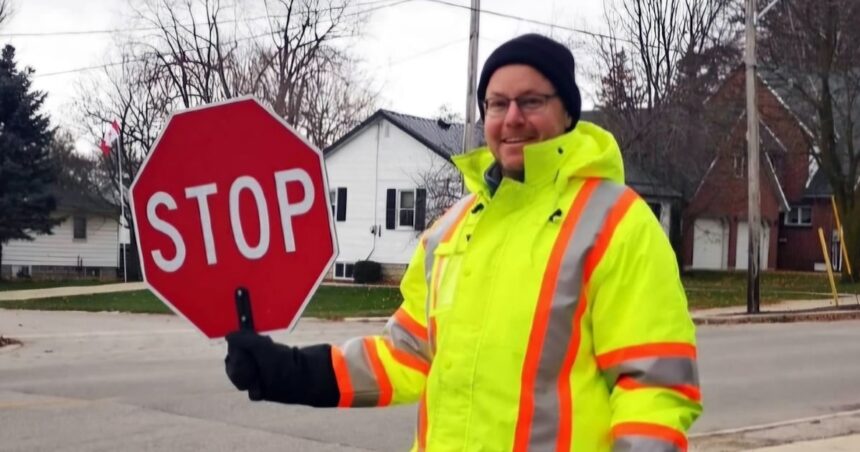
Peter Clark’s family shared photos with CTV News Ottawa. They wanted people to see the man behind the uniform. A person who showed up every day to do a job that mattered. A job that required patience, kindness, and vigilance.
Hit-and-run collisions carry serious legal consequences in Canada. Fleeing the scene of an accident that causes death can result in life imprisonment. The Criminal Code treats it as a severe offence. It shows a disregard not just for the law but for human life. Investigators are working to identify and locate the driver.
The intersection where Clark was struck is busy during school hours. Parents drop off children. Buses arrive and depart. Crossing guards are the glue that holds that chaos together. They wave. They smile. They make sure no one gets hurt. Until Monday, the system worked.
School zones across Ottawa have posted speed limits of 40 kilometres per hour during certain hours. Those limits exist for a reason. Children are unpredictable. They dart into streets. They forget to look both ways. Crossing guards fill that gap. They are the last line of defence between a child and a speeding vehicle.
The Ottawa Police Service’s Collision Investigations Unit is handling the case. They are asking anyone who witnessed the collision to contact them at 613-236-1222, extension 2345. Dashcam footage from drivers in the area could be critical. Even footage that seems irrelevant might contain a detail investigators need.
Barrhaven has grown rapidly over the past decade. New subdivisions mean more families and more children walking to school. That growth brings traffic. More vehicles on the road increase the risk for pedestrians. Crossing guards become even more vital in expanding communities.
Peter Clark’s death raises questions about road safety in school zones. Are current measures enough? Should penalties for speeding near schools be harsher? Should more intersections have traffic lights instead of relying on crossing guards? These are conversations that need to happen.
The Ottawa Safety Council noted that thousands of school crossings happen safely every day. Walking to school remains a healthy choice for children. But safety requires cooperation. Drivers must stay alert. They must respect crossing guards. They must follow posted speed limits.
Clark’s colleagues at the Ottawa Safety Council are grieving. They knew him as a dedicated professional. Someone who took his role seriously. Someone who showed up no matter the weather. His loss will be felt across the organization.
Mary Honeywell Elementary School sits near the intersection where Clark was killed. Students there saw him every day. He was a familiar face. A trusted adult. News of his death will ripple through that community for a long time.
Crossing guards don’t get much recognition. They work early mornings in rain, snow, and freezing temperatures. They earn modest wages for work that demands focus and care. Yet they show up. They do it because it matters. Peter Clark did it because it mattered.
The driver who struck Clark made a choice to flee. That choice turned a tragic accident into a criminal act. It left a family without answers. It left a community grieving. It left investigators searching for justice.
Mayor Sutcliffe’s plea for information reflects the urgency of the situation. A driver who flees a fatal collision poses a danger to everyone. They have already shown a willingness to prioritize their own escape over the life of another person. Finding that driver is a public safety priority.
Barrhaven residents are shaken. Social media has filled with tributes to Clark and calls for the driver to be found. People are angry. They are scared. They want to know their children are safe walking to school.
The Ontario legislature’s moment of silence was a rare pause in the usual political routine. MPPs from all parties stood together. They recognized that some losses transcend partisanship. Peter Clark’s death is one of those losses.
Councillor Hill’s promise to commemorate Clark’s life is important. It ensures his service won’t be forgotten. It sends a message that the community values the work crossing guards do. It honours a man who gave his life protecting children.
Peter Clark was 55 years old. He had a family. He had friends. He had a job he cared about. On Monday morning, he put on his uniform and headed to work. He never came home. That simple fact is the tragedy at the heart of this story.