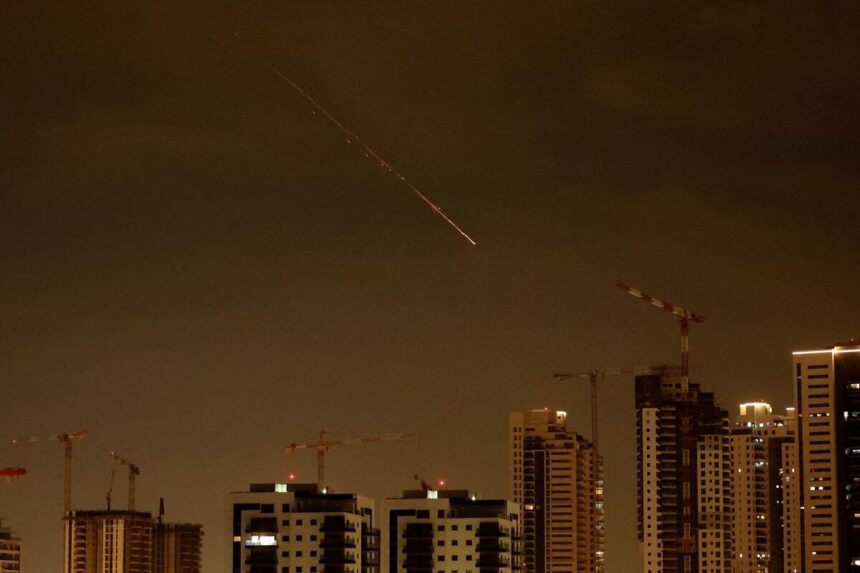
The fighting hasn’t stopped. While Donald Trump insists negotiations are underway to end hostilities between Iran and the U.S.-Israeli coalition, missiles continue to arc across Middle Eastern skies. The contradiction between the former president’s claims and the reality on the ground reveals either diplomatic theater or a profound disconnect between what’s being said in Washington and what’s happening in Tehran, Baghdad, and beyond.
Saudi Arabia now signals it may join strikes against Iran, according to reporting from the Wall Street Journal. That potential escalation transforms what was already a volatile situation into something approaching a regional conflagration. Riyadh has long viewed Tehran as its primary strategic rival, but direct military involvement marks a threshold the kingdom has historically avoided. The shift suggests either heightened confidence in U.S. backing or a calculation that remaining on the sidelines poses greater risks than engagement.
Trump’s assertion that talks are progressing came during a campaign-style appearance in Florida, where he offered few specifics beyond claiming “very serious people” were involved. No Iranian officials have confirmed any such dialogue. The State Department, when pressed, provided only the vaguest acknowledgment that “multiple channels remain open.” That’s diplomatic speak for uncertainty. Either backchannel communications exist that Iran has strategic reasons to deny, or Trump is projecting confidence about negotiations that haven’t meaningfully begun.
The market reaction tells its own story. Oil prices climbed as traders weighed the gap between reassuring words and troubling actions. Stocks drifted without clear direction, reflecting investor confusion about whether to price in escalation or de-escalation. The Bloomberg Dollar Spot Index nudged upward as nervous capital sought perceived safety. These movements suggest markets don’t believe the fighting ends soon, regardless of what’s being said publicly.
On the ground in Iraq, where I spent time last month, the mood among locals oscillates between resignation and alarm. One shopkeeper in Baghdad’s Karrada district told me he’s stopped watching the news. “They say one thing in Washington, another thing happens here,” he said while restocking shelves with Turkish goods that have replaced Iranian imports. “We just try to keep living.” That sentiment reflects a broader regional exhaustion with being caught between competing powers whose decisions are made far from the places that absorb the consequences.
The potential Saudi involvement introduces complications that extend beyond military calculations. Riyadh has spent years attempting to diversify its economy and attract foreign investment through initiatives like NEOM and Vision 2030. Direct conflict with Iran jeopardizes that carefully constructed image of stability. Yet Crown Prince Mohammed bin Salman may calculate that demonstrating resolve against Tehran strengthens his position domestically and within the Gulf Cooperation Council, where smaller states watch nervously to see who holds regional primacy.
Iran’s response to Trump’s talk claims came through a statement from Foreign Ministry spokesman Nasser Kanaani, who dismissed them as “psychological warfare designed to obscure the aggression against our sovereignty.” Tehran has reasons to reject publicly what it might pursue privately. Acknowledging talks could appear weak to hardliners within Iran’s political structure, particularly the Islamic Revolutionary Guard Corps, which has staked its institutional prestige on confronting what it calls American imperialism.
The humanitarian toll continues mounting with less attention than it deserves. The UN High Commissioner for Refugees reports displacement figures rising in western Iran and eastern Iraq as civilians flee areas near military installations that have become targets. Hospital capacity in cities like Kermanshah is strained. These aren’t abstractions on a map but families making impossible choices about whether staying home or fleeing into uncertainty poses greater danger.
Analysts at the International Crisis Group suggest the confusion around talks may itself be strategic. “Ambiguity can create space for de-escalation without either side appearing to capitulate,” said Nazila Golestan, their Iran project director, during a briefing I attended via video link. “But it can also lead to miscalculation if one party misreads the other’s intentions.” That risk of miscalculation haunts every phase of this conflict, where proxies, direct strikes, and competing narratives create multiple layers of potential misunderstanding.
The economic ripples extend globally. Australian wheat farmers are reducing plantings due to fertilizer supply concerns tied to potential disruptions in Persian Gulf shipping lanes. Pakistani authorities asked cricket fans to watch matches at home to conserve fuel. Italian winemakers in Calabria worry about diesel costs intersecting with existing tariff pressures. These aren’t tangential effects but demonstrations of how regional conflict becomes everyone’s problem through the integrated systems that move food, energy, and goods across borders.
Trump’s diplomatic style complicates assessment of what’s actually happening. His tendency to announce progress prematurely or describe aspirations as accomplished facts has been documented across multiple policy areas. Is this instance of claiming ongoing talks simply another example of that pattern? Or has his team established communications that Iran has strategic reasons to deny while quietly exploring options? Without independent confirmation, observers are left parsing statements for clues rather than analyzing substance.
The coming days will clarify whether diplomatic progress exists or whether we’re witnessing another chapter in the long history of Middle Eastern conflicts where talking about peace proceeds simultaneously with preparing for war. Saudi Arabia’s decision whether to move from signaling to action represents one critical variable. Iran’s calculus about whether it gains more from negotiations or from demonstrating it won’t be pressured into concessions represents another.
What’s clear is that confusion serves no one well except perhaps those who profit from volatility. Arms manufacturers see stock prices rise. Oil traders capitalize on uncertainty. Meanwhile, ordinary people across the region navigate daily life wondering whether the next strike comes tonight or next week, whether their cities become targets, whether the fighting that already feels endless might actually intensify further. They deserve better than contradictory statements from distant capitals. They deserve either genuine diplomacy that ends the violence or at least honest acknowledgment about what’s really happening and why.