Members of the Midtown Racquet Club arrived for their usual Wednesday evening session last month only to find management in crisis mode. A city tax reassessment had just landed, and the bill was staggering: over $500,000 more than the year before. For a community facility that operates on thin margins and volunteer energy, the notice felt like a knockout blow.
The club has served this neighborhood for nearly four decades. Generations of families have learned tennis here. Kids from nearby schools use the courts after class. Seniors gather for pickleball leagues on weekday mornings. Now all of that stands in jeopardy because the property suddenly carries a commercial tax burden it was never designed to handle.
City officials defend the reassessment as part of routine municipal practice. Property values have climbed across this part of town, they say, and tax rates adjust accordingly. But the club’s board argues that applying commercial rates to a nonprofit community space misses the point entirely. This isn’t a luxury fitness chain. It’s a public amenity that operates more like a community center than a business.
The distinction matters more than semantics suggest. Commercial ventures build profit margins into their pricing. Community clubs like this one keep fees low to ensure access. Many members pay on sliding scales. Youth programs run at cost or below. The entire operation depends on keeping overhead manageable, and property taxes form a major part of that equation.
Council will take up the issue Thursday evening in what promises to be a packed chamber. Club members have been organizing. They’ve gathered petition signatures and prepared deputations. Local residents who’ve never set foot on the courts plan to show up too, recognizing that what happens here could ripple across other community spaces.
The tax notice arrived without warning in early March. Management had budgeted for the usual modest increase, maybe five or six percent. Instead, the reassessment pushed their annual property tax bill from roughly $120,000 to over $620,000. No nonprofit sports facility can absorb that kind of hit without fundamentally changing what it offers or shutting down completely.
Board president Sandra Kowalski described the shock in blunt terms during a recent interview. “We thought there had been a mistake,” she said. “I called the city three times to confirm the numbers were real.” They were real, and they reflected a reclassification that shifted the property from recreational to commercial status based on updated zoning maps and land valuations.
Other cities have faced similar flashpoints when tax policy collides with community infrastructure. Vancouver dealt with this a few years back when reassessments threatened cultural venues. Montreal saw neighbourhood pools and rinks caught in tax squeeze plays. The outcomes varied, but the pattern holds: when municipalities treat community assets like commercial real estate, accessibility suffers.
The politics get complicated because nobody wants to appear anti-revenue in a climate of tight budgets. Municipal governments across the country face pressure to find new income sources. Property taxes remain one of the few reliable levers they control. But hammering community clubs creates a different kind of cost, one that shows up in lost programs and reduced access rather than balance sheets.
This particular racquet club serves a diverse cross-section of the city. Membership lists include new immigrants, retirees on fixed incomes, and young families stretching every dollar. The courts provide more than recreation. They offer a gathering point, a place where neighbours meet and social ties form. That’s harder to quantify than a tax bill, but it matters just as much to civic health.
The club explored options over the past few weeks. Raising membership fees enough to cover the hike would price out most current members. Selling the property would erase the community asset entirely. Applying for grants or charitable status might help long term but does nothing about this year’s bill. Every path forward looks rocky.
Local councillor Michael Tran has promised to bring forward a motion asking staff to review the reassessment. He noted that other cities have carved out exemptions for nonprofit recreational facilities serving public interest. “We shouldn’t tax community spaces out of existence,” Tran said in a statement issued Monday. “There has to be room in our system for assets that build neighborhood strength.”
But not everyone on council shares that view. Budget hawks argue that exemptions erode the tax base and shift burdens onto other property owners. If the racquet club gets relief, they ask, what about the community theatre or the food co-op or the dozen other nonprofits that could make similar cases? The slippery slope argument carries weight in austere times.
Still, the public response suggests this issue touches something deeper than tax policy minutiae. Over two thousand people have signed petitions supporting the club. Social media lit up with stories of kids who found confidence on these courts. Former members who moved away years ago have been emailing council. The outpouring reflects anxiety about what gets lost when communities can’t sustain the spaces that hold them together.
Thursday’s council meeting will likely run late. Dozens of speakers have registered. The club’s treasurer plans to present detailed financials showing exactly how the tax hike breaks their operating model. A youth tennis coach will talk about the kids who can’t afford private lessons. Neighbours will speak to property values that benefit from having active community amenities nearby.
Whatever council decides will set precedent. Other community facilities are watching closely. The city’s approach here will signal whether municipal government sees itself as partner to neighborhood institutions or simply as a tax collector indifferent to their survival. Both roles matter, but the balance between them shapes what kind of city this becomes.
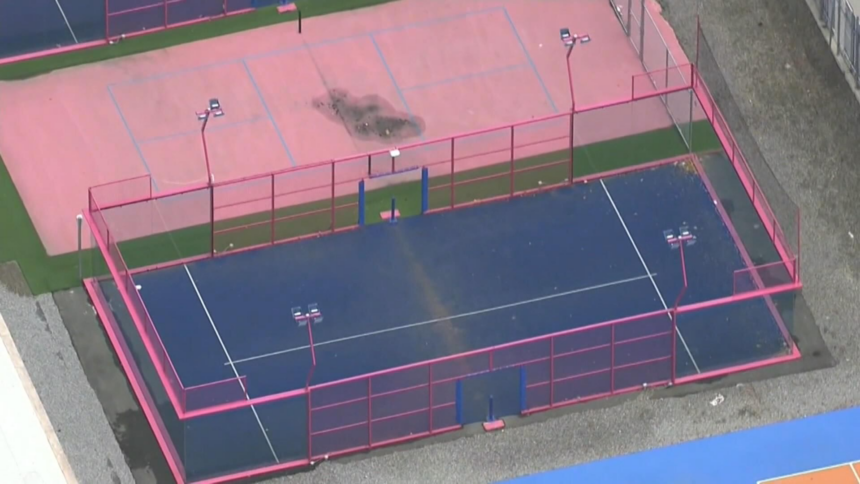
The racquet club’s courts sit empty on this cool spring evening. Nets hang ready. Lines are freshly painted. Everything looks normal except for the uncertainty hanging over the whole operation. A half-million dollar question awaits an answer, and an entire community waits to see whether the game can continue.