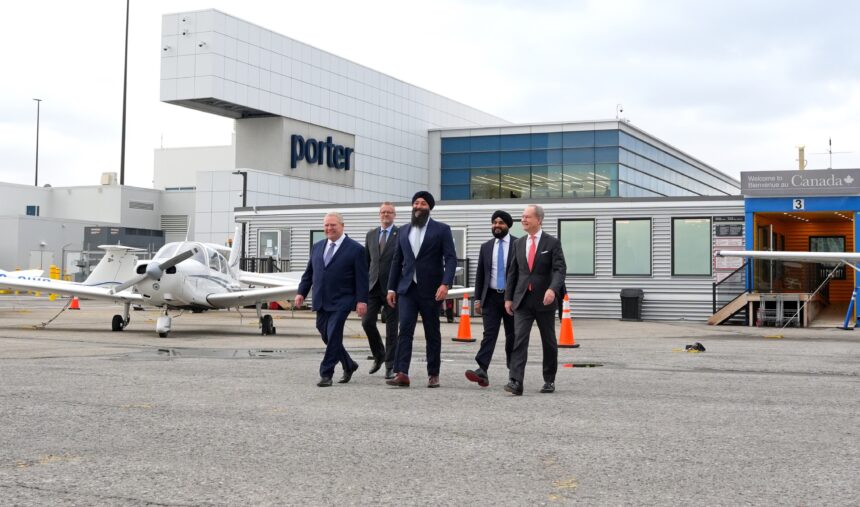
The fight over Billy Bishop Airport just got louder. City council is preparing to push back against Premier Doug Ford’s move to seize control of the island airport, a waterfront landmark that’s been part of Toronto’s landscape for decades. The clash pits provincial ambition against municipal authority, and it’s playing out in real time.
A motion heading to council this week asks members to oppose any attempt by senior governments to expropriate city-owned land without consultation. Councillor Ausma Malik, whose ward includes the airport, brought the motion forward. Mayor Olivia Chow seconded it. The message is clear: Toronto wants a seat at the table when decisions about its waterfront are made.
Ford floated the takeover idea in early March. He said the province needs to run the airport so it can handle jets. Right now, Billy Bishop only accommodates smaller turboprop planes. The premier argues that expanding capacity will ease pressure on Pearson International Airport and create jobs. On Monday, he made it official, announcing a bill to take over the city’s stake in the airport and designate it a special economic zone.
That designation matters. It allows projects to skip usual approval processes under provincial legislation designed to fast-track development. Critics say it sidesteps public input. Ford says it’s necessary to boost the economy, especially with American tariffs looming.
The city motion notes that while other levels of government have made comments about the waterfront, Toronto hasn’t received a formal proposal. “The plan, if there is one, remains a mystery,” the document reads. It’s titled “Toronto must have a say in waterfront decisions,” and the frustration is evident.
But Ford’s plan is now public. A Monday press release laid out the province’s intention to replace Toronto in a three-way agreement governing the airport. Right now, the Toronto Port Authority operates it. The city owns 20 percent of the land. Ports Toronto and Transport Canada control the rest. The arrangement dates back to the 1980s and has been tweaked several times since.
Last year, council voted to extend the airport’s lease by up to 12 years. Ports Toronto wanted 40. The extension ties into a runway expansion mandated by Transport Canada, with a price tag hitting $64 million. The lease and expansion were contentious, but this takeover adds another layer entirely.
Ford says Ottawa supports his plan. Transport Minister Steven MacKinnon’s office offered a more cautious response. Decisions about Billy Bishop require consensus from all parties to the agreement, including Toronto, a spokesperson said. That doesn’t sound like a blank cheque. The Toronto Port Authority, a federal agency separate from the city, has backed the province’s move. That muddies the waters.
The province’s pitch is straightforward. Take over the city’s share of the agreement and its land in exchange for fair compensation. Then expand the airport to handle more flights and bigger planes. Ford will introduce legislation during the spring session, which kicked off Monday after a 14-week break.
He framed the takeover as essential for Ontario’s economic future. At a press conference, he said the province needs to enable an economic boom. He called opposition from city council typical of “the lefties down at the City of Toronto.” Ford added that the airport isn’t just for Toronto residents. It serves all of Ontario and Canada, he said.
That argument doesn’t sit well with local leaders. Malik told reporters the premier’s move is unacceptable. She said it fits a pattern of cutting the city out of decisions that directly affect it. Two of her fellow councillors echoed that sentiment last week. Big choices about the waterfront and Billy Bishop need transparency, she said.
“Torontonians deserve to have a say over our city and our waterfront,” Malik said. “It’s our waterfront, and we’ve worked hard to keep making it a vibrant and sustainable place.”
Mayor Chow said earlier this month she doesn’t support jets at the island airport. Councillor Josh Matlow vowed to fight Ford’s plan. Both have raised concerns about noise, traffic, and the impact on the waterfront. The airport sits just offshore from downtown, accessible by a short ferry ride or pedestrian tunnel. Surrounding neighborhoods are densely populated. Residents there worry about increased air traffic.
The political dynamics are tricky. Ford has a majority at Queen’s Park, which means he can pass legislation without opposition support. But federal involvement complicates things. If Ottawa doesn’t play along, the takeover could stall. MacKinnon’s measured response suggests the feds aren’t ready to rubber-stamp Ford’s plan.
There’s also the question of compensation. What’s fair value for the city’s stake? Who decides? The motion going to council this week doesn’t address those details, but they’ll matter if negotiations happen. Toronto’s budget is tight. Losing an asset without adequate payment would sting.
Ford’s timing is strategic. He’s linking the airport expansion to his broader pitch that Ontario needs to be economically competitive. With tariffs threatening cross-border trade, he’s positioning himself as the leader willing to make bold moves. Whether voters buy that narrative remains to be seen.
For now, the battle lines are drawn. The province wants control. The city wants a voice. And the waterfront, a piece of Toronto that residents fiercely protect, hangs in the balance. Council will debate the motion this week. That vote will signal whether Toronto plans to dig in or negotiate. Either way, this fight isn’t over.