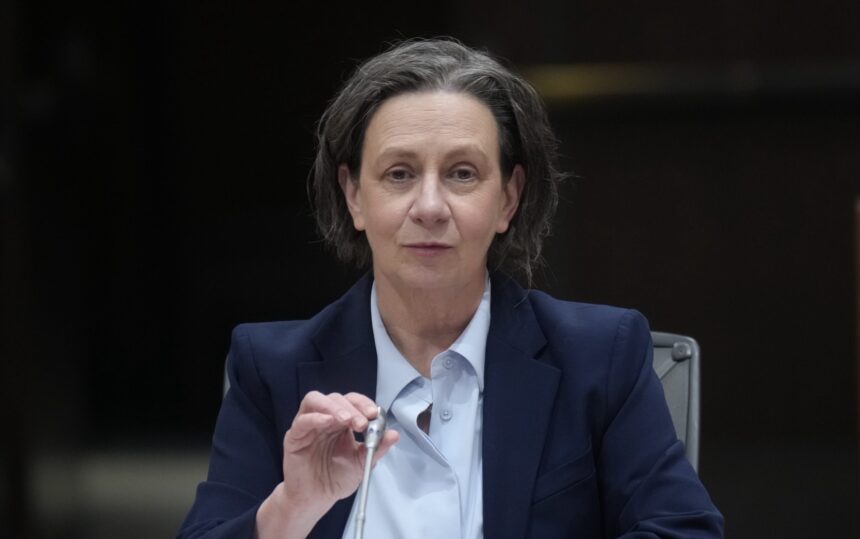
The woman tapped to become Canada’s next Parliamentary Budget Officer sat before MPs this week and made a simple pitch. She promised sharp analysis, no soft edges, and answers that won’t make anyone comfortable. Annette Ryan, currently deputy director at Fintrac, wants the job overseeing federal finances. But getting it means convincing parliamentarians she won’t bend under pressure.
Ryan appeared before the finance committee on a chilly Monday afternoon in Ottawa. Her nomination requires approval from both the House of Commons and the Senate. The questioning stretched for hours, and it became clear early on that the conversation would be as much about her predecessor as about her own credentials.
“I intend to provide you with high-quality, independent and relevant analysis so that you can hold the prime minister, his ministers and senior officials to account,” Ryan told the room in her opening remarks. It was the kind of declaration budget officers always make. But this time, the stakes felt different.
Jason Jacques, the former interim PBO, left the role earlier this month when his term expired. Conservative MPs made it clear they wanted him to stay. They said Monday they plan to vote against Ryan’s nomination because they believe Jacques should have gotten the permanent position instead.
Sandra Cobena, a Conservative MP, told reporters that declining to renew Jacques’ six-month term was effectively firing him. Jacques had been critical of Liberal fiscal management during his brief tenure. That criticism earned him praise from opposition benches and suspicion from the government side.
Multiple MPs opened their questions by praising Jacques. Ryan responded each time with measured diplomacy. She spoke of her “deep respect” for Jacques and those who held the office before him. It was a balancing act, one that required acknowledging his work without diminishing her own qualifications.
Jean-Denis Garon, a Bloc Québécois MP, said after the hearing that he entered with an open mind. His party hasn’t decided whether to support Ryan. But Garon expressed frustration with the selection process itself. He wanted a competitive process where candidates could be compared side by side.
“It’s never the skills that are questioned. It’s the independence,” Garon said. “And I think she defended her point well.”
Independence became the central theme of the afternoon. Jasraj Singh Hallan, a Conservative MP, asked Ryan whether she would speak out if pressured to adjust her analysis for political reasons. Her answer was direct. She said parliamentarians, not the government, would be her boss.
“I would see you collectively as my boss. I think that the key of that role is to provide you with exactly that pointy analysis,” Ryan said. The phrase “pointy analysis” stuck. It suggested work that doesn’t smooth over inconvenient truths.
Ryan went further to address concerns about independence. She promised to serve only one term as PBO. The move was strategic. It removes any incentive to curry favor with the party in power in hopes of reappointment.
During the hearing, Ryan also committed to holding the government accountable on spending. But she framed fiscal sustainability as a nonpartisan issue. “Nobody’s agenda gets carried if you hit the fiscal wall,” she said. It was a reminder that fiscal crises don’t respect party lines.
Jacques made waves early in his tenure by calling the Liberal debt trajectory “stupefying” and unsustainable. He later said he regretted using such blunt language. Ryan indicated she would take a different approach. She said she would present fiscal analysis clearly but leave the “stark language” to parliamentarians.
Several MPs pressed Ryan for her take on federal finances. She mostly deferred to existing analyses from organizations like the International Monetary Fund. Those reports suggest Ottawa’s debt levels remain sustainable. Jacques himself said after the November budget that the long-term debt track was manageable, though he warned the government had used up fiscal cushion.
Ryan did acknowledge risks when Singh Hallan asked about the Liberals abandoning previous fiscal anchors tied to the debt-to-GDP ratio. She didn’t elaborate much, but the concession was noted.
Ryan’s background includes time in Newfoundland and Labrador and Prince Edward Island. She’s a Rhodes Scholar with degrees from Acadia University and Oxford. Over her career, she’s held roles across the public service. In her opening statement, she listed ministers she’s worked with from multiple parties, including Conservative Leader Pierre Poilievre.
One question lingered over the hearing like fog. Ryan and Prime Minister Mark Carney both studied at Oxford in the early 1990s. MPs wanted to know about that connection. Ryan said they knew each other as Canadians abroad but ran in different social circles.
The two later worked in Ottawa at the same time. Ryan was chief economist at Industry Canada while Carney led the Bank of Canada. She said most interactions were through his office, not face to face. After Carney left to run the Bank of England, she said they had no contact.
The finance committee will vote on Ryan’s nomination in the coming weeks. Conservative opposition is confirmed. The Liberals hold enough seats to approve her, but NDP and Bloc support could matter. Both parties appear to be weighing their options.
Ryan’s promise of “pointy analysis” will resonate differently depending on who’s listening. For opposition MPs, it sounds like accountability. For the government, it might sound like a threat. Either way, the next PBO will inherit a role with growing scrutiny and shrinking patience for vague answers.
The office was created to give Parliament independent fiscal analysis. But independence is hard to measure until it’s tested. Ryan’s hearing was the first test. The real ones will come later, when the analysis she promised lands on desks and makes someone uncomfortable.