Good evening, readers.
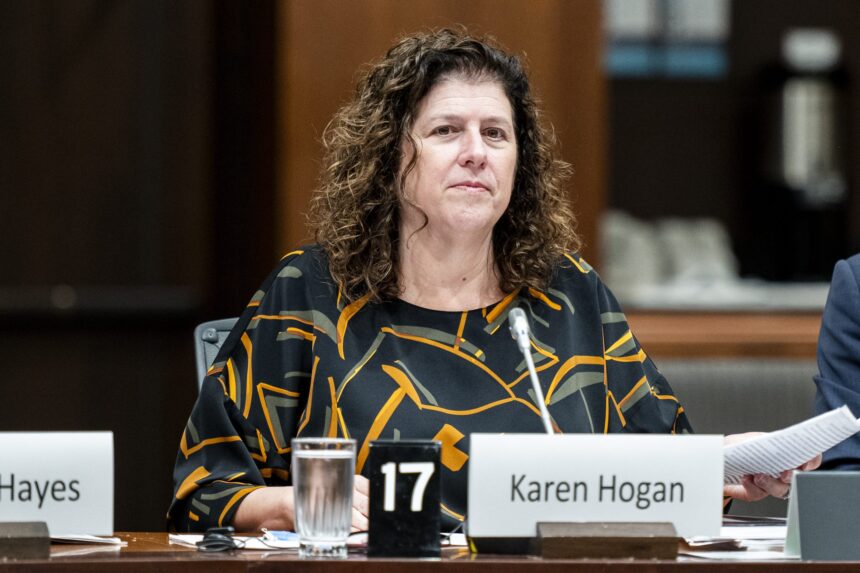
A new audit report on Canada’s international student program has raised serious questions about the government’s ability to keep up with its own enforcement priorities. Auditor General Karen Hogan says the immigration department is falling behind on investigating potential violations among student visa holders. The numbers paint a troubling picture of system capacity and follow-through.
An audit of the International Student Program published Monday reveals that about 150,000 cases were flagged in 2023 and 2024 alone. These files involved student visa holders who may not have been complying with the terms of their study permits. Most cases get flagged because students aren’t attending the academic institutions that accepted them. That’s a significant red flag in a program designed to bring genuine learners to Canada.
The federal government launched only about 4,000 investigations of those flagged cases. That’s less than three percent of the total. Of those investigations, 1,600 were marked as inconclusive because the student in question did not respond to Immigration, Refugees and Citizenship Canada. In other words, more than a third of the small number of cases actually pursued went nowhere.
An official from the auditor’s office explained in a background briefing that IRCC makes two attempts to reach out to students involved in these investigations before a file is marked inconclusive. The entire process takes about six months. For critics of the program, that timeline feels like an eternity when the integrity of Canada’s immigration system is at stake.
Immigration Minister Lena Diab appeared before the House of Commons immigration committee Monday and defended the department’s response. She pointed out that this is “a preliminary look” at international student reforms and noted she was only minister for four of the 18 months covered by the audit. Her tenure, in other words, doesn’t cover the full scope of what Hogan examined.
Diab told the committee that the early audit cannot offer a complete picture of these reforms. It can inform, though, what the government does on a go-forward basis. She emphasized that the report and the auditor general do recognize the progress being made to reduce student numbers, diversify the student population and improve program integrity. Whether that satisfies critics remains to be seen.
The international student program has become a political flashpoint over the past two years. Post-secondary institutions across the country have relied heavily on international tuition revenue to balance their budgets. That dependence has created perverse incentives for some schools to admit students who may not be adequately prepared or genuinely interested in completing their programs. Provincial governments have been slow to address this dynamic.
Meanwhile, the federal government has tried to rein in numbers through caps and stricter eligibility criteria. But enforcement remains the weak link. When 150,000 cases are flagged and only a tiny fraction are actually investigated, the message sent to prospective violators is clear. The system has limited teeth.
There’s also a question of fairness to the students who do follow the rules. Genuine international students contribute significantly to Canadian communities and the economy. They often face scrutiny and suspicion because of the bad actors who exploit the system. When the government fails to investigate non-compliance, it undermines trust in the program and damages Canada’s reputation as a destination for serious learners.
Public opinion on international students has shifted in recent years. Polling from Environics and other firms shows growing concern among Canadians about the volume of temporary residents, including students. Housing shortages, job market competition and service strain have all been cited as factors. The audit adds another dimension to that debate by suggesting the government isn’t adequately managing the program it created.
Immigration critics in Parliament have seized on the findings. Conservative immigration critic Tom Kmiec called the audit evidence of a “broken system” and demanded immediate action to clear the backlog. NDP immigration critic Jenny Kwan said the government has failed both Canadians and legitimate students by allowing the program to become a “back door” for those seeking work permits rather than education.
There’s also a regional dimension to this story. Ontario and British Columbia host the majority of international students in Canada, and both provinces have expressed frustration with federal oversight. Ontario’s Colleges and Universities Minister Jill Dunlop said last year that the province needs more control over which institutions can accept international students. British Columbia has floated similar ideas.
The audit arrives at a politically sensitive time for the Liberal government. With an election expected within the year, immigration policy has become a central campaign issue. The Conservatives have hammered the government on border enforcement and program integrity. The NDP has called for better protections for vulnerable students and workers. The Liberals are caught defending a system that even their own auditor general says isn’t working as intended.
What happens next will depend on whether IRCC can significantly increase its investigative capacity. The department has acknowledged the backlog and says it’s hiring more staff to process cases. But hiring takes time, and training takes even longer. In the meantime, the gap between flagged cases and investigations will likely continue to grow.
There’s also the question of what happens to students whose cases are marked inconclusive. Are they allowed to remain in Canada? Do they face any consequences for failing to respond to government inquiries? The audit doesn’t provide clear answers, and neither did Minister Diab’s testimony. That ambiguity is itself a problem.
For those watching Canadian immigration policy, this audit is a reminder that systems are only as strong as their enforcement mechanisms. Canada can set all the rules it wants for international students. But if those rules aren’t consistently applied and violations aren’t meaningfully investigated, the integrity of the entire program is compromised. The government now faces the uncomfortable task of explaining how it plans to fix a problem it’s known about for years.
Karen Hogan’s office has done the public a service by shining light on this issue. Now it’s up to elected officials to respond with more than rhetoric. The 150,000 flagged cases aren’t going away on their own.